Prison time for HIV?

Prison time for HIV? It’s possible in Veracruz

El Daily Post, August 6th 2015

New legislation passed by the Veracruz state Congress calls for up to five years in prison for “willfully” infecting another with HIV, which can lead to AIDS. The measure is fraught with legal, medical, public health and human rights problems, but supporters insist it will help protect vulnerable women.


The Veracruz state Congress has unanimously approved legislation that calls for prison time for anyone who intentionally infects another person with the HIV virus or other sexually transmitted diseases.

The amendment to the state penal code makes Veracruz the second Mexican state (after Guerrero) to criminalize the sexual transmission of illnesses. Another 11 states have sanctions in the books for infecting others with “venereal diseases,” a term and concept no longer used in the medical community.

But Veracruz has stipulated a more severe punishment than the other states — from six months to five years in prison. Guerrero also has a maximum of five years, but it’s minimum is three months.

The bill was promoted by Dep. Mónica Robles Barajas, a member of the Green Party, which is allied with the ruling Institutional Revolutionary Party. She said the legislation is aimed at protecting women who can be infected by their husbands.

“It’s hard for a woman to tell her husband to use a condom,” she said in an interview with the Spanish-language online news site Animal Político.

The legislation, however, raises serious questions, both legal and medical, as well as concerns about human rights.

The most obvious problem is the notion of “intentional” infection. Robles emphasizes that the bill is based on a “willful” passing of the virus, which she defines as a carrier having sexual relations when he or she is aware of his or her HIV infection.

But the notion of intentionality in such cases is a complicated one for prosecutors, legal experts say. The he-said/she-said factor can be a sticking point, according to Luis González Plascencia, a former head of the Mexico City human rights commission, with the accusation likely to be based on one person’s testimony.

“There could be ways to show through testimony that there was an express intention to infect,” González told Animal Político. “But that’s always going to be circumstantial.”

A likely abuse of the law, he said, is attempted revenge or blackmail. An angry spouse or other partner can, with a simple declaration, create a legal nightmare.

Even if the issue of intentionality can be overcome, the very notion of criminalizing HIV infection is controversial. AIDs and human rights experts are against it.

One of them is Ricardo Hernández Forcada, who directs the HIV-AIDS program at Mexico’s National Human Rights Commission (CNDH). International experience, he says, indicates that punitive policies accomplish little besides government intrusion into private life. (Eastern Europe and Southeast Asia are regions where laws similar to the new one in Veracurz have existed.)

A Veracruz non-governmental organization called the Multisectoral HIV/AIDS Group issued a communiqué in response to the new legislation, declaring, “Scientific evidence shows that legislation and punishment do not prevent new infections, nor do they reduce female vulnerability. Instead, they negatively affect public health as well as human rights.”

González concurred. “The only thing that’s going to happen is that there will be another crime in the penal code that won’t accomplish anything except generate fear,” he said.

The Multisectoral Group also pointed out a disconnect between the law and medical science. It’s  virtually impossible, the group says, to determine with certainty who infected whom with a sexually transmitted disease.

“Phylogenetic analyses alone cannot determine the relationship between two HIV samples,” the group said in its release. “They cannot establish the origin of an infection beyond a reasonable doubt, or how it occurred, or when it occurred.”

Robles, for her part, objects to the notion that the legislation criminalizes HIV carriers, insisting that the target is the intentional infection of another through sex. She emphasized that the aim of the new law is to protect women, who are often in a vulnerable situation.

“It’s directed much more at protecting women than homosexual groups,” she said. “There is a high incidence among women because there is no awareness of the risk they run.”

Opponents, however, see the new law as a step backward for men and women, and for public health in general, insisting that penalization comes at the expense of prevention.

“Knowing that they could be at risk of prosecution, people won’t get tested,” the CNDH’s Hernández Forcada said. “These measures inhibit people’s will to know their diagnosis.”

US: ‘Turn It Up!’ an innovative resource for prisoners with HIV needs your help reaching Kickstarter goal

Sero is a national network of people with HIV and allies fighting HIV-related stigma, discrimination and criminalization by engaging and empowering ourselves and others with HIV to speak and advocate, conduct original research, document the experiences of those criminalized, educate communities and work in partnership with others to mobilize for change.

They particularly work to support and strengthen networks of people with HIV, especially those representing key populations, to bring their voice and insight to the discussion and development of policy, delivery of services and the media.

They have received many letters from people with HIV and/or hepatitis who are currently in prison, many on charges arising from their HIV or hepatitis status. Cindy Stine, Sero’s Prisoner’s Network co-ordinator, responds to these inquiries, provides research assistance and sometimes is able to help find legal counsel or other needed resources.

From this informal and growing network, it soon became clear that many people who are incarcerated have unique knowledge about effective strategies to maintain good health and access healthcare while behind bars.

Last September, Sero gathered a group of people who have been incarcerated or work with those who are, as well as HIV and hepatitis experts.

They spent time brainstorming how they could facilitate the sharing of advice, insights and tips from people who are in prisons or jails concerning how they stay as healthy as possible.

That led to the creation of Turn It Up! a new print resource guide for people with HIV and/or hepatitis who are incarcerated, as well as those newly-released from prison or jail and their friends and families.

Written and edited in large part by people who have themselves been incarcerated and/or have HIV and/or hepatitis, Turn It Up! will help those serving time navigate healthcare and stay as healthy as possible.

Laura Whitehorn and Suzy Martin, two longtime and prison reform activists, editors and HIV experts, are co-editing Turn It Up! They are both former editors at POZ magazine and Suzy works closely with Prison Health News.

To produce Turn It Up!, they worked with more than two dozen others, including contributors from prisons and jails in a dozen states, bringing an authentic, passionate and informed voice to the pages of Turn It Up!

The challenge now is to get it distributed to those who need it the most. Sero have launched a modest Kickstarter campaign, that includes this video explaining the project, which they hope will raise at least $5,000 to help with distribution costs.

Support the Kickstarter campaign here.

AFAO Policy Analyst Michael Frommer highlights the many types of anti-HIV criminalisation advocacy undertaken by the Canadian HIV/AIDS Legal Network

The 8th IAS Conference on HIV Pathogenesis, Treatment and Prevention (IAS 2015) is on in Vancouver, Canada, this week. AFAO Policy Analyst Michael Frommer reports back on the pre-conference community forum. 

Key human rights challenges, such as criminalisation of HIV transmission, were centre stage at the IAS community forum on Saturday 18 July.

Alison Symington, co-director of Research and Policy at the Canadian HIV/AIDS Legal Network (Legal Network), described the challenge of advocacy and policy work in Canada in the face of ongoing criminalisation.

Aside from the significant justice issues when charges are laid for HIV non-disclosure, exposure or transmission, she also identified the serious of issue of people threatening their partners with an allegation, when there is relationship conflict, and how this in particular affects women who may be in abusive relationships.

In Canada, as in Australia, most of the people charged to date have been male heterosexuals, with a strong racialised element – mainly Black men. Since the mid-1990s, there has been an increase in the proportion of gay men charged.

Despite the fact that men make up the majority of those charged, Alison has investigated the pernicious effects of criminalisation on women. She explained how the ‘informal’ criminalisation of HIV positive mothers works, with their sense that their parenting is being under surveillance.

She outlined a huge range of advocacy and policy activities being undertaken by the Legal Network in response.

1) Legal defence strategy and intervention

Tactics include contacting the defence lawyers of individuals who have been charged with criminalisation related offences. The Legal Network also intervenes in the formal court proceedings and provides relevant scientific evidence.

2) Campaigns and advocacy

This has involved the Legal Network’s participation in the ‘Stop the Witch Hunt’ campaign targeting prosecutors, undertaken in collaboration with the AIDS Action Now. Legal Network staff also sit in court during trials, to make clear to judges/prosecutors that the community is monitoring developments.

3) Raising awareness/education

This education work is targeted at raising understanding among judges and among the community.

4) Working with doctors/scientists

A key piece of work was the Canadian Scientist Statement on HIV transmission risk. The Legal Network organised for 70 leading scientists from across Canada to sign this document which explained clearly the actual levels of risk of HIV transmission.

5) Distinguishing between HIV non-disclosure and sexual assault

HIV non-disclosure/exposure/transmission charges in Canada are made under the Canadian criminal law as an aggravated charge using the sexual assault provisions. The Legal Network aims to work with domestic violence/feminist organisations to ensure that HIV-related jurisprudence does not circumvent the appropriate application of sexual assault laws.

6) Prosecutorial guidelines

This has been an ongoing area of work across Ontario, Quebec and British Columbia. Ontario most recently advocated for the adoption of guidelines, but without adequate community input the Government drafted guidelines were dropped. There is still a desire to pursue appropriately formulated guidelines in future.

Marama Pala (in the audience) highlighting Australia’s public

health response to MC Dazon Dixon Diallo.

The comprehensive advocacy and policy response taken by the Canadian Legal Network is extremely impressive.

With one of, if not the highest rates per capita of criminalisation in the world, it is obviously very necessary in the Canadian context.

While some circumstances differ, there are a great many ideas that may be drawn upon for responding to HIV criminalisation in the Australian context.

US: As college student, Michael Johnson, 23, is sentenced to 30 1/2 years for HIV exposure, advocates organise and condemn Missouri’s HIV-specific law as ‘barbaric’

Yesterday, Michael Johnson, 23, was sentenced to 30 1/2 years in prison after being found guilty on May 14th of five counts stemming from the accusations of three people who said he exposed them to the virus without their knowledge.

For the most serious charge, recklessly infecting another with HIV, Johnson will serve 30 years in prison. The remaining four charges, for HIV ‘exposure’, carried sentences of 5.5, 5.5, 5.5 and 14 years. Johnson will serve his sentences concurrently, meaning he will spend a total of 30 1/2 years in prison.

Mr Johnson’s case created considerable attention from HIV, gay and social justice advocates, such as this open letter from black gay men, and the press release from The Center for HIV Law and Policy below.

Tomorrow (Wednesday 15th July), the Counter Narrative Project, HIV Prevention Justice Alliance and Positive Women’s Network – USA will hold a webinar to provide an update on the current on-the-ground efforts to support his appeal and a discussion of advocacy strategy from a legal, media, intersectional and activism perspective.

Click on this link to register for Michael L. Johnson: Strategizing collectively for justice.

Sentencing of Missouri College Student in HIV “Exposure” Case Decried As “Barbaric” 

US: Texas 'HIV criminalization bill' defeated

Despite some last-minute legal wrangling, the Texas legislature failed to pass several anti-gay measures as of the May 27 final deadline for passing any bills that lawmakers wish to see enacted into law. This year’s legislative session ends on June 1….

The legislature also failed to approve an HIV criminalization bill, which would have allowed prosecutors to subpoena the medical records and HIV test results of defendants living with HIV if prosecutors believe that they intended to intentionally infect people. The measure would have protected anybody who releases or discloses a test result in response to a subpoena from any liability, either civil or criminal, or any professionally disciplinary action.

According to LGBT and HIV/AIDS advocates, the bill was unnecessary, as Texas law already allows law enforcement and public safety officials to conduct HIV testing on individuals when appropriate, but there are privacy measures to keep the tests confidential. The advocates claimed the bill would have allowed an HIV-positive test result to be subpoenaed and used in any criminal proceeding against a person who happens to live with HIV, and was subjective, based on the personal whims and discretion of individual prosecutors.

The Human Rights Campaign (HRC), the nation’s top LGBT rights organization, worked with Legacy Community Health of Houston to oppose the HIV criminalization measure, saying revealing the results of an HIV test could potentially bias criminal proceedings, lead to enhanced privacy, and could discourage other people from getting tested for HIV for fear that a positive result would not be kept private and could be used against them.

“The defeat of SB 779 ensures that Texans living with HIV are not further stigmatized and penalized for their positive status,” Januari Leo, the director of public affairs with Legacy Community Health, said in a statement. “HIV is a public health issue that must be addressed through testing, treatment and prevention methods, not criminal prosecutions. HIV is neither a crime nor a death sentence.”

Alone But Together
Women and Criminalisation of HIV

(15 min, Zimbabwe Lawyers For Human Rights, Zimbabwe, 2014)

This video explains why overly broad HIV criminalisation harms women, and highlights the issue with an interview with a woman who is fighting her conviction for allegedly infecting her husband.

Australia: Victoria’s HIV-specific criminal law, Section 19A, finally repealed today

In a joint media release, Living Positive Victoria and the Victorian AIDS Council have welcomed the passage of the Crimes Amendment (Repeal of Section 19A) Act 2015 by the Victorian Parliament. The Act repeals Australia’s only HIV-specific law criminalising the intentional transmission of HIV, section 19A of the Crimes Act 1958, which has been criticised for unfairly targeting and stigmatising people with HIV.

Live Tweets from Victoria’s Parliament today. To find out more about the five year campaign to repeal the law, read this blog post written for the HIV Justice Network by Paul Kidd, Chair of the HIV Legal Working Group.

The two organisations had called for the repeal of section 19A in the lead-up to the 2014 International AIDS Conference, held in Melbourne, as part of an advocacy effort designed to reduce the incidence of HIV-related criminal prosecutions in Victoria.

“Victoria has the unfortunate distinction of having had more HIV-related prosecutions than any other state, and until today had the only HIV-specific criminal law,” said Simon Ruth, Chief Executive Officer, Victorian AIDS Council. “Our organisations strongly believe that HIV should be treated as a health issue, and that criminal prosecutions should only be used in cases where transmission occurs and there is evidence the alleged perpetrator acted with intent.”

The use of the criminal law to control HIV has been roundly criticised by legal theorists, HIV experts and international agencies. The Joint United Nations Program on HIV/AIDS has called for HIV-specific criminal laws, like section 19A, to be repealed.

“Today we can be proud that Victoria has repealed its HIV-specific criminal law, and in doing so, reaffirmed its commitment to treating HIV as a public health issue and not a criminal justice issue. Government, community and industry need to work together if we are to meet our goal of eliminating HIV transmissions by 2020, and the multi-party support for repealing section 19A shows our legislators are listening and prepared to enact evidence-based policies,” said Brent Allan, Chief Executive Officer, Living Positive Victoria.

The repeal of section 19A will not legalise the intentional transmission of HIV, but will ensure that any allegation of intentional transmission is dealt with under general laws, the same as for other forms of injury. The campaign to repeal the laws highlighted the stigmatising effect of HIV criminalisation.

“Criminalising HIV transmission and exposure isn’t just ineffective as a method of prevention, it is actually counterproductive to our efforts because it perpetuates stigma,” said Paul Kidd, Chair of the HIV Legal Working Group. “We know the stigma around HIV is one of the biggest barriers to increasing testing and treatment, and enabling voluntary disclosure of HIV. Section 19A sent a false message that people with HIV are a danger to the community, and todays repeal shows the Parliament accepts that we are not.

“This is a law that was never needed, and should never have been enacted. It has not made Victorians safer, and in fact may have led to an increase in the number of people living with HIV. The whole Victorian community should be happy to see it go.”

The HIV Legal Working Group has been the recipient of GLOBE, VAC and Living Positive Victoria awards for its work on the repeal of section 19A. A community celebration of the repeal of section 19A is being planned and will be announced shortly.

In a blog post written exclusively for the HIV Justice Network, Paul Kidd highlights that although this battle has been won, the work against unjust prosecutions in Victoria is yet not over.

“Now that section 19A is gone, our work continues, he writes. “We still need to address the unacceptably high number of prosecutions for ‘HIV endangerment’ that occur in Victoria. We strongly believe we have a model that will deliver the right public health outcomes while safeguarding the public, without the use of expensive, ineffective and highly stigmatising criminal prosecutions. With the repeal of section 19A, our state government has recommitted itself to a health-based response to HIV, and we believe that gives us the best possible platform to continue our campaign for prosecutorial guidelines.”

Repealing Section 19A: How we got there, by Paul Kidd, Chair of the HIV Legal Working Group

Australia’s only HIV-specific criminal law, section 19A of the Crimes Act in the state of Victoria, has now been repealed. This is an exciting step forward for those of us working to turn around Victoria’s poor record on criminalisation of HIV. This blog entry outlines the process we used to achieve this historic reform.

This story starts just before the 2010 International AIDS Conference in Vienna, at the first-ever HIV criminalisation pre-conference meeting, co-organised by the Canadian HIV/AIDS Legal Network, the Global Network of People Living with HIV (GNP+) and NAM (who host the HIV Justice Network). Attending this meeting and hearing about the incredible work being done in this area was the inspiration for starting a joint advocacy project to address the issue here in Victoria. The partners in that project are the two largest HIV organisations in our state, Living Positive Victoria and the Victorian AIDS Council.

Our objectives were to achieve a set of prosecutorial guidelines, on a similar model to those adopted by the Crown Prosecution Service for England and Wales, and the repeal of s 19A. Although our initial focus was on the guidelines, with the announcement that Melbourne would host the 2014 International AIDS Conference, we decided to shift our focus to the repeal of s 19A. We felt that by focusing on a law that was manifestly out of step with best practice, we could use the conference to embarrass our legislators into action. With a state election due three months after AIDS 2014, we felt confident we could make political headway with the issue.

Section 19A makes it a criminal offence to intentionally transmit a ‘very serious disease’, which is defined to mean only HIV. It carries a maximum 25-year prison sentence, making it one of the most serious crimes on the Victorian statute book. It was enacted in 1993, following a high-profile case in which a prison officer in NSW was stabbed with a hypodermic syringe, and a number of cases in which blood-filled syringes were used in armed robberies.

Although the law was passed, supposedly, to deal with this kind of ‘syringe bandit’ assault, in practice it has been applied exclusively against people accused of sexual transmission of HIV. Although only a handful of cases have ever been prosecuted (and none successfully), s 19A has often been charged, or used as a threat against people accused of reckless transmission or endangerment. Its presence on the statute book has sent an unwelcome and false signal that people with HIV are a danger to public safety.

Additionally, we were armed with a solid evidence base – particularly the reports of UNAIDS and the Global Commission on HIV and the Law, which specifically criticise HIV-specific laws like s 19A.

We made a point of telegraphing our intentions to the government and opposition political parties well ahead of the conference. We developed a policy brief setting out the case for repeal of the section, and sought dialogue with both parties in the months before the conference. We wanted to give them every opportunity, at a time when the eyes of the world would be on us, to take action that would generate international attention and goodwill.

Our approach to the government was initially rebuffed, with a curt reply that they had no intention of changing the law. The Labor opposition, which had opposed the law in 1993, was more welcoming and we were able to explain our position at a number of meetings leading up to the conference. We were unable to get a commitment for action, but we were confident that both sides knew what we were asking for.

We gathered together a strong coalition of supporting organisations who agreed to back our call. As well as the HIV sector, we had support from the broader civil sector (organisations focused on human rights, mental health, gay and lesbian rights) and from the legal sector, particularly the criminal bar. We had the backing of the AIDS 2014 chairs. We spent a good deal of time before the conference drafting talking points that enabled us to get our media messaging clear, and thinking about ways to get our message out to conference delegates already being showered with slogans, messages and leaflets.

As the conference approached, however, we had no commitment from either party. We were taken by surprise when the health minister used a speech opening the ‘Beyond Blame’ HIV criminalisation pre-conference to make a commitment to ‘amend section 19A to make it non-discriminatory.’ Given the blunt ‘not interested’ we had received a couple of months earlier, this was a stunning turnaround, but still fell short of what we wanted – full repeal of section 19A. Worse, the way the announcement was phrased suggested the scope of the law could in fact be widened to include other diseases like hepatitis C – the last thing we wanted.

IMG_7441

As the conference week progressed, we continued to press our case and to highlight the need for repeal. We garnered positive press coverage following a media conference held on the opening day (even the tabloid press gave us a sympathetic hearing). The sight of thousands of protesters marching through the streets of Melbourne with signs reading ‘#REPEAL19A’ made the evening news. We publicly called on the government to clarify why they were saying ‘amend’ rather than ‘repeal’. Behind the scenes, we used every social event and reception to buttonhole politicians and push our case, highlighting the goodwill that an announcement would generate for them on the international stage. It was an exhausting week, but with each passing day we knew our opportunities were diminishing.

IMG_7443

Finally, on the last full day of the conference, the opposition Labor Party committed to full repeal of section 19A, within one year, if they won the election in November. The word came though via text message while I was sitting in a conference session on criminalisation advocacy, and I felt close to tears as I told the room what had happened. We now had commitments from both major parties, meaning reform of the law was almost assured.

Following the conference, we continued to push the government to explain how they intended to ‘amend’ section 19A and pressed our case for full repeal further. We never got an answer to our question, because the government didn’t bring the legislation forward before the expiry of the parliamentary term, then at the election there was a change of government.

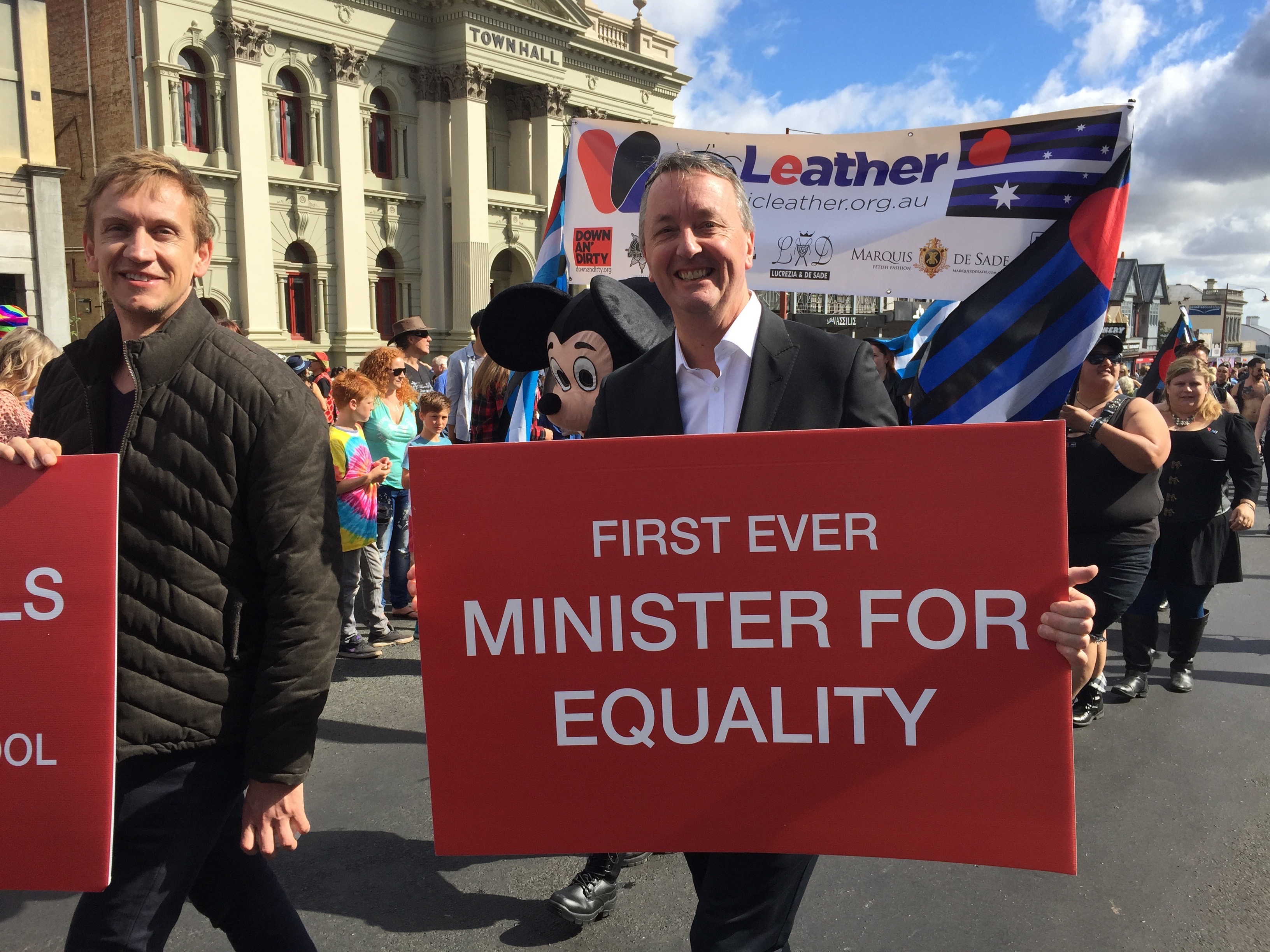
The Labor Party, which had unambiguously promised to repeal s 19A, was now in government, and one of the most pleasing things about the last five months has been seeing them stick to their guns around 19A. Seeing government ministers on gay pride day carrying a banner saying ‘repeal section 19A’ was amazing.

I think the key message from our experience is that if you have an opportunity and you plan well, you can make tremendous use of it. I realise most activists won’t have the luxury of having the international AIDS conference come to their city, but hopefully other opportunities exist where local and global attention can be used to highlight inequities in the law. Building collaborations and learning from what has worked elsewhere is vital, but develop a strategy that suits your local needs and capacities.

Don’t be deterred if others disagree with your strategy – I’ve lost count of the number of times I’ve been told that criminalisation isn’t a first-order issue, or that by advocating for change we risk ‘making things worse’, or that by advocating too hard we risk getting nothing in return and pushing the issue off the agenda.

Now that s 19A is gone, our work continues. We still need to address the unacceptably high number of prosecutions for ‘HIV endangerment’ that occur in Victoria. We strongly believe we have a model that will deliver the right public health outcomes while safeguarding the public, without the use of expensive, ineffective and highly stigmatising criminal prosecutions. With the repeal of section 19A, our state government has recommitted itself to a health-based response to HIV, and we believe that gives us the best possible platform to continue our campaign for prosecutorial guidelines.

Paul Kidd (@paulkidd) chairs the Victorian HIV Legal Working Group.

US: [Update] Texas HIV criminalisation bill defeated (link does not reflect this updated news)

The Texas State House is considering SB 779, a bill that would allow any HIV test results to be used in any criminal proceedings against a person with HIV in Texas. This bill is unnecessary – Texas law already allows law enforcement and public safety officials to conduct HIV testing on individuals when appropriate, but there are privacy measures to keep these tests confidential. This bill goes much further – HIV tests could be subpoenaed and used in any criminal proceeding.

HRC opposes this legislation because stigma against people with HIV may bias criminal proceedings, this may unfairly result in enhanced penalties, and of course, because it undermines medical privacy.

From a public health perspective, it is inadvisable and dangerous to create obstacles that might prevent people from seeking or receiving HIV tests. If this bill passes, having a positive HIV test result may be used to enhance penalties or foster bias in criminal proceedings, which creates an incentive for the public to avoid testing. Everyone deserves medical privacy.

SB 779 has already passed the Texas Senate, so this is our last chance to stop this bill from becoming law. Please, if you live in Texas, reach out to your state representative and urge them to oppose SB 779. HRC is also coordinating with state and local advocates to oppose this measure, which compromises the privacy of people living with HIV and public confidence in HIV testing.

US: HIV Criminalization Task Force being set up to challenge Florida's HIV-specific criminal law

On April 3, 2015, SFGN interviewed Tami Haught, Sero Project Criminalization Conference Coordinator to discuss the HIV Criminalization Task Force in Florida.

Could you define “HIV criminalization” for the readers of SFGN?

“HIV criminalization” is the wrongful use of HIV status in a criminal prosecution, even when transmission was unlikely or impossible (a condom was used, the PLWHA had an undetectable viral load, or the behavior posed no risk of transmission, such as in biting, scratching, or spitting).

In discussions of HIV criminalization, “intent” has a similar importance to “consent” in discussions of sexual behavior. Could you explain how important “intent” is in this discussion?

The lack of intent is much easier to prove than intentional transmission. The lack of intent can be proven if you are doing everything right, like so many people living with HIV are. You’re taking your medication, you’re virally suppressed, or you’re using protection. Those defenses show that you are not intentionally trying to transmit HIV, because you are protecting yourself and your partner by taking your medications and using protection. Any of this would indicate an interest in not transmitting the virus, but under current HIV criminalization law, using a condom, or adhering to a medication regimen are irrelevant.

These laws appear to be based on a “protectionist” model of sexuality rather than an empowerment model. Could you discuss how the “protectionist” model has the potential to harm the very people it’s supposed to benefit?

When people think of sexual protection, generally it’s women being protected from men. Women, however, go to the doctor more often, and are more likely to take the HIV test than men are. These laws only target people who have taken the test and gotten their results.

Men have used the threat of these laws to keep HIV positive women from leaving them. After a break up, people have filed complaints based on these laws as revenge.

Could you discuss how HIV criminalization has worked in Florida?

There have been 250 charges filed in Florida and 153 convictions in Florida from 1998 to 2012. So far, the project has not been able to get breakdowns by race, gender, or sexuality. Lambda Legal and the ACLU are involved in this project.

You’re in Florida to set up an HIV Criminalization Task Force. Can you describe what you hope that Task Force will do?

The task force should include diverse people willing to advocate but also to reach out to legislators in Tallahassee for the reform of these laws. Floridians need to decide on how you want your laws to be modernized and what your political reality is. There will come a time when Floridians have to determine what is the minimal change that you will accept.

We have to reach out to faith based communities, everyone. It is not an easy conversation to have. It often takes more than one conversation. We’re going to have to be ready for the long haul, be persistent, and never give up. Because it can be done, but it’s definitely not easy.

Is there anything else you would like to say to the readers of SFGN?

We need your voices. We need your stories. Not just to legislators but also to other community members. It is by touching people’s hearts that we can make a difference to change the law.

If people wanted to find out more about the Florida HIV Criminalization Task Force, how could they?

To get involved with the Florida HIV Criminalization Task Force, people can email me at tami.haught@seroproject.com and I can get you added to the google group.