AIDS 2026, the biennial global conference on all things HIV, closed on July 31 after a week of presentations on scientific advances (including twice-yearly lenacapavir and long-acting cabotegravir plus rilpivirine; advances in cure and vaccine research, with reports of sustained remission in the “Kansas City Patient”) and ongoing funding crises and key populations under threat, with anti-LGBTQ legislation in Uganda, Ghana, Senegal, and Côte d’Ivoire.
During the week, I attended more than a dozen sessions. As always, the most important conversations took place not only in formal sessions, but in the Global Village, in corridors, at community events, and over coffee. By the end of the week, I realised they all revolved around the same question: How do we build a movement capable of confronting an increasingly organised anti-rights agenda?
The question first crystallised for me during Wednesday’s session, Law, Power and Access: Overcoming barriers to HIV services. During the discussion I asked how we can overcome what increasingly feels like a successful “divide and rule” strategy. Across the world, the forces seeking to roll back human rights appear remarkably coordinated. They target communities already facing marginalisation—including people living with HIV, LGBTQ+ people, women, migrants, sex workers, and people who use drugs—as they always have. Reproductive rights, civil society, and scientific evidence are under fire as well, not as separate issues, but as part of a broader political project.
Meanwhile, those of us working to defend rights too often continue to organise ourselves in silos.
The same theme emerged again later that day during a conversation between Georgetown University’s Matthew Kavanagh and Mariângela Simão, who begins her role next week as the UN Special Rapporteur on the right to health. Simão spoke of the growing cohesion of anti-rights forces internationally, while Kavanagh posed what may be the defining question for the years ahead: what would it take to build an equally effective pro-rights force?
It struck me that this wasn’t simply another conference discussion; it was the thread connecting so many conversations throughout AIDS 2026.
The HIV movement knows better than most that progress has never come from science alone. Scientific breakthroughs have transformed HIV from a life-threatening diagnosis into a manageable condition and have given us extraordinary tools to prevent transmission. But while HIV itself may no longer be life-threatening for most people with access to treatment, the political environment has become increasingly rights-threatening. Evidence alone has never guaranteed equitable access, ended stigma or repealed punitive laws. Those achievements have always depended on organised communities, strategic advocacy, political leadership, and solidarity.
Throughout AIDS 2026 there were outstanding sessions on criminalisation, gender equality, community leadership, access to medicines, funding, and shrinking civic space. Each highlighted a different piece of the puzzle. Yet we still too often approach these as separate struggles, competing for scarce funding and political attention. Our opponents do not.
Anti-rights alliances reinforce each other
The anti-rights movement has spent decades building alliances across countries and political movements. It understands that attacks on LGBTQ+ rights, sexual and reproductive health and rights, gender equality, migrant rights, civil society, and science reinforce one another. Divide and rule is effective precisely because those defending rights are so often divided.
Another session that stayed with me was No retreat, no surrender: The future of philanthropy in HIV. Richard Borain of the Children’s Investment Fund Foundation (CIFF) argued that philanthropy’s greatest contribution is not simply funding projects but strengthening the “connective tissue” that brings together governments, communities, donors, and civil society around shared goals.
That phrase resonated with me. We have become very good at investing in programs, but less intentional about investing in the relationships, trust, and collaboration that allow organisations and movements to reinforce one another.
I was reminded of this again at the Robert Carr Fund’s celebration of 15 years of supporting global HIV and health movements. At a time when the Fund has faced an uncertain future following the withdrawal of support from both the United States and the Netherlands, there was welcome news: CIFF has joined as a new donor, while ViiV Healthcare announced a further year of support.
For more than a decade, the Robert Carr Fund has demonstrated a different model of philanthropy—trust-based, multi-year, flexible core funding combined with peer learning and movement building. The HIV Justice Global Consortium, which first united regional and global HIV criminalisation networks, was made possible through Robert Carr Fund support, and the HIV Justice Network remains proud to be one of its grantees.
Yet even within the Robert Carr Fund family there is greater potential to work across movements and constituencies. That is not a criticism of the Fund; rather, it reflects how deeply siloed our sector has become. If organisations already committed to rights-based approaches can collaborate more intentionally, imagine what could be achieved with greater investment in those connections.
The anti-rights movement invests in networks, long-term relationships, shared strategies, and patient coalition-building. We need to become equally serious about investing in the infrastructure of solidarity. AIDS 2026 made clear: our greatest challenge is no longer simply defending individual rights. It is building a movement capable of defending them together.
Edwin J Bernard is Executive Director of the HIV Justice Network and a global advocate for human rights and HIV justice.
Email:edwin@hivjustice.net
Image: Rogério von Krüger / IAS
The next phase of HIV decriminalisation: closing the translation gap
Last month, I wrote about the limits of relying on “U=U” as the primary message for HIV decriminalisation. In doing so, I also reflected on how “U=U” has transformed the lives of people living with HIV. Grounded in compelling science and amplified through years of advocacy, it has become a powerful message of hope, dignity and self-acceptance. Its success also demonstrates something broader: science changes lives only when it is translated into policy, practice and public understanding.
HIV criminalisation reminds us that translating science into justice remains unfinished. Forty-five years into the HIV epidemic, advances in HIV science have fundamentally transformed our understanding of transmission, treatment and prognosis. Yet people living with HIV continue to be investigated, prosecuted and imprisoned based on outdated assumptions about risk and harm.
This contradiction formed the basis of my presentation yesterday at AIDS 2026, the 26th International AIDS Conference in Rio de Janeiro. The question I posed was simple: Why does HIV criminalisation persist despite contemporary HIV science? The answer, I argued, lies in what I call the translation gap: the persistent failure – or refusal – to translate contemporary HIV science into law, policy and practice.
Scientific evidence does not change society on its own. It changes society only when institutions choose to translate it into legal standards, public policy and everyday practice. That process is never purely technical; it is shaped by politics, power and values.
The evidence for this is clear. Over the past decade, 50 jurisdictions across 28 countries have moved towards HIV decriminalisation through legislative reform, constitutional and supreme court decisions, and updated prosecutorial guidance. Together, these reforms demonstrate that when contemporary HIV science is effectively translated into law and policy, legal systems do change.
But progress has been highly uneven. In some parts of the world, reform has accelerated. In others, it has barely begun. At the same time, the HIV Justice Network’s Global HIV Criminalisation Database continues to document new prosecutions around the world, suggesting that the pace of reform has slowed.
The challenge facing the HIV justice movement has therefore evolved. In many countries, the problem is no longer simply HIV-specific criminal laws. Increasingly, criminalisation is sustained through the interaction of criminal law, public health systems, policing, politics, and stigma.
Our recent research illustrates this shift. In Uzbekistan, for example, HIV criminalisation often begins long before anyone enters a courtroom. Mandatory registration, public health surveillance, referrals from healthcare providers to law enforcement, and the use of medical records as evidence all demonstrate how healthcare systems themselves can become part of the machinery of criminalisation.
Recognising this changes what justice requires. Contemporary HIV science requires greater legal precision. Non-disclosure is not the same as intent. Perceived risk is not the same as actual risk. An allegation of HIV transmission is not proof of who transmitted HIV, and establishing the direction of transmission often requires scientific evidence that courts fail to consider or misinterpret. Even where harm has occurred, criminal punishment is not automatically the appropriate response.
But science alone cannot produce these changes. Translation depends on institutions that value evidence, independent courts, governments willing to act and civil society organisations able to advocate for reform. Increasingly, these conditions are being undermined by broader attacks on public health, human rights and democratic institutions.
This is where structural violence helps explain why the translation gap persists. Scientific evidence alone is insufficient because law does not operate independently of politics or power. Organised anti-rights movements have become increasingly influential in reshaping the political environments in which legal reform takes place. As civic space shrinks and scientific expertise is challenged, translating contemporary HIV science into law becomes increasingly difficult.
Yet communities continue to create pathways to justice. Even where legal reform is blocked, advocates document prosecutions, provide legal literacy and paralegal support, engage international human rights mechanisms, influence global health policy and support those living under punitive laws. Communities do not simply wait for the law to change; they continue creating opportunities for justice despite the obstacles they face.
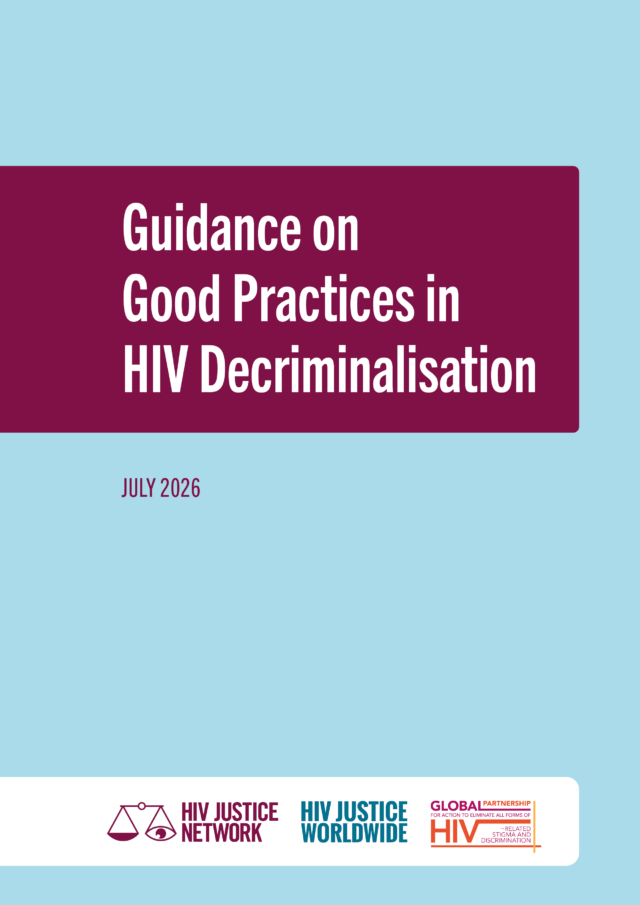
That is why the next phase of HIV decriminalisation is not simply about changing more laws. It is about closing the translation gap. Yesterday we launched the Guidance on Good Practices in HIV Decriminalisation. The Guidance brings together contemporary HIV science, legal expertise and the experience of communities around the world to support countries wherever they are on the journey towards HIV decriminalisation.
Closing the translation gap requires more than scientific evidence. It requires practical tools that help governments, courts, advocates and communities translate that evidence into action. The Guidance is designed to be one of those tools.
The success of “U=U” demonstrates what is possible when science is translated into practice. The persistence of HIV criminalisation demonstrates what happens when the translation of science into justice is resisted. Closing that translation gap is now the central challenge for HIV justice. The new Guidance is intended to help meet that challenge by helping ensure that science is translated into justice.
New global Guidance on HIV decriminalisation launched at AIDS 2026
The HIV Justice Network (HJN), on behalf of HIV JUSTICE WORLDWIDE (HJWW) and the Global Partnership for Action to Eliminate All Forms of HIV-related Stigma and Discrimination, today launched the Guidance on Good Practices in HIV Decriminalisation during a packed Global Village session at the 26th International AIDS Conference (AIDS 2026) in Rio de Janeiro.
Supported by UNAIDS, the Guidance is the first practical global resource to bring together more than three decades of community leadership, human rights standards, contemporary HIV science and real-world experience of advocacy, litigation and law reform into a single framework for action.
Opening the session, HJN Executive Director Edwin J Bernard described the Guidance as “a practical resource that we hope communities, advocates, lawyers, judges, policymakers and public health officials will actually use.”
Rather than presenting the publication chapter by chapter, the session demonstrated how it can support change in diverse legal and political contexts around the world.
Speakers included Janet Butler McPhee (HIV Legal Network), Svitlana Moroz (Eurasian Women’s Network on AIDS), Immaculate Owomugisha Bazare (Centre for Women Justice Uganda) and Sofía Várguez Villanueva (HIV Justice Network), who shared examples of community advocacy, legal reform, strategic litigation, work in restrictive legal environments and practical advocacy tools.
Although more than 80 countries continue to maintain HIV-specific criminal laws and prosecutions also occur under general criminal laws, the Guidance reflects growing evidence that communities can successfully challenge punitive approaches. Around the world, advocates have helped repeal or modernise laws, influenced courts and prosecutors to apply contemporary HIV science, and promoted rights-based public health responses.
“The HIV justice movement has reached an important milestone,” Bernard said. “For the first time, we’ve accumulated enough experience from around the world to identify what good practice actually looks like. This Guidance brings together what communities have learned over decades, so others don’t have to start from scratch.”
Designed for advocates, lawyers, judges, prosecutors, policymakers, public health officials and community organisations, the Guidance recognises that every country starts from a different place and that reform is rarely linear. Rather than prescribing a single model, it offers practical approaches that can be adapted to different legal, political and cultural contexts.
HIV Justice Network at AIDS 2026: new research, practical tools and global advocacy for HIV justice
The HIV Justice Network (HJN) team will be participating in the 26th International AIDS Conference (AIDS 2026) in Rio de Janeiro, Brazil, where we will showcase new research, launch an important new global resource, facilitate community dialogue, and connect with partners from around the world.
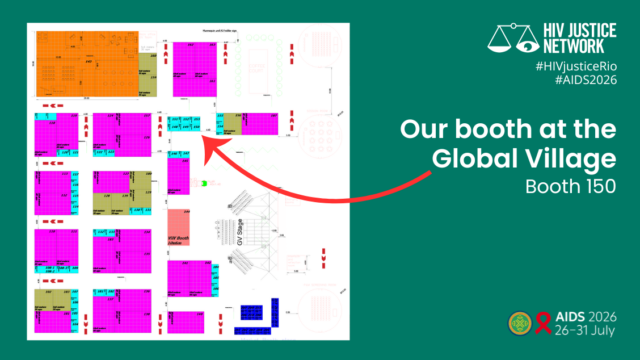
Throughout the conference, visit us in the Global Village to explore our work, meet the team, and discover practical tools supporting HIV justice.
Visit the HIV Justice Network booth
Global Village | Monday 27 – Thursday 30 July
Our interactive booth will feature:
the Global HIV Criminalisation Database
the HIV Justice Academy
Positive Destinations, our platform addressing HIV-related travel and migration restrictions
practical tools and resources to support advocacy, legal reform and community action against HIV criminalisation
Meet members of the HIV Justice Network team, learn about our latest projects, and discover how you can contribute to global efforts to end HIV criminalisation and HIV-related travel restrictions.
Whether you are an activist, researcher, lawyer, healthcare provider, policymaker or funder, we would love to meet you and discuss opportunities for collaboration.
Launching the Guidance on Good Practices in HIV Decriminalisation
Thursday 30 July | 10:45–11:45 | Global Village
One of the highlights of our week will be the official launch of the Guidance on Good Practices in HIV Decriminalisation, developed by HJN on behalf of HIV JUSTICE WORLDWIDE and the Global Partnership for Action to Eliminate All Forms of HIV-Related Stigma and Discrimination, with support from UNAIDS.
This practical session will introduce advocacy resources, legal literacy tools and community-led strategies that can help challenge HIV criminalisation around the world.
Speakers include Edwin Bernard, Janet Butler McPhee, Isis Tapia, Svitlana Moroz, Sofía Várguez and Immaculate Owomugisha Bazare.
HJN represented in AIDS 2026 plenary
Thursday 30 July | Morning plenary
HIV Justice Network is also proud to see Immaculate Owomugisha Bazare, a member of our Supervisory Board and Executive Director of the Centre for Women Justice Uganda, featured in one of AIDS 2026’s flagship plenary sessions.
Immaculate will speak on “Justice, rights and HIV: Building resilient legal frameworks”, bringing her expertise as a lawyer, advocate and leader in advancing HIV justice and gender equality. Her participation highlights the growing recognition that ending HIV criminalisation and other punitive laws is essential to an effective, rights-based HIV response.
Breastfeeding is not a crime!
Wednesday 29 July | 16:30–18:00 | Global Village
HJN’s Alison Symington will lead an interactive workshop, in partnership with ICW Global, exploring criminalisation and other punitive responses to women living with HIV who breastfeed.
The workshop will bring together advocates, researchers and clinicians to contribute to a growing global consensus supporting rights-based, evidence-informed approaches grounded in bodily autonomy and informed choice.
Presenting new research
HJN team members will present four abstracts during AIDS 2026.
Oral presentation
Thursday 30 July | 16:30–17:30 | Room 203
Edwin Bernard HIV criminalisation as structural violence: science, geopolitics and community-led pathways to justice
Drawing on new global data, this presentation argues that HIV criminalisation persists because of structural violence embedded within legal, political and funding systems. It explores how community-led advocacy is helping to close the gap between science and the law.
Poster presentations
Wednesday 29 July | 12:15–13:15
Sylvie Beaumont – From the doctor’s office to the jail cell: system reforms to protect care, confidentiality and prevention in the context of HIV criminalisation.
Edwin Bernard – Science, rights, and HIV on trial: is rising HIV criminalisation part of a global anti-science/anti-rights resurgence?
Sofía’s poster has been selected for the Track F Featured Poster Walk, where invited presenters will give short presentations and discuss their work with conference delegates.
Follow us from Rio
We’ll be sharing highlights, photos, videos and key messages throughout the conference across our website and social media channels.
Whether you’re attending AIDS 2026 in person or following from elsewhere, we hope you’ll join us as we continue working towards a world where HIV criminalisation is consigned to history.
US: Arkansas’s outdated HIV laws fuel fear and deter people from getting tested and treated
Advocates call on Arkansas lawmakers to decriminalize HIV, fund treatment and prevention
As Arkansas tops another terrible list, this time as the state with the highest rate of HIV transmission, advocates are calling on Arkansas lawmakers to decriminalize the sexually transmitted disease and commit funding for prevention, treatment and education.
A coalition of people from community organizations including Central Arkansas Pride, Arkansas Rapps, Intransitive, Arkansas Black Gay Men’s Forum and Arkansas Queer Men United, along with several people living with undetectable HIV, gathered in the Old Supreme Court Room in the State Capitol before several Democratic state representatives on Monday.
Advocates argued that Arkansas’s HIV laws, which haven’t been updated since the 1980s, are outdated and create a culture of fear that prevents people from getting tested and treated for HIV. They asked lawmakers to commit $1.5 million from the state’s surplus of more than $367 million to HIV prevention, treatment and education.
Under Arkansas law, knowingly exposing another person to HIV is a Class A felony, punishable by up to 30 years in prison and a fine of up to $15,000. But critics like the Center for HIV Law and Policy say these woefully outdated laws are out of step with modern science, rooted in stigma and punish behavior that carries no or negligible risk of actually transmitting the disease.
With proper treatment, HIV can become undetectable in a person, meaning it can’t be transmitted to another person through sex, but Arkansas law doesn’t account for this.
“HIV criminalization laws like ours here in Arkansas are opposed by public health and national justice experts such as the National Alliance of State and Territorial AIDS Directors and the National Association of Criminal Defense Lawyers,” said Tian Estell, policy director of Intransitive. “We need to modernize and stop punishing people for having a virus.”
Tian added that “Black, transgender and non-binary individuals in the South are disproportionately impacted by HIV” due to other contributing factors like lack of housing, transportation and employment and limited or no access to healthcare.
“Discriminatory policies also generate and enhance stigma and fear, creating barriers to prevention and care,” Tian said. “Intransitive serves transgender people and migrants, and we’ve seen a rise in fear associated with HIV testing and disclosure of positive status”
HIV is a larger problem in Arkansas than in most states, and advocates argue our laws are only making it worse.
In 2019, the federal Health and Human Services Department started an initiative to end the HIV epidemic by 2030, identifying Arkansas as one of seven priority states where the burden of HIV is the highest.
“Arkansas continues to see new HIV diagnoses each year. In fact, Arkansas ranked number one in the highest increase of new HIV cases, seeing a roughly 67% spike since 2018,” said Raheem White, program director for Arkansas Rapps. “The burden does not fall equally. Black communities tend to carry a higher share of these diagnoses. Central Arkansas and parts of Northwest Arkansas show higher impact, while rural areas face a different challenge with fewer services and longer distances to care.”
Tommy Sproles, a community outreach organizer for Arkansas Rapps, said those numbers may not be representative of the full scope of cases in Arkansas, especially in rural areas.
“It’s a concern of ours that the numbers do not accurately reflect the real life experiences within those other parts of the state, such as the rural areas where we think that the numbers would be higher, but they’re going under-reported because of the lack of testing in those areas,” Sproles said. “As we’re talking about the data that we receive, what we’re basing our stuff on is the data that the Arkansas Department of Health actually receives, but that doesn’t even cover the full scope of everyone who is testing, if you’re not a clinic or a subcontractor for the Arkansas Department of Health, that data is not even being accumulated.”
Arkansas Rapps, for example, uses telehealth to connect people in Arkansas with testing, medication and preventative medicine like PrEP, which is up to 99% effective at preventing the transmission of HIV.
Advocates said criminalizing HIV and not funding its prevention costs Arkansas millions of dollars in both healthcare and incarceration.
“Pulaski County has the highest rate of HIV-criminalization arrests, with most other counties having only one or no arrests. This not only speaks to a disproportionate application of the law, but a significant waste of resources,” said Amber Kincade, a comprehensive prevention specialist with Engaging Arkansas Communities.
“According to data from the Arkansas Department of Corrections, from 2007 to 2023 the average sentence per count for the HIV-related convictions was 24 years. According to the fiscal year 25 Inmate Cost Report, the cost per incarcerated person a day was $74.46, which was a $4.03 increase from 2024. This means that a sentence of 24 years would cost the state roughly $652,272,” Kincade said. “The lifetime cost of treating HIV is estimated to be over $500,000. Therefore, for one case of a person living with HIV receiving such a sentencing, the cost will be over $1 million.”
Kincade added that Texas decriminalized HIV in 1994 and increased public health funding for prevention and testing.
“Texas has saved an estimated $500,000 in lifetime cost per case in HIV treatment,” Kincade said.
Sanjay Johnson, a man living with undetectable HIV, told lawmakers he was prosecuted in Pulaski County for knowingly transmitting HIV, despite the virus being undetectable in his system, in 2017.
“The language itself is damaging, because with that, people think that transmission actually occurred, which in my case was not the case. It never occurred at all,” Johnson said.
Johnson’s case lasted two years, and his lawyer got the charge reduced from a felony to aggravated assault with five years of probation. That’s despite Johnson’s medical records, which said he was undetectable, being shown in court, he said.
“You wonder why HIV is the only STD that someone can be charged for. Not gonorrhea, chlamydia, herpes, etc, etc. HIV is the only sexually transmitted disease that can be criminalized here,” Johnson said.
New Zealand: New research reveals how HIV criminalisation is experienced in Aotearoa
HIV decriminalisation in Aotearoa: Survey findings
For the first time in Aotearoa New Zealand, we have national evidence on how HIV criminalisation is experienced by people living with HIV.
This research captures the voices of 247 people from diverse communities across the country. It documents how criminal law, public health processes, stigma, and modern HIV science intersect in real life. The project was undertaken collaboratively by Positive Women Inc, Burnett Foundation Aotearoa, Body Positive, and Toitū te Ao, reflecting the shared commitment of all four organisations to amplifying community experiences and informing meaningful change.
The findings highlight the need for greater clarity, alignment with contemporary science, and thoughtful public conversation.
About the research
This study explores:
Awareness and understanding of criminal and public health law
Attitudes toward HIV criminalisation
The lived impact of legal uncertainty
The role of stigma in shaping legal and social outcomes
Recommendations informed by participant experience
Participants represented a wide range of ages, genders, sexualities, ethnicities, migration histories, and lengths of time living with HIV.
This research centers lived experience while grounding analysis in contemporary HIV science, including the evidence behind U=U (Undetectable = Untransmittable).
Key findings
1. Preference for public health management
Most participants would prefer public health manage their HIV transmission rather than the police – because HIV is a health issue, not a crime.
2. Attitudes are nuanced
Participants held diverse and layered views about criminalisation. Support was often linked to cases of intentional harm, while broader criminalisation raised concerns about fairness, stigma, and unintended consequences.
3. Impact extends beyond prosecutions
Even where prosecutions are rare, the possibility of criminalisation shapes behaviour, disclosure practices, relationships, and wellbeing.
4. Stigma remains central
Legal frameworks do not exist in isolation. Participants described how stigma around HIV influences both public perception and perceived legal risk.
Why this matters
Effective HIV responses must reflect:
Modern treatment science
Public health best practice
Human rights principles
The lived experience of people living with HIV
Clear, evidence-informed discussion is essential to ensuring legal and policy settings support – rather than undermine – public health outcomes.
Recommendations
The report identifies areas for consideration, including:
Clearer, accessible legal guidance
Greater alignment between law and contemporary HIV science
Stigma reduction through public education
Meaningful involvement of people living with HIV in future policy conversations
What happens next
Positive Women Inc, Burnett Foundation Aotearoa, Body Positive, and Toitū te Ao will:
Share these findings across health, legal, and policy sectors
Engage stakeholders in informed discussion
Continue centering lived experience in advocacy and education
Support accurate public understanding of HIV and the law
This report is a foundation for evidence-based dialogue in Aotearoa.
In Senegal, people have been incriminated for their homosexuality and accused of HIV transmission. These arrests follow the announcement by Prime Minister Ousmane Sonko of the tightening of the law penalizing “unnatural acts”. Since these arrests, the actors in the fight against AIDS have seen a decrease in attendance at screening centers.
“Arrest for homosexuality: serious cases of unnatural acts with voluntary transmission of HIV/AIDS,” headlined the Senegalese daily Les Échos, on February 9. About thirty people have been accused of transmitting HIV and incriminated for their homosexuality, which is prohibited by law. The Senegalese government has just toughened this legislation on February 24. These arrests frighten patients with the virus, who no longer go to the Dakar screening center.
“Patients are afraid of being arrested and stigmatized,” explains Dr. Rassoul Diouf, at Fane Hospital, one of Senegal’s main health centers. Usually, this facility welcomes dozens of patients daily for HIV testing and monitoring. But in recent weeks, Dr. Rassoul Diouf has seen a significant drop in consultations.”The convocations for appointments are difficult to happen. We call them but there is reluctance,” he explains to TV5MONDE.
Breach of medical confidentiality
For the actors in the fight against AIDS, this disclosure constitutes a “violation of medical confidentiality“. The National AIDS Council recalls that a law in Senegal protects the identity of people with HIV.
“On an ethical level, this is not normal, but even less on a legal level,” says Dr. Safiatou Thiam, executive secretary of the National Council for the fight against AIDS. “HIV has the particularity of being framed by a law that prohibits the disclosure of people’s status. We do not know how or by what process medical results ended up in the public square,” she explains to TV5MONDE.
Misinformation and confusion about HIV transmission
Actors in the fight against AIDS also deplore confusion about the modes of transmission of the virus. However, Senegal has long been cited as an example for the means put in place to fight HIV. Since the end of the 1990s, the country made treatments accessible. “At the beginning of the epidemic [of HIV, ed.], many countries refused to recognize its existence. But Senegal said: not only does HIV exist, but I will treat it,” explains Dr. Khoudia Sow, doctor and anthropologist.
“When a person follows his treatment properly, he becomes undetectable and can no longer transmit the virus. On the other hand, if these people interrupt their treatment for fear of stigmatization, the risk is that in the short term new transmissions will appear,” she confides. Currently, the HIV prevalence rate in Senegal is estimated at 0.3%, one of the lowest in the region. However, if patients stop taking their treatment, for fear of stigma, this rate could increase in Senegal.
US: HIV criminalisation laws expose Black Americans to disproportionate arrest and prosecution rates
“Look at who’s in political control”: How HIV disclosure laws are steeped in racial bias
HIV criminalization arose in an atmosphere of fearful ignorance, disproportionately harming Black men. But activists are fighting back.
Today, 32 states have laws that criminalize people living with HIV (PLWH). These laws expose PLWH to the risk of prosecution and incarceration for engaging in consensual sexual activity while not disclosing their status. Of those states, 28 enhance criminal penalties based on an individual’s knowledge of their HIV status. In many of these states, arrests and convictions due to HIV criminalization disproportionately impact Black populations, because HIV disproportionately impacts Black populations.
A new study of 16 states by the Williams Institute shows Black Americans are more likely than any other race to be arrested and convicted for HIV-related allegations, and were arrested for HIV-related crimes at higher rates than their overall share of the population. In 64% of the states analyzed, Black Americans faced higher rates of arrest than their share of PLWH in the state. In 75% of the states, Black Americans were convicted at higher rates than their share of PLWH in the state.
Legislation criminalizing the transmission of HIV started in the 1980s, in response to events largely fueled by fear that the AIDS epidemic — which at the time was perceived as gay men’s disease, and was originally called Gay Related Immunodeficiency Syndrome (GRID) — would spread to heterosexuals. In 1987, Ronald Reagan’s Presidential Commission on the HIV Epidemic recommended that states adopt HIV-specific laws in response to rising infection rates among gay men, based on the belief that existing assault laws were too lenient to serve as a deterrent.
In 1990, the Ryan White Comprehensive AIDS Resource Emergency (CARE) Act was enacted, providing funding to states on the condition that their criminal laws addressed intentional HIV exposure and transmission.
Subsequently, flurries of punitive legislation arose amid highly publicized, sensationalized cases involving young Black men, such as that of Nushawn Williams in the late 1990s. Accused of having sex with younger women while HIV-positive, Williams pleaded guilty to reckless endangerment and statutory rape and was sentenced to 12 years in prison. He remains imprisoned after serving his sentence because the New York attorney general initiated involuntary civil commitment proceedings against him just days before his release.
“Available research confirms what we knew back then — criminal laws do not reduce HIV transmission or the behavior that causes it,” says Catherine Hanssens, the founding executive director of The Center for HIV Law and Policy.
Robert Suttle, an HIV criminalization policy expert, tells LGBTQ Nation that these laws became more about control than prevention. “HIV criminalization became a proxy to control certain populations — queer people, sex workers — especially to stop people diagnosed with HIV from having sex,” says Sutter. “It’s never worked.”
Not only do HIV criminalization laws, conceived at a time when an HIV diagnosis was essentially considered a death sentence, fail as preventative measures, but they also eliminate burdens of proof and intent to do harm, which are required under criminal law.
Most of these laws only require simple exposure with the failure to disclose HIV status. Most state laws don’t require evidence of transmission or intent to harm. Several target interactions in which spit and other bodily fluids come into contact with law enforcement, correctional employees, and first responders, criminalizing behavior that has no chance of transmitting HIV.
Again, these laws — which have stood for decades — reflect a time when little was known about how HIV was spread, and a diagnosis was considered fatal.
Black bodies on trial: The case of “Tiger Mandingo”
The case of Michael Johnson, also known by his screen name “Tiger Mandingo,” illustrates many of the problems with HIV-criminalization laws and how they intersect with the historic policing of Black Americans.
Johnson, a Black gay wrestler at Linwood University in St. Charles, Missouri, was arrested in 2013 for not disclosing his HIV-positive status to six former male sex partners, four of whom were white. At the time, Missouri’s law required PLWH to inform their partners of their status, regardless of safe-sex practices. The law did not require intent to transmit or actual transmission of HIV, but only that a person was aware of their status and unable to prove that they informed their partners before engaging in sex.
Johnson faced a stacked deck before his trial even started. Of the 51 potential jurors, only one was non-white. Half said they believed being gay was a choice, and two-thirds believed it was a sin. All were straight, HIV-negative, and believed that PLWH who do not disclose to their partners deserved to be prosecuted. The final jury consisted of four white men, seven white women, and one retired Black nurse. Most of the jurors appeared to be in their 50s or 60s.
Several discrepancies arose during Johnson’s trial. Johnson maintained that he disclosed his status and that all of his partners engaged in consensual sex without condoms. Each of his partners testified that they’d asked if he was “clean” or STD-free, and that he’d assured them that he was. This contradicted what they initially told police. But the jury never heard of these discrepancies, either because his defense attorney failed to raise them or because she was overruled when she did.
Telling people that they are a potential criminal based only on a diagnosed health condition is harmful, particularly to people who have been told for centuries that they are not worthy of equal treatment under the law based on race, sexual orientation, or gender identity.”
Catherine Hanssens, executive director of The Center for HIV Law and Policy.
One partner testified that Johnson had actually infected him, but told the police he’d told Johnson he was HIV-positive when he met him. No genetic evidence linked Johnson’s strain of HIV to the virus in the other men, suggesting that they may have contracted it from someone else.
The prosecution employed stereotypical tropes. Images of Johnson’s penis — from a sex video made with one of his partners — were shown to the nearly all-white, all heterosexual, HIV-negative jury, literally criminalizing his “contagious” Black body, and reducing him to his sex organ, described in graphic, lurid detail in police reports and on the witness stand as “very large” and “too tight” for condoms.
In 2015, the jury sentenced him to 30 years for transmitting HIV without disclosure to six former sexual partners, and 30.5 years for exposing four others without disclosure, for a total of 60.5 years — a longer sentence than many convicted of involuntary manslaughter. The judge ultimately reduced the sentence to 30 years.
However, Johnson served only a fraction of his sentence. His conviction was overturned in December 2016 due to egregious prosecutorial misconduct. Johnson accepted a plea deal and was released from prison on July 7, 2019.
In 2021, Missouri reformed its HIV-criminalization law, downgrading “reckless exposure” of someone to HIV from a Class B felony to a Class D felony. Moving away from the AIDS panic of the 1980s, the law applies to all “serious infections and communicable diseases,” instead of singling out HIV. Prosecutors must now prove someone “knowingly” exposed someone to HIV.
Policing Black bodies in a culture of fear
While HIV criminalization laws were originally targeted at gay men, they represent a small number of actual arrests.
“Based on the best data available, women of color who are sex workers and Black men targeted by police or those currently incarcerated make up most of the arrests and convictions,” Hanssen says.
Hanssen also describes how HIV criminalization laws don’t necessarily impact transmission, but may discourage vulnerable communities from accessing essential resources. “As I’ve suggested, laws based on myths and misconceptions surrounding HIV will perpetuate HIV stigma,” Hanssen said.
HIV-related stigma creates real obstacles for PLWH. The behaviors often associated with acquiring HIV — such as being gay or using intravenous drugs — are still stigmatized, and confirming or disclosing one’s HIV status is still widely perceived as socially dangerous. HIV-related stigma can discourage testing and prevention practices. Individuals may fear confirming their HIV status, let alone accessing education about transmission and prevention. HIV criminalization laws increase those fears.
“But look at who’s in political control — and who controls public health and the legal system. Those systems get off the hook by shifting blame to individuals. Instead of investing money into prevention, education, and awareness, they criminalize people.”
Robert Suttle, an HIV criminalization policy expert
“Telling a newly diagnosed person they will be prosecuted as a felon if they expose another person to HIV may not discourage them from having sex,” she said, “but it might discourage them from entering and staying in health care, particularly when medical mistrust is already so high among the vulnerable populations targeted by these laws.”
This is especially true for Black Americans, among whom medical mistrust may be a deeply rooted reaction to historical exploitation by incidents like the Tuskegee experiment and ongoing systemic racism.
Suttle explains how these laws cause particular harm to Black LGBTQ+ people by creating a culture of fear. “Is the public health system or legal system helping the people they claim to protect?” he asks, “The evidence shows they’re doing more harm than good.”
“For Black people — especially Black LGBTQ+ people — HIV isn’t just a medical condition,” he says. “It’s shaped by laws, policies, and institutions that operate from a culture of fear rather than science, and from control rather than care.”
Hanssen echoes Suttle, saying, “Telling people that they are a potential criminal based only on a diagnosed health condition is harmful, particularly to people who have been told for centuries that they are not worthy of equal treatment under the law based on race, sexual orientation, or gender identity.”
“There is now plenty of evidence demonstrating how HIV criminal laws increase stigma,” says Catherine Hanssens. “These laws create a uniquely harmful, un-American legal standard and produce felony penalties rooted in lack of knowledge about HIV transmission – that alone is enough to demand their repeal.”
California and Washington State have made the biggest changes. Now, both states require proof that someone intended to transmit HIV or actually did so before they can be convicted. They have also removed most laws that made exposure to HIV or other diseases a crime, except in some cases involving sex offenders. Intentional transmission is now a misdemeanor in California, with a maximum sentence of six months, or in Washington State, 30 days.
By comparison:
North Carolina still connects criminal liability to viral load and engagement in care.
Iowa eliminated its sex offender registry requirement and tightened up intent requirements, but added “recklessness” as a standard for liability.
Virginia reformed its bill, but retains felony-level offenses.
Beyond reforms to state laws, Suttle suggests a paradigm shift away from focusing on individuals and toward the legal and justice systems is necessary for effective change.
“In an individualistic society, if HIV is happening, it’s treated like we [PLWH] caused it,” he says. “But no single individual can cause an epidemic. Instead of addressing external factors — poverty, lack of education, lack of access to healthcare — systems punish individuals. Those conditions are by design, not because people ‘created’ HIV.”
“But look at who’s in political control — and who controls public health and the legal system. Those systems get off the hook by shifting blame to individuals. Instead of investing money into prevention, education, and awareness, they criminalize people.”
“For Black LGBTQ communities, this is a matter of survival,” Suttle says. “HIV in America today isn’t simply defined by medicine. It’s defined by whether laws and institutions will catch up with science, provide equity, and understand the reality we’re living in.”
Subscribe to the LGBTQ Nation newsletter and be the first to know about the latest headlines shaping LGBTQ+ communities worldwide.
Terrance Heath is a longtime LGBT equality activist, writer, and award winning blogger. He lives in Chevy Chase, Maryland, with his two sons.
US: Report from the Williams Institute examines how HIV stigma contributes to HIV criminalisation
HIV stigma is pervasive and increasing among US adults
This study uses data from the nationally representative General Social Survey to assess the prevalence of HIV stigma in the U.S. and examine the ways HIV stigma contributes to the criminalisation of people living with HIV.
Today, U.S. Representative Mark Pocan (WI-02), Chair of the HIV/AIDS Caucus, introduced the HIV Is Not a Crime Awareness Day resolution,which recognizes nationwide February 28 as “HIV Is Not a Crime Awareness Day.” This is a call to action to end the criminalization of people living with HIV and to promote science-based public health policy.
“In 2026, it should not be a crime to live with HIV, but in nearly 3/4ths of the states, there are still HIV-specific exposure or transmission laws, and more than half of the states impose enhanced criminal penalties based solely on a person’s HIV status. That is wrong. It’s long past time to remove the stigma of HIV/AIDS. This resolution will encourage the repeal of outdated laws, promote medically accurate HIV education, and support increased funding for prevention, treatment, and care. Having a disease should not be a crime. Plain and simple.”
Co-sponsors include: Mark Pocan (WI-02), Steve Cohen (TN-09), Danny Davis (IL-07), Josh Gottheimer (NJ-05), LaMonica McIver (NJ-10), Gwen Moore (WI-04), Eleanor Holmes Norton (DC), Delia Ramirez (IL-03), Mark Takano (CA-39), Bonnie Watson Coleman (NJ-12)
Endorsing organizations include: Advocates for Youth, AIDS United, ANEA Coalition, Center for Health Law and Policy Innovation, Equality Federation, Health Not Prisons Collective, HIV Medicine Association, HIV+Hepatitis Policy Institute, National Working Positive Coalition, National Working Positive Coalition, PWN-NYS, Ribbon-A Center of Excellence, SAGE, Save HIV Funding Campaign, SIECUS: Sex Ed for Social Change, Strategies for High Impact, The Elizabeth Taylor AIDS Foundation, U.S. People Living with HIV Caucus, ALINT Consulting, Association of Nurses in AIDS Care, Florida National Organization for Women, Miss Trans Star National, NASTAD, NHAAN, NMAC, Positive Women’s Network-USA, PrEP4All, Pwn-Pa, RiseUpToHIV, SisterReach, The 6:52 Project Foundation, The Center for HIV Law and Policy, The Sero Project, The Well Project, Treatment Action Group, Women’s Health & Evolutionary Wellness, AIDS Foundation Chicago, Colorado Organizations and Individuals Responding to HIV/AIDS (CORA), Health Not Handcuffs Alliance – SC, HIV Modernization Movement-Indiana, Louisiana Coalition on Criminalization and Health, Maryland Network Against Domestic Violence, Positive Iowans Taking Charge, TENT, Vivent Health, Vivent Health, We the Positive Network/My Brother’s Keeper, Equality California, Silver State Equality, AIDS Foundation Chicago, Arianna’s Place, Five Horizons Health Services, ACT UP Cleveland, CareSouth Carolina (Care Innovations), Posada Strategy Consulting
You can select your preferred language from the 'Select Language' menu at the top of the page.
Continue
We use cookies to ensure that we give you the best experience on our website. By continuing to use our site, you are agreeing to our use of cookies. You can change your cookie settings at any time if you want. Find out more in our Privacy & Cookie Policy.