New global Guidance on HIV decriminalisation launched at AIDS 2026

Community-led resource distils more than 30 years of global experience into practical action for advocates, policymakers and justice systems

Download the Guidance here

The HIV Justice Network (HJN), on behalf of HIV JUSTICE WORLDWIDE (HJWW) and the Global Partnership for Action to Eliminate All Forms of HIV-related Stigma and Discrimination, today launched the Guidance on Good Practices in HIV Decriminalisation during a packed Global Village session at the 26th International AIDS Conference (AIDS 2026) in Rio de Janeiro.

Supported by UNAIDS, the Guidance is the first practical global resource to bring together more than three decades of community leadership, human rights standards, contemporary HIV science and real-world experience of advocacy, litigation and law reform into a single framework for action.

Opening the session, HJN Executive Director Edwin J Bernard described the Guidance as “a practical resource that we hope communities, advocates, lawyers, judges, policymakers and public health officials will actually use.”

Rather than presenting the publication chapter by chapter, the session demonstrated how it can support change in diverse legal and political contexts around the world.

Speakers included Janet Butler McPhee (HIV Legal Network), Svitlana Moroz (Eurasian Women’s Network on AIDS), Immaculate Owomugisha Bazare (Centre for Women Justice Uganda) and Sofía Várguez Villanueva (HIV Justice Network), who shared examples of community advocacy, legal reform, strategic litigation, work in restrictive legal environments and practical advocacy tools.

Although more than 80 countries continue to maintain HIV-specific criminal laws and prosecutions also occur under general criminal laws, the Guidance reflects growing evidence that communities can successfully challenge punitive approaches. Around the world, advocates have helped repeal or modernise laws, influenced courts and prosecutors to apply contemporary HIV science, and promoted rights-based public health responses.

“The HIV justice movement has reached an important milestone,” Bernard said. “For the first time, we’ve accumulated enough experience from around the world to identify what good practice actually looks like. This Guidance brings together what communities have learned over decades, so others don’t have to start from scratch.”

Designed for advocates, lawyers, judges, prosecutors, policymakers, public health officials and community organisations, the Guidance recognises that every country starts from a different place and that reform is rarely linear. Rather than prescribing a single model, it offers practical approaches that can be adapted to different legal, political and cultural contexts.


New analysis finds HIV travel restrictions are shifting from border bans to hidden migration barriers as global progress stalls

Research presented by the HIV Justice Network at AIDS 2026 reveals that HIV-related travel restrictions are no longer disappearing, but instead they are evolving. Updated global data show that 49 jurisdictions continue to impose HIV-related migration restrictions, with many now embedded in immigration systems rather than explicit entry bans, raising concerns that decades of progress may be stalling or even reversing.

Despite decades of advocacy and major victories in dismantling HIV-related travel restrictions, our latest analysis shows that discriminatory barriers continue to affect people living with HIV who wish to travel, work, study or settle abroad. Rather than relying on explicit HIV entry bans, many governments now embed HIV-related restrictions within broader immigration, labour and public administration systems, making them less visible, and often more difficult to challenge.

Our poster, Positive destinations or persistent barriers? Rethinking HIV-related travel restrictions, presented today at the 26th International AIDS Conference (AIDS 2026) in Rio de Janeiro, draws on three decades of data and lived-experience reports to examine how HIV-related migration restrictions have evolved and why progress has slowed.

The updated analysis identifies 33 countries maintaining partial HIV-related restrictions and a further 16 enforcing severe restrictions. While some countries have formally repealed HIV-specific entry bans, many continue to impose barriers through medical inadmissibility assessments, employment-related health screening, visa requirements, healthcare access rules and other administrative decision-making processes affecting long-term residence.

“The nature of HIV-related travel restrictions has fundamentally changed,” said lead author Sofía Várguez Villanueva. “Governments rarely claim these measures protect public health anymore. Instead, HIV has become embedded within broader systems of migration governance, making discrimination less obvious but often much harder to identify and challenge.”

Our analysis also traces the remarkable advocacy successes that led to the repeal of many HIV-related travel restrictions between 2008 and 2014. Coordinated community advocacy, political leadership and multilateral pressure helped persuade countries including China and the United States to remove their HIV entry bans. International AIDS Conferences also played an important role, most notably when the 1992 conference was moved from Boston to Amsterdam because of the US travel ban, demonstrating that discriminatory policies could carry significant political and economic consequences.

However, we conclude that this momentum has largely stalled. Recent developments – including expanded medical examination and registration requirements for many foreign nationals in the Russian Federation – illustrate how HIV-related restrictions are increasingly being reinforced through immigration systems rather than overt HIV-specific laws.

The research identifies several broader political trends driving this shift, including growing anti-migrant sentiment, increasing appeals to national sovereignty, weakening commitment to multilateral institutions, competing global health priorities following Ebola, Zika and COVID-19, and an increasing willingness by governments to ignore established public health evidence when designing border and migration policies.

The research draws on data from Positive Destinations, the HIV Justice Network’s information and advocacy platform on travelling and relocating with HIV. Building on more than three decades of monitoring, the platform tracks legal and policy developments affecting the mobility of people living with HIV and provides practical information on travel and migration worldwide.

Our findings suggest that future advocacy must move beyond rebutting outdated public health arguments and engage more directly with migration governance, administrative decision-making and broader debates about mobility, inclusion and belonging. They also highlight the continuing need for robust monitoring of HIV-related travel restrictions to ensure discriminatory policies do not simply disappear from view as they become embedded within wider immigration systems.

Download THPEF618 Positive destinations or persistence barriers? Rethinking HIV-related travel restrictions

New data presented at AIDS 2026 reveal renewed rise in HIV criminalisation amid global anti-rights backlash

HIV criminalisation is increasing again after several years of decline, with prosecutions continuing to ignore established scientific evidence and disproportionately targeting already marginalised communities, according to new research presented today at the 26th International AIDS Conference (AIDS 2026).

The analysis examined 115 database entries covering 150 reported HIV criminalisation cases documented between 1 June 2025 and 15 June 2026. We conclude that these findings reflect not only failures to apply contemporary HIV science but also a broader global resurgence of anti-science and anti-rights politics.

The data show a clear upward trend in reported cases since 2022. By mid-June 2026, 93 reported cases had already been documented, exceeding the total annual cases recorded during both 2023 (70) and 2024 (86), although still below pre-COVID-19 pandemic levels.

“Our findings suggest that science, rights and HIV are increasingly being put on trial together,” said Edwin J Bernard, Executive Director of the HIV Justice Network, who presented the findings on behalf of his co-authors, Sylvie Beaumont, Alison Symington and Sofia Varguez. “When courts continue to prosecute people for acts that science tells us pose no possibility of HIV transmission, this is no longer a scientific problem. It is a political and legal one.”

Uzbekistan and Senegal dominate reported cases

Uzbekistan accounted for 60 of the reported cases during the study period – around 40% of all documented cases. Many involved allegations of HIV “exposure” without evidence of transmission, prosecutions involving intimate partners, and cases against women whose partners were aware of their HIV status or who were receiving effective treatment.

We also highlight a major escalation in Senegal, where a broader crackdown on LGBTIQ+ communities led to more than 200 arrests. By mid-June at least 39 people were prosecuted in relation to their HIV status, often alongside charges linked to same-sex conduct. (See this report for the most recent numbers, which increase on a daily basis.)  The poster documents reports of forced HIV testing, public disclosure of HIV status, and the use of condom possession as evidence of criminal conduct.

Other countries with multiple reported cases included the United States (19), the Russian Federation (eight), France (three), the United Kingdom (three), Kazakhstan (two) and Zimbabwe (two).

Courts continue to disregard HIV science

We found that prosecutions continue to involve conduct for which there is either no possibility or only negligible possibility of HIV transmission, despite overwhelming scientific consensus.

Cases involving people with sustained undetectable viral loads continued to be prosecuted, with courts often failing even to consider viral load evidence. Prosecutions for spitting also persisted in both North America and Europe, despite scientific consensus that HIV cannot be transmitted this way.

These prosecutions stand in stark contrast to the 2018 Expert Consensus Statement on the Science of HIV in the Context of Criminal Law, which concluded that effective HIV treatment eliminates the possibility of sexual HIV transmission, condoms are highly effective prevention tools, and acts such as spitting cannot transmit HIV.

Criminalisation increasingly shifts into general criminal law

We also identified an important legal trend: HIV criminalisation increasingly continues through general criminal laws even where HIV-specific criminal statutes have been repealed or modernised.

Our data show that prosecutions increasingly rely on offences such as assault, sexual offences, public health legislation and child protection laws, suggesting that reforming HIV-specific statutes alone is insufficient unless broader criminal law and prosecutorial practices also change.

Structural inequalities reinforced

We argue that HIV criminalisation functions as a mechanism reinforcing wider systems of social control rather than protecting public health.

Women, migrants, sex workers, LGBTIQ+ people and economically marginalised communities continued to experience disproportionate enforcement. Many prosecutions occurred despite evidence of partner awareness, coercive circumstances or negligible possibility of transmission.

We conclude that HIV criminalisation increasingly operates within political environments characterised by hostility towards science, human rights, gender equality and community-led public health responses.

Positive developments offer a roadmap

Despite these concerns, we also identified encouraging developments.

Courts in Canada, France, Italy, Türkiye and the United States increasingly engaged with contemporary HIV science, while acquittals, successful legal challenges and improved judicial reasoning demonstrated that evidence-based approaches remain possible.

These examples are reflected in the newly launched Guidance on Good Practices in HIV Decriminalisation, developed by the HIV Justice Network with support from UNAIDS, which recommends:

  • recognising contemporary HIV science in criminal proceedings;
  • limiting prosecutorial discretion and overcharging;
  • requiring proof of actual intent and significant harm;
  • prohibiting criminalisation related to pregnancy, infant feeding and vertical transmission; and
  • strengthening community-led monitoring, legal support and accountability.

“The evidence increasingly shows what works,” Bernard said. “Where legal systems engage with science, require evidence of genuine harm and respect human rights, prosecutions decline and justice improves. But sustainable change also requires confronting the stigma and political narratives that continue to portray people living with HIV as dangerous.”

Download E J Bernard et al. WEPEF620, Science, rights, and HIV on trial: Is rising HIV criminalisation part of a global anti-science / anti-rights resurgence?
New research identifies how healthcare systems become gateways to HIV criminalisation

Healthcare should be a place of care, trust and confidentiality. But our new research presented at the 26th International AIDS Conference (AIDS 2026) shows that, in many countries, routine interactions with healthcare providers and public health systems instead become the starting point for criminal investigations against people living with HIV.

Our poster, From the doctor’s office to the jail cell: System reforms to protect care, confidentiality, and prevention in the context of HIV criminalisation, examines how healthcare systems contribute to HIV criminalisation and identifies practical reforms that can better protect both public health and human rights.

Most discussions about HIV criminalisation focus on criminal laws themselves. We wanted to understand something that receives far less attention: how cases reach police and prosecutors in the first place.

Drawing on documented cases from our Global HIV Criminalisation Database, alongside legal and clinical guidance from multiple countries, we identified three recurring pathways through which healthcare systems contribute to criminalisation.

The first involves state-driven referral systems. In countries with centralised HIV registration, mandatory legal warnings, and ongoing monitoring of people living with HIV, health authorities can initiate criminal investigations without any complaint from a partner. Uzbekistan provides perhaps the clearest example, where HIV diagnosis, registration and routine public health monitoring create a direct pathway to prosecution.

The second pathway is discretionary reporting by healthcare workers or institutions. Our analysis documents cases where clinicians or health authorities contacted police based on misunderstanding of the law, perceived ethical obligations or concerns about risk, even where no legal duty existed. Examples include Argentina, where a clinic reported a mother living with HIV to family court for breastfeeding, and Iowa in the United States, where a hospital’s report to police led to a criminal prosecution despite the complainant later saying they had not intended to pursue charges.

The third pathway is compelled disclosure of confidential medical information. Even where healthcare providers do not initiate investigations, criminal procedures often require disclosure of medical records, compel clinicians to testify, or force HIV testing and disclosure. In one Australian case, police warrants resulted not only in the defendant’s records being released, but also the confidential records of sixteen other people living with HIV.

These pathways place healthcare professionals in an impossible position. They are expected to provide confidential, patient-centred care while simultaneously becoming part of systems of surveillance and punishment. This undermines trust in healthcare, discourages HIV testing and treatment, and ultimately weakens public health.

Importantly, our research also highlights examples of good practice. The British HIV Association’s position statement recommends strict confidentiality protections, multidisciplinary review before any disclosure without consent, and explicitly recognises that people with an undetectable viral load pose zero risk of sexual HIV transmission. We also highlight the Beyond Do No Harm initiative developed by Interrupting Criminalization, which provides healthcare workers with practical tools to minimise unnecessary criminalisation while meeting legitimate legal obligations.

Our research also reinforce the recommendations of the HIV BASIC (Building Access to Services through Improved Care) consensus statement, which calls on healthcare professionals to avoid practices that contribute to HIV criminalisation and instead promote confidential, rights-based care. 

“Our findings show that ending HIV criminalisation isn’t only about changing criminal laws,” said Sylvie Beaumont, lead author of the study. “We also need reforms that protect medical confidentiality, support healthcare workers, and clearly separate healthcare from law enforcement.”

Download WEPEF619 From the doctor’s office to the jail cell: system reforms to protect care, confidentiality, and prevention in the context of. HIV criminalisation.

HIV Justice Network at AIDS 2026: new research, practical tools and global advocacy for HIV justice

The HIV Justice Network (HJN) team will be participating in the 26th International AIDS Conference (AIDS 2026) in Rio de Janeiro, Brazil, where we will showcase new research, launch an important new global resource, facilitate community dialogue, and connect with partners from around the world.

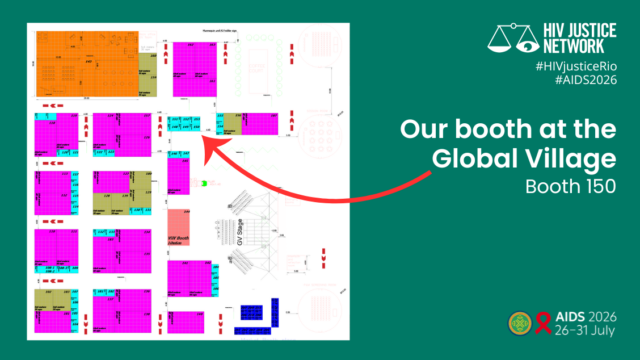
Throughout the conference, visit us in the Global Village to explore our work, meet the team, and discover practical tools supporting HIV justice.

Visit the HIV Justice Network booth

Global Village | Monday 27 – Thursday 30 July

Our interactive booth will feature:

  • the Global HIV Criminalisation Database
  • the HIV Justice Academy
  • Positive Destinations, our platform addressing HIV-related travel and migration restrictions
  • practical tools and resources to support advocacy, legal reform and community action against HIV criminalisation

Meet members of the HIV Justice Network team, learn about our latest projects, and discover how you can contribute to global efforts to end HIV criminalisation and HIV-related travel restrictions.

Whether you are an activist, researcher, lawyer, healthcare provider, policymaker or funder, we would love to meet you and discuss opportunities for collaboration.

Launching the Guidance on Good Practices in HIV Decriminalisation

Thursday 30 July | 10:45–11:45 | Global Village

One of the highlights of our week will be the official launch of the Guidance on Good Practices in HIV Decriminalisation, developed by HJN on behalf of HIV JUSTICE WORLDWIDE and the Global Partnership for Action to Eliminate All Forms of HIV-Related Stigma and Discrimination, with support from UNAIDS.

This practical session will introduce advocacy resources, legal literacy tools and community-led strategies that can help challenge HIV criminalisation around the world.

Speakers include Edwin Bernard, Janet Butler McPhee, Isis Tapia, Svitlana Moroz, Sofía Várguez and Immaculate Owomugisha Bazare.

HJN represented in AIDS 2026 plenary

Thursday 30 July | Morning plenary

HIV Justice Network is also proud to see Immaculate Owomugisha Bazare, a member of our Supervisory Board and Executive Director of the Centre for Women Justice Uganda, featured in one of AIDS 2026’s flagship plenary sessions.

Immaculate will speak on “Justice, rights and HIV: Building resilient legal frameworks”, bringing her expertise as a lawyer, advocate and leader in advancing HIV justice and gender equality. Her participation highlights the growing recognition that ending HIV criminalisation and other punitive laws is essential to an effective, rights-based HIV response.

Breastfeeding is not a crime!

Wednesday 29 July | 16:30–18:00 | Global Village

HJN’s Alison Symington will lead an interactive workshop, in partnership with ICW Global, exploring criminalisation and other punitive responses to women living with HIV who breastfeed.

The workshop will bring together advocates, researchers and clinicians to contribute to a growing global consensus supporting rights-based, evidence-informed approaches grounded in bodily autonomy and informed choice.

Presenting new research

HJN team members will present four abstracts during AIDS 2026.

Oral presentation

Thursday 30 July | 16:30–17:30 | Room 203

Edwin Bernard
HIV criminalisation as structural violence: science, geopolitics and community-led pathways to justice

Drawing on new global data, this presentation argues that HIV criminalisation persists because of structural violence embedded within legal, political and funding systems. It explores how community-led advocacy is helping to close the gap between science and the law.

Poster presentations

Wednesday 29 July | 12:15–13:15

  • Sylvie BeaumontFrom the doctor’s office to the jail cell: system reforms to protect care, confidentiality and prevention in the context of HIV criminalisation.
  • Edwin BernardScience, rights, and HIV on trial: is rising HIV criminalisation part of a global anti-science/anti-rights resurgence?

Thursday 30 July | 12:00–13:00

  • Sofía VárguezPositive destinations or persistent barriers? Rethinking HIV-related travel restrictions.

Sofía’s poster has been selected for the Track F Featured Poster Walk, where invited presenters will give short presentations and discuss their work with conference delegates.

Follow us from Rio

We’ll be sharing highlights, photos, videos and key messages throughout the conference across our website and social media channels.

Whether you’re attending AIDS 2026 in person or following from elsewhere, we hope you’ll join us as we continue working towards a world where HIV criminalisation is consigned to history.

Humanising the Law: Reflections on Two Decades of Advocacy Against HIV Criminalisation

This week, the international peer-reviewed journal, AIDS Care, published online a research paper that examines how two decades of scientific progress, community advocacy, and storytelling have come together to influence laws, policies, and public understanding of HIV in the context of the criminal law. 

In Humanising the law: harnessing science and community voices to end HIV criminalisation, I trace nearly twenty years of work to challenge HIV criminalisation, drawing on my own involvement and on the collective efforts of so many others in the HIV justice movement. 

Some of the key points include:

  • Science as evidence for change. The consensus that people on effective treatment cannot transmit HIV, and the 2018 Expert Consensus Statement, have reshaped legal reasoning and prevented unjust prosecutions.

  • Stories bring the impact to life. The ordeals of people such as Ugandan nurse Rosemary Namubiru and the real Malawian woman at the centre of our short film, Mwayi’s Story, highlight the human cost of HIV criminalisation and the resilience of those most affected.

  • Legal reforms are possible. Since the HIV JUSTICE WORLDWIDE coalition was created in 2016, over a dozen countries and jurisdictions around the world have repealed or modernised their HIV criminalisation laws.

But I also make it clear that much remains to be done. HIV criminalisation continues to undermine public health and human rights, particularly in environments shaped by authoritarianism, disinformation, and broader crackdowns on sexuality, gender, migration, sex work, and drug use.

That is why I argue for a paradigm shift – a humanisation of the law that centres lived experiences, affirms dignity, and ensures legal systems reflect science and rights rather than fear and prejudice. Achieving this requires:

  • Ongoing investment in legal reform, advocacy, and community-led monitoring.

  • Stronger cross-movement solidarity with those facing overlapping forms of criminalisation.

  • Sustained funding to support the global HIV justice movement for the long term.

As I conclude in the article: ending HIV criminalisation is not only about changing laws, but also about changing cultures. It is about recognising that our lives, our rights, and our voices matter.


A limited number of free eprints of this article are available from this link.

New case study and documentary examines how Zimbabwe repealed its HIV criminalisation law

Today, the HIV Justice Network (HJN), supported by the International AIDS Society (IAS), released a video documentary, “It is Time!” – How Zimbabwe Decriminalised HIV, along with a case study report examining Zimbabwe’s successful repeal of its HIV-specific criminal law.

The report, Reforming the Criminal Law in Zimbabwe: A Case Study, explores how advocates, legal experts, and community leaders worked together to repeal Section 79 of Zimbabwe’s Criminal Code, which criminalised HIV non-disclosure, exposure, or transmission. It outlines key strategies used in the campaign and lessons for other countries seeking to end HIV criminalisation.

The 24-minute documentary “It is Time!” brings this story to life through interviews with those involved in the multi-year effort. It also explores how advocates responded when a new law threatened to reintroduce HIV criminalisation.

Zimbabwe’s experience highlights several key strategies:

  • Coalition-building: Bringing together civil society, legal experts, and policymakers strengthened the advocacy effort.
  • Public health and human rights messaging: Advocates demonstrated how criminalisation undermined Zimbabwe’s HIV response.
  • Scientific evidence: Expert testimony helped policymakers understand the realities of HIV transmission.
  • Legislative strategy: Repealing Section 79 as part of a broader legal reform helped ensure success.

The documentary “It is Time!” is now available on the HIV Justice Network YouTube channel.

Reforming the Criminal Law in Zimbabwe: A Case Study (English, pdf, 9 pages) can be downloaded here.

The documentary and case study will also be added to the HIV Criminalisation Online Course, available for free as part of the HIV Justice Academy.

The case study and video were launched during a webinar co-hosted by HJN and IAS, featuring discussions on the significance of Zimbabwe’s law reform for the global movement against HIV criminalisation from:

  • Marlène​​​​ Bras, Director of HIV Programmes at the IAS;
  • Dr Ruth Labode, former legislator, and chairperson of the Parliamentary Portfolio Committee on Health in Zimbabwe;
  • Immaculate Owomugisha, a Ugandan lawyer and human rights activist who also sits on HJN’s Supervisory Board; and
  • HJN’s Senior Policy Analyst, Alison Symington.

A recording of webinar can now be viewed in English and in French on the IAS+ website.

Powerful and important new book, ‘Criminalized Lives’ published this week

This week sees the publication of a powerful and important new book, Criminalized Lives.

Based on 24 interviews conducted across Canada over two years with 16 people who were criminally accused of not disclosing their HIV-positive status, author Alexander McClelland, details the many complexities of disclosure, and the violence that results from being criminalised.

McClelland, who is living with HIV, works as a criminologist at Carleton University, in Ottawa, Canada. He is also a member of HJN’s Global Advisory Panel (GAP) and the Canadian Coalition to Reform HIV Criminalization.

Canada has long been a hot spot for HIV criminalisation where the act of not disclosing one’s HIV-positive status to sex partners has historically been regarded as a serious criminal offence. The book describes how this approach has disproportionately harmed Black and Indigenous people, women, gay men, and the poor.

While the book focuses on Canada, it presents lessons for those of us working around the world to end HIV criminalisation, especially in contexts where general criminal laws – like bodily harm, sexual assault and even attempted murder – are being applied to instances of alleged HIV non-disclosure.

Accompanied by a foreword by fellow HJN GAP member, US-based leading HIV criminalisation activist Robert Suttle, and portraits from queer comic artist Eric Kostiuk Williams, the book’s moving interviews illustrate that criminal legal systems are unprepared to handle the nuances and ethical dilemmas faced everyday by people living with HIV. 

By offering personal stories of people who have faced criminalisation first-hand, McClelland questions common assumptions about HIV, the role of punishment, and the violence that results from the criminal legal system’s legacy of categorising people as either victims or perpetrators, and the complicity of public health systems in processes of criminalisation.

The book is distributed internationally via Rutgers University Press where you can purchase paperback, hardback, and ebook versions.

Five things you can do to amplify Criminalized Lives:

  1. Ask your local library to carry the book.
  2. Host a conversation on the book in your community to help mobilise for change.
  3. Share your thoughts about the book on social media to generate conversations about the harms of HIV criminalisation.
  4. Review the book in a publication or online.
  5. Include the book in a course syllabus.

HIV Is Not A Crime Awareness Day goes global!

Next Wednesday 28th February is HIV Is Not A Crime Awareness Day.

For the first time, HIV Is Not A Crime Awareness Day – which began two years ago in the United States – has gone global! This year’s theme is: “You care about ending HIV criminalisation – you just don’t know it yet!”

That’s why we’ll be producing a very special episode of our webshow, HIV Justice Live! on this important new date for global HIV decriminalisation activism, where I’ll be joined on my ‘virtual sofa’ by an inspiring group of community-based expert activists – Florence Riako Anam (GNP+); HIV and human rights consultant, Michaela Clayton; Mikhail Golichenko (HIV Legal Network); and Andy Tapia and Kerry Thomas (SERO Project) – to explain why HIV criminalisation impacts us all, and what you can do about it.

We’ll be streaming live to YouTube and Facebook, so you’ll be able to interact with us during our Q&A session. By March 1st, Zero Discrimination Day, the show will also be available on our YouTube channel where it will be subtitled in English, allowing for automatic translation into any language.

HIV Is Not A Crime Awareness Day was the brainchild of our long-time HIV JUSTICE WORLDWIDE partner, the SERO Project’s co-Executive Director, Kamaria Laffrey. HIV Is Not A Crime Awareness Day was launched two years ago in collaboration with the Elizabeth Taylor AIDS Foundation, community activists and public policy organisations across the United States and grown in size and prominence ever since.

HIV Is Not A Crime Awareness Day takes place on 28th February for several reasons. It’s a date that bridges two major US awareness months – Black History Month in February and Women’s History Month in March. And it’s also a symbolic nod to the legacy of the late Hollywood icon and early AIDS activist, Elizabeth Taylor, who was born on 27th February.

HIV Is Not A Crime Awareness Day is an opportunity to amplify the voices of those who have been criminalised based on their HIV status; to remind people of the negative impacts of HIV criminalisation on health and rights; to celebrate the work of many individuals who are part of the growing global movement to end HIV criminalisation; and to recognise that there’s still much to do to achieve HIV JUSTICE WORLDWIDE.

You can find out what other events are taking place on and around HIV Is Not A Crime Awareness Day by visiting a dedicated Facebook page or by following the hashtag #HINACDay.