HIV criminalisation firmly on the agenda at AIDS 2016

For those of you in Durban for AIDS 2016 this week and next, make sure you don’t miss all the amazing HIV criminalisation events taking place.

Download and print this 2-pager covering all the HIV criminalisation highlights (including posters and Global Village events) put together by the HIV Justice Network on behalf of HIV JUSTICE WORLDWIDE.

And of course, we hope to see you at our pre-conference this Sunday July 17th, Beyond Blame: Challenging HIV Criminalisation. Download the Beyond Blame Final Programme.

Only a few places remain, so register now if you want to attend.

HIV criminalisation highlights at AIDS 2016 by HIV Justice Network

Key HIV transmission study shows no risk to HIV-negative partner when person with HIV is on suppressive antiretroviral therapy

By Simon Collins, HIV i-Base

Tuesday 12 July 2016

Published to coincide with IAS 2016 conference that opens in Durban next week, the PARTNER study showing the impact of HIV treatment (ART) on reducing transmission will benefit millions of people globally.

The results set a new challenge about whether transmission is anything other than a theoretical risk when someone is taking effective ART. This reverses the common assumption that, by definition, some level of risk always exists when one partner is HIV positive.

The PARTNER study provides good evidence that undetectable viral load might be a threshold below which sexual HIV transmission does not occur. The importance of the PARTNER study is that it included both gay and straight couples, that it measured risk in people who were not using condoms and that it estimated absolute risks.

Previous studies have been almost exclusively in heterosexual people who still reported high rates of condom use. The PARTNER study provides more than three times the amount of follow-up time from people not using condoms than all the previous studies combined. This includes 500 couple-years of follow up from people having anal sex without condoms.

Methods

Between September 2010 and May 2014 the PARTNER study prospectively enrolled 1166 serodifferent couples at 75 clinical sites in 14 European countries. Entry criteria included that the positive partner had an undetectable viral load on ART and that the couple were not always using condoms when they had sex.

Follow-up included routine sexual health checks (including HIV testing for the negative partners) and each participant also completed sexual history questionnaires to look at risk for different activities. Couples were only included in the final analysis when the most recent viral load for the positive partners was undetectable – defined as <200 copies/mL. The primary endpoint was the rate of within-partner transmissions, determined by phylogenetic analyses for all couples in which the negative partner became positive.

Results

Of 1166 couples enrolled, 1004 couples had at least one follow-up visit and 888 couples provided 1238 couple years of follow-up (median 1.3 years (IQR 0.8 to 2.0) per couple. This included 548 heterosexual (HT) couples and 340 gay male couples. The main reasons for data not being included in the follow-up analysis was: not yet reaching first follow-up visit (n=162), lack of HIV test (n=20), use of PEP or PrEP (n=9), no condomless sex (n=15), viral load >200 copies/mL (n=55) and lack of viral load result (n=17). There were no significant differences between couples who contributed to follow-up data compared to those who didn’t.

Although 11 people became HIV positive, none of these infections were phylogenetically linked transmissions. This was after at least 58,000 distinct times when couples had penetrative sex without condoms.

Baseline demographics were reported – as with all results – by categories of HIV status, gender and sexuality, with some differences between groups. This makes summarising results complex, but the median age ranged from 40 to 44 (with IQR overall ranging from 31 to 50 years). Gay men and HT women were a few years younger than HT men. Approximately 80% of the HT men were white compared to 70% of women and 90% of gay men. A higher percentage of gay men had education to college/university or higher (approximately 50% compared to 19% to 35% for heterosexuals. Although some of these differences were significant, other than there were fewer very young adults involved, they reflect the diversity of people living with HIV.

HIV positive partners had been on ART for a median of 10.6 (IQR: 4.3 to 15.6), 7.5 (IQR: 3.3 to 14.2) and 4.8 (IQR: 1.9 to 11.4) years, for HT men, HT women and gay men respectively. At baseline, couples reported having had sex without condoms for a median of 2 years (IQR 0.5 to 6.3), with differences between groups. For example, straight couples had been having sex without condoms for roughly 3 years (IQR 0.7 to 11 years) compared to 1.5 years (IQR 0.5 to 4 years) for gay couples. Approximately 23% of couples were in new/recent relationships (<6 months). Self-reported adherence to ART was similarly high at >90% in the three positive groups.  Similar proportions of each group also had CD4 counts >350 cells/mm3 (85% to 91%).

Based on data from the negative partners, overall, couples reported having sex without condoms a median of 37 times a year (IQR 15 to 71), with gay couples (median 41; IQR 17 to 75) reporting condomless sex at least 22,000 times and heterosexual couples (median 35; IQR 13 to 70) more than 36,000 times. These were rough estimates from recall and partners did not always report the same numbers. Some couples reported sex outside the main relationship: 108 gay couples (33%) and 34 heterosexual couples (4%).

None of the 11 incident HIV infections in negative partners (ten gay and one heterosexual) were phylogenetically linked to the positive partner. Most people (8/11) reported having sex without condoms with people outside the main relationship. All samples (n=22) were successfully sequenced for pol and 91% (n=20) were sequenced for env. None of the partner sequences clustered together and the results were consistent after using using several different analyses. Additional details for these analyses are described in the online supplementary material. [2]

With zero transmissions, the upper limit of the 95% confidence interval (95%CI) for the overall study was 0.3 per 100 couple years of follow up (CYFU). Each category of specific risks, given that the calculations are a factor determined by study numbers and power, had different upper 95%CI boundaries: for example, 0.88 for HT sex overall vs 0.84 for gay sex overall.

This means that the upper 95%CI for receptive anal sex for gay men (2.70 with ejaculation and 1.68 without ejaculation) needs to be interpreted as a factor of sample size: there were fewer CYFU so the upper limit is by definition higher. While this calculation is developed to define the potential range within which the true risk might lie, the 95%CI should not be interpreted as indicating a risk that has been observed in the study. To illustrate this difficulty, the higher estimated risk for heterosexual anal sex with upper 95%CI of 12.71 and 8.14 (with and without ejaculation, respectively) are driven by fewer CYFU with this as the primary risk rather than any biological reason for this to be much higher. Of note though, more than 20% of straight couples reported anal sex.

The ongoing PARTNER 2 study continues to follow up gay couples in the PARTNER study and to recruit additional gay couples, in order to produce a similarly powered evidence base for gay mean as for straight couples, with follow up until 2019. [2]

Also of note during the study, 91 HIV positive partners reported other STIs (n=16 HT men, 16 HT women and 59 gay men) – closely matching STIs in the negative partners, also without any increased risk reported for HIV transmission.

An non-technical i-Base Q&A on these results is also online. [3]

An extension of the PARTNER study is continuing to collect further data on risk for gay men. [4]

Simon Collins is a community representative on the steering committee of the PARTNER study.

comment

These results are simple to understand – zero transmissions from over 58,000 individual times that people had sex without condoms. They are also notable for the complexity of the analysis that was needed to prove that none of the new diagnoses were linked transmissions from within the couple.

Together, this provides the strongest estimate of actual risk of HIV transmission when an HIV positive person has undetectable viral load – and that this risk is effectively zero. While no study cannot exclude the possibility that the true risk might lie within the upper limit of the 95%CI, even if the true value is actually zero due to some as yet unproven mechanism, the 95%CI can never be zero, just becomes increasingly close. Neither the presence of STIs nor likely viral load blips between tests had any impact in enabling transmission.

The results provide a dataset to question whether transmission with an undetectable viral load is actually possible. They should help normalise HIV and challenge stigma and discrimination.

The results challenge criminalisation laws that in many countries, including the United States, continue to imprison hundreds of people based on assumptions of risk that these results disprove, even when condoms are used and viral load is undetectable.

Activist Sean Strub, from the SERO project (www.seroproject.com) said:

“Hundreds of people living with HIV in the US have been charged with criminal offences for the perceived or potential risk of HIV exposure or transmission. Some are serving or have served long prison sentences for spitting, scratching or biting and others for not being able to prove they had disclosed their HIV positive status before having sexual contact (even in the absence of any risk of HIV transmission). HIV criminalisation has created a viral underclass in the law, further burdening a disenfranchised community, putting a disproportionate share of the shared responsibility for preventing sexually-transmitted infections on one party, and discouraging people at risk from getting tested for HIV.”

The results will also positively impact on the quality of life for both HIV positive and HIV negative individuals who are in serodifferent relationships, irrespective of the choice to use condoms.

The ongoing PARTNER 2 study is continuing to follow-up gay couples and is still enrolling new couples to achieve a similar statistical power for anal sex compared to vaginal sex. For further details of sites please see the PARTNER2 website. [3]

Reference

  1. Rodger AJ et al for the PARTNER study group. Sexual activity without condoms and risk of HIV transmission in serodifferent couples when the HIV-positive partner is using suppressive antiretroviral therapy. JAMA, 2016;316(2):1-11. DOI: 10.1001/jama.2016.5148. (12 July 2016). Full free access.

    http://jama.jamanetwork.com/article.aspx?doi=10.1001/jama.2016.5148

  2. PARTNER study, supplementary material. JAMA (16 July 2016).
  3. i-Base Q&A from the study.

    http://i-base.info/qa-on-the-partner-study/

  4. PARTNER2 website.

    http://www.chip.dk/PARTNER-2

Webinar: HIV Criminalization Attitudes and Opinions of the American Public (Sero, 2016)

Presenters: Sean Strub and Dr. Rosita Thomas

Australia: Zaburoni v Queen legal analysis

This analysis is by David Buchanan SC, Barrister at Forbes Chambers, Sydney. It was originally published in LGBT Law Notes and is republished here with his permission.

In a case that should reduce the extent of overcharging in HIV criminal cases, the High Court of Australia (Australia’s apex court) has emphasised the importance of distinguishing between reckless behaviour and behaviour involving intention to transmit HIV.

In Zaburoni v The Queen [2016] HCA 12, a man was sentenced to nine and a half years in prison for unlawfully transmitting a serious diseases with intent to do so.  The evidence was that Zaburoni frequently had unprotected sex with his girlfriend, knowing that he had HIV, and that he lied to her, and later to investigating police, about his status.  However, the offence required proof of actual intention.  The High Court held that, if the evidence had established Zaburoni’s awareness of the probability that his conduct would result in his girlfriend contracting HIV, it would have been open to the jury to infer that Zaburoni meant to bring about that result.  However, the evidence did not rise to that level.

The Court distinguished between intention, on the one hand, and desire or motive, noting that a person can intend a result without desiring it.  Thus a person can have the infection of their sex partner as a purpose of their conduct whilst regretting that consequence.  The plurality observed “(t)he complainant said the appellant preferred unprotected sexual intercourse because it was more pleasurable.  Accepting that the appellant engaged in unprotected sexual intercourse because it gave him pleasure is not necessarily inconsistent with proof that he also had the intention thereby of transmitting HIV to the complainant.   It is the identification of evidence from which the latter inference could be drawn to the criminal standard that is the issue in this appeal.”

Zaburoni had tested positive to HIV and been told he must use condoms for sex.  The evidence was that he understood that advice.  But when he took up a relationship with a woman he told her he had been tested for HIV and was not HIV positive.  He had unprotected intercourse with her, telling her that he found condomless sex more pleasurable.  The complainant suffered seroconversion illness.  Zaburoni told her his brother had died from AIDS.  When the woman asked Zaburoni whether he had HIV, he said he did not.

The relationship later broke down.  About a year afterwards, the woman was diagnosed with HIV/AIDS and when she tackled Zaburoni about it, he admitted he was infected and said he found out after they had broken up.  She asked why he had failed to tell her of his condition.  He replied that he had not wanted to make her unhappy and that he thought that she was having a good time.  He said that he had been told by the doctors that he had had HIV for two years.  A friend of the complainant asked Zaburoni why he had not told the complainant and he responded that “I didn’t want to ruin her life”.

Later, in both a conversation with the complainant monitored by police and in interviews with police, Zaburoni lied about when he knew he was infected and the extent of his unprotected sex with the complainant.  Later Zaburoni, who had migrated to Australia many years previously, admitted having submitted a blood sample from an uninfected friend in order to satisfy Immigration authorities that he did not have HIV.

Although there was evidence that, given the length of the relationship (21 months), the risk of the complainant contracting HIV were about 14 per cent, there was no evidence that Zaburoni knew what the statistical likelihood was of the transmission of HIV as the result of unprotected heterosexual sex.  The plurality said “To the extent that the inference of intent depends upon foresight of the risk of the sexual transmission of HIV, it is the appellant’s understanding, whether informed or otherwise, that is material.  There was ample evidence from which to find that the appellant was aware of the risk of transmitting HIV to the complainant through unprotected sexual intercourse.  Apart from the medical advice that the appellant was given by several doctors in 1998 after he learned of his HIV positive status, his lies to the complainant about that status before their sexual relationship commenced, and during the course of it, point to his awareness of the risk of sexual transmission.  So, too, do his lies to the police about the number of times they engaged in unprotected sexual intercourse.”

The plurality concluded that “(a) rational inference open on the evidence is that the appellant engaged in regular unprotected sexual intercourse with the complainant because it enhanced his sexual pleasure and he was reckless of the risk of transmitting HIV to her.   The existence of that inference lessens the force of reasoning to a conclusion that the appellant intended to transmit the disease from the fact of frequent unprotected sexual intercourse.   Apart from frequent unprotected sexual intercourse, there is no evidence to support the inference that the appellant had that intention.  And the evidence fell well short of proving that the appellant believed that it was virtually certain that he would pass on HIV by regular unprotected sexual intercourse.”   In particular, none of the lies proved that Zaburoni knew that it was virtually certain that he would infect his partner with HIV if he had unprotected sex with her.

Whilst Zaburoni’s conduct was described as a form of “callous deception”, what this meant (as another judge put it) was that the evidence left open “a reasonable hypothesis that the appellant, not knowing the degree of risk, was extremely reckless and also callous.  As appalling as his selfish recklessness was, it cannot be equated with a subjective, actual intent to transmit the HIV virus.  In the absence of evidence of malice or knowledge of the degree of risk, a subjective intent to inflict the HIV virus was not proven beyond reasonable doubt.”

The conviction for intentionally transmitting a serious disease was quashed and a verdict of guilty of unlawfully doing grievous bodily harm substituted.

The full High Court decision can be accessed here.

A number of news reports and other analyses of the Zaburoni case can be found here.

US: National Association of Criminal Defense Lawyers pass resolution opposing all laws that base criminal liability and/or penalty enhancements on one's HIV status rather than on the intent to harm another individual

On May 21, 2016, at the spring meeting of the National Association of Criminal Defense Lawyers (NACDL), the board of directors unanimously adopted a resolution opposing all laws that base criminal liability and/or penalty enhancements on one’s HIV status rather than on the intent to harm another individual. Thirty-four U.S. states and territories have criminal statutes that allow prosecutions for allegations of non-disclosure, exposure and (although not required) transmission of the HIV virus. Prosecutions have occurred in at least 39 states under HIV-specific criminal laws or general criminal laws. Most of these laws treat HIV exposure as a felony, and people convicted under these laws are serving sentences as long as 30 years or more.

As set forth in NACDL’s resolution, “the focus on knowledge of status as a key element of an HIV-related crime, rather than on intent and capacity to transmit the virus, is a classic example of an inadequate mens rea, or criminal intent, requirement and overly expansive criminalization.”

“Laws such as these are textbook examples of flawed criminal justice policy,” said NACDL President E.G. “Gerry” Morris. “Furthermore, as a public health matter, these laws operate as an impediment to what should be the shared goal here – ending the epidemic. NACDL stands with the HIV/AIDS-affected community and others in unambiguously declaring that HIV is not a crime. It should not be treated as such. Rather than irrationally deploying the criminal law to stigmatize and punish the more than 1.2 million people in the United States living with HIV, we need to work together to advance policies that encourage, rather than deter people from learning of their HIV status and seeking life-saving treatment.”

NACDL’s May 21, 2016 resolution is below.

In addition, audio from a May 5, 2016 teleconference co-sponsored by NACDL, the Center for HIV Law and Policy, and the American Bar Association AIDS Committee – When Sex is a Crime and Spit is a Dangerous Weapon: A Teleconference on HIV Criminal Laws – is available here.

Resolution of the Board of Directors of the National Association of Criminal Defense Lawyers Concerning HIV Criminalization

Las Vegas, Nevada

May 21, 2016

Introduction

Thirty-four U.S. states and territories have criminal statutes that allow prosecutions for allegations of non-disclosure, exposure and (although not required) transmission of the HIV virus. Prosecutions have occurred in at least 39 states under HIV-specific criminal laws or general criminal laws. Most of these laws treat HIV exposure as a felony, and people convicted under these laws are serving sentences as long as 30 years or more. The focus of these laws on knowledge of status as a key element of an HIV-related crime, rather than on intent and capacity to transmit HIV, is a classic example of an inadequate mens rea, or criminal intent, requirement and overly expansive criminalization. In sum, these laws do not comport with well-established American criminal law principles concerning intent, harm, and proportionality.

The bulk of HIV criminalization laws were enacted prior to the availability of effective antiretroviral therapy for HIV, which not only can extend significantly the lifespan of those with HIV, increasing the probability that a person with HIV never develops AIDS, but also has been shown in studies to dramatically reduce the risk of transmission by those carrying the virus. An obvious prerequisite to securing appropriate treatment is getting tested to determine if one is carrying the HIV virus. Being aware of one’s HIV status is also a necessary, and all too often sufficient, threshold fact making one vulnerable to prosecution under these laws. That, however, creates a powerful disincentive to getting tested for the virus. According to the President’s Advisory Council on AIDS, “Public health leaders and global policy makers agree that HIV criminalization is unjust, bad public health policy and is fueling the epidemic rather than reducing it.”

For additional background information, attached are (i) the President’s Advisory Council on HIV/AIDS (PACHA) Resolution on Ending Federal and State HIV-Specific Criminal Law, Prosecutions, and Civil Commitments (PDF), (ii) the U.S. Department of Justice, Civil Rights Division, Best Practices Guide to Reform HIV-Specific Criminal Laws to Align with Scientifically-Supported Factors (PDF), and (iii) the Positive Justice Project1 Guiding Principles for Eliminating Disease-Specific Criminal Laws (PDF).

Resolution

WHEREAS, there are more than 1.2 million people in the United States living with HIV, and an estimated 156,000 of those people are unaware of their infection, according to the Centers for Disease Control and Prevention (CDC); and

WHEREAS, the United States has led the world in HIV prosecutions; and

WHEREAS, the National Association of Criminal Defense Lawyers (NACDL) has long been concerned with the trend in the criminal law away from the moral anchor of adequate mens rea, or criminal intent, requirements; and

WHEREAS, the focus on knowledge of status as a key element of an HIV-related crime, rather than on intent and capacity to transmit the virus, is a classic example of an inadequate mens rea, or criminal intent, requirement and overly expansive criminalization; and

WHEREAS, punishments imposed for non-disclosure of HIV status, exposure, or HIV transmission are grossly out of proportion to the actual harm inflicted and reinforce the fear and stigma associated with HIV; and

WHEREAS, such laws constitute bad public health policy, erecting disincentives to getting tested for HIV when modern and effective antiretroviral therapy for HIV not only can extend significantly the lifespan of those with HIV, increasing the probability that a person with HIV remains healthy and never develops AIDS, but also can dramatically reduce the risk of transmission by those carrying the virus; and

WHEREAS, according to the CDC and the Civil Rights Division of the Department of Justice, “most of these laws do not account for actual scientifically-supported level of risk by type of activities engaged in or risk reduction measures undertaken” and “many of these state laws criminalize behaviors that the CDC regards as posing either no or negligible risk for HIV transmission even in the absence of risk reduction measures”; and

WHEREAS, HIV criminalization was bad criminal justice policy prior to the advent of modern and effective antiretroviral therapy, and remains so today; and

WHEREAS, NACDL’s core mission includes working to ensure justice and due process for persons accused of a crime as well as promoting the proper and fair administration of criminal justice; therefore

BE IT RESOLVED that NACDL hereby opposes all laws that base criminal liability and/or penalty enhancements on one’s HIV status rather than on the intent to harm another individual. Accordingly, NACDL supports the repeal of such criminal laws as fundamentally unfair and unjust. Recognizing that outright repeal can result in the abusive use of existing statutes, NACDL also supports modernization of these criminal laws to incorporate strong principles of intent and proportional punishment.

Footnote

1 The Positive Justice Project is a national coalition of organizations and individuals working to end HIV criminalization in the United States. It is a project of The Center for HIV Law and Policy, a national legal and policy resource and strategy center working to reduce the impact of HIV on marginalized communities and to secure the human rights of people affected by HIV. Organizational members of the Positive Justice Project Steering Committee include the Center for HIV Law and Policy, the National Alliance of State & Territorial AIDS Directors, the National Black Leadership Commission on AIDS, and the National LGBTQ Task Force.


US: Blog post by HIV criminalisation survivor Monique Howell-Moree

My name is Monique Howell-Moree. As a survivor of HIV criminalization myself, I believe laws criminalizing HIV definitely need to be changed. I would have had to serve 8 to 12 years if I had been convicted, because my state, like most states, does not take into consideration current science of the risk transmission. Nobody wants to take the time to educate themselves and update themselves on what we now know about transmission risks– especially when someone is in care and taking care of themselves–and the result is unjust laws and prosecutions. Transmission rates when in care are so low compared to how things were in the ’80s and early ’90s, yet laws have not kept up with medical advances.

A lot of these laws are very outdated, and stigma is what is still keeping these laws alive. I believe that most states still live in fear of the unknown. They still have stigma circulating around their communities, and they refuse to bring about CHANGE. Ignorance and lack of knowledge are still prevalent in many states.

When I was on trial myself, not one person in the room knew much about HIV. If I was convicted I could have possibly lost my children, home, and would even have been labeled a sex offender. That’s not even fair, when so many other crimes are so much worse than this. HIV is not a death sentence, but people in many states still believe it is. If someone is intentionally trying to put their partner at risk, then yes, we do need to make sure there is a remedy, because of course we are trying to stop the spread of HIV. But if someone just is afraid, not educated and doesn’t have the support they need when disclosing their status, that’s when our local  ASOs and HIV organizations need to come together and show them how to say the right words and do the right thing when disclosing. Women are sometimes even in a violent relationship and fear the repercussions of disclosure, or are afraid to say the words that they need to say due to embarrassment or guilt.

These outdated laws also cause people to actually be afraid, because the laws are worded as if we are the worst people on this earth. People fear of losing their jobs, homes, children etc. These laws makes no sense, and the punishment definitely doesn’t fit the “crime.”

Many factors can play into why a individual discloses or does not disclose. If we can raise more awareness about HIV everywhere, even in the workforce, then maybe, just maybe, people’s views will evolve. Sharing our testimonials and allowing policymakers and the public to hear our hearts will also help. We must take responsibility for ourselves and also stand for what we believe is fair and right.

When I was charged, I had none of this type of support. Serving my country at the time in the Army, I only signed a form in tiny, tiny fine print saying to make sure I tell my status if I should engage in any sexual act, and that was it. Still afraid and fearing rejection, I didn’t know the best way to disclose, and didn’t even think I would get into another relationship after my diagnosis. Had I had the support and knowledge that I have now back then, I would have most definitely have done things differently. I wouldn’t have been ashamed of who I was, and I would have been honest and disclosed my status when involved in a sexual act.

Changing these laws will have a major impact on many HIV survivors. We shouldn’t have to live in fear of being who we are. Intentionally trying to cause harm is different from just needing support and help on how to disclose the proper way when necessary. We fear rejection, but the laws make disclosure even harder, because we so fear the punishment that we just keep things bottled up inside as a safe place. Disclosing can be tough. I’m a living witness to that; but we can help many if we continue to raise awareness on HIV criminalization. Many are behind bars for cases where no transmission had taken place, but HIV stigma makes the system want to lock us up, rather than educating policymakers and the public.

My sisters and brothers that are living with HIV: We must have each other’s backs and support one another, because the laws are definitely set up to pit us against a society that has not a clue that we are still human beings and deserve to be treated fairly and not as if we still live in the 1980s. So much has improved since then, and it’s time that we all take a stand to help get these laws changed!!!

More Advocacy Needed to Stop HIV Criminalisation

People living with HIV face increased criminalisation and prosecution based on their HIV status, finds a new report by the HIV Justice Network and the Global Network of People Living with HIV (GNP+).

HIV criminalisation is the application of the criminal law to people living with HIV based solely on their HIV status. This happens through HIV-specific criminal statutes, or by applying general criminal laws that allow for prosecution of unintentional HIV transmission, potential or perceived exposure to HIV without transmission, and/or non-disclosure of known HIV-positive status.

The use of criminal laws against people with HIV impacts entire communities. It perpetuates stigma, discrimination and feelings of fear, shame and anger towards people living with HIV.

“These laws and prosecutions do not only impact the people investigated, prosecuted, or incarcerated. These laws undermine core sexual rights and public health principles. Their existence and application exacerbate racial and gender inequalities and jeopardize critical HIV prevention and service delivery efforts” says Julian Hows of GNP+.

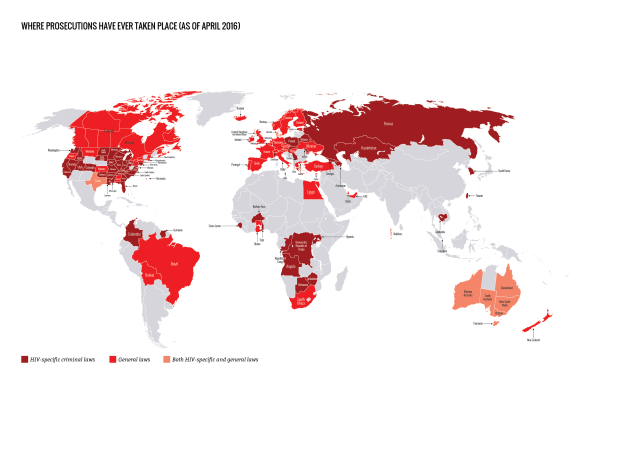
The report, Advancing HIV Justice 2: building momentum in global advocacy against HIV finds a total of 72 countries have adopted laws that specifically allow for HIV criminalisation. In these countries laws are either HIV-specific, or name HIV as one (or more) of the diseases covered by the law. Prosecutions for HIV non-disclosure, potential or perceived exposure and/or unintentional transmission have now been reported in 61 countries.

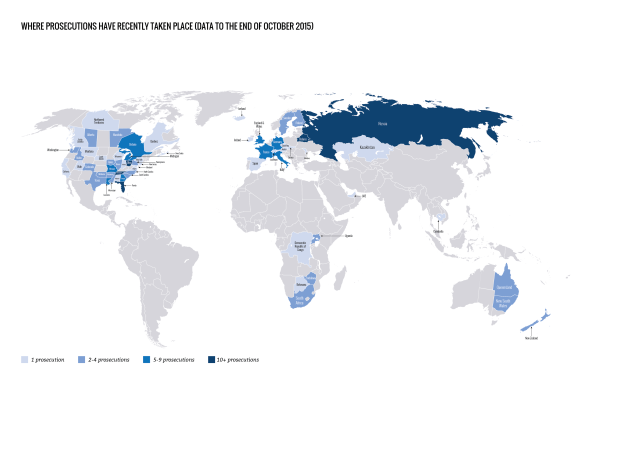
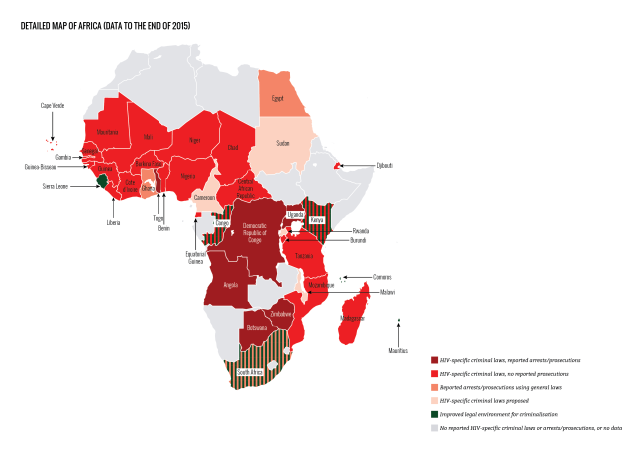
Of particular concern is the fact that 30 sub-Saharan African countries have now enacted overly broad and/or vague HIV specific statues enabling legal repercussions against people living with HIV. The report shows the highest number of prosecutions are being reported in Russia, the United States, Belarus and Canada.

The trend is in contrast with the latest science which shows that people with HIV who adhere to HIV treatment and have an undetectable viral load are not infectious. In addition this approach of the criminal law violates key legal and human rights principles.

HIV criminalisation does not exist in vacuum. It is often linked to punitive laws and policies that impact sexual and reproductive health and rights, especially those aimed at sex workers, current and former drug users (particularly people living with hepatitis C), transgender people and/or men who have sex with men and other sexual minorities.

Click here to read the new report and visit the  HIV Justice Network for more information on how you can get involved in the movement to eliminate HIV – or modernise – HIV criminalisation laws.

Justice Edwin Cameron: ‘Why HIV criminalisation is bad policy and why I’m proud that advocacy against it is being led by people living with HIV’

[This is the foreword to Advancing HIV Justice 2: Buiding momentum in global advocacy against HIV criminalisation, which will be published by the HIV Justice Network and GNP+ tomorrow, Tuesday May 10th.]


Since the beginning of the HIV epidemic, 35 long years ago, policymakers and politicians have been tempted to punish those of us with, and at risk of, HIV. Sometimes propelled by public opinion, sometimes themselves noxiously propelling public opinion, they have tried to find in punitive approaches a quick solution to the problem of HIV. One way has been to use HIV criminalisation – criminal laws against people living with HIV who don’t declare they have HIV, or to make potential or perceived exposure, or transmission that occurs when it is not deliberate (without “malice aforethought”), criminal offences.

Most of these laws are appallingly broad. And many of the prosecutions under them have been wickedly unjust. Sometimes scientific evidence about how HIV is transmitted, and how low the risk of transmitting the virus is, is ignored. And critical criminal legal and human rights principles are disregarded. These are enshrined in the International Guidelines on HIV and Human Rights. They are further developed by the UNAIDS guidance note, Ending overly-broad criminalisation of HIV non-disclosure, exposure and transmission: Critical scientific, medical and legal considerations. Important considerations, as these documents show, include foreseeability, intent, causality, proportionality, defence and proof.

The last 20 years have seen a massive shift in the management of HIV which is now a medically manageable disease. I know this myself: 19 years ago, when I was dying of AIDS, my life was given back to me when I was able to start taking antiretroviral medications. But despite the progress in HIV prevention, treatment and care, HIV continues to be treated exceptionally for one over-riding reason: stigma.

The enactment and enforcement of HIV-specific criminal laws – or even the threat of their enforcement – fuels the fires of stigma. It reinforces the idea that HIV is shameful, that it is a disgraceful contamination. And by reinforcing stigma, HIV criminalisation makes it more difficult for those at risk of HIV to access testing and prevention. It also makes it more difficult for those living with the virus to talk openly about it, and to be tested, treated and supported.

For those accused, gossiped about and maligned in the media, investigated, prosecuted and convicted, these laws can have catastrophic consequences. These include enforced disclosures, miscarriages of justice, and ruined lives.

HIV criminalisation is bad, bad policy. There is simply no evidence that it works. Instead, it sends out misleading and stigmatising messages. It undermines the remarkable scientific advances and proven public health strategies that open the path to vanquishing AIDS by 2030.

In 2008, on the final day of the International AIDS Conference in Mexico City, I called for a sustained and vocal campaign against HIV criminalisation. Along with many other activists, I hoped that the conference would result in a major international pushback against misguided criminal laws and prosecutions.

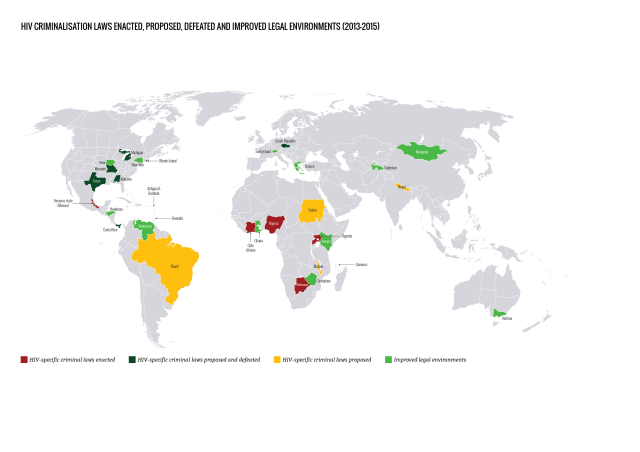
The Advancing HIV Justice 2 report shows how far we have come. It documents how the movement against these laws and prosecutions – burgeoning just a decade ago – is gaining strength. It is achieving some heartening outcomes. Laws have been repealed, modernised or struck down across the globe – from Australia to the United States, Kenya to Switzerland.

For someone like me, who has been living with HIV for over 30 years, it is especially fitting to note that much of the necessary advocacy has been undertaken by civil society led by individuals and networks of people living with HIV.

Advancing HIV Justice 2 highlights many of these courageous and pragmatic ventures by civil society. Not only have they monitored the cruelty of criminal law enforcement, acting as watchdogs, they have also played a key role in securing good sense where it has prevailed in the epidemic. This publication provides hope that lawmakers intending to enact laws propelled by populism and irrational fears can be stopped. Our hope is that outdated laws and rulings can be dispensed with altogether.

Yet this report also reminds us of the complexity of our struggle. Our ultimate goal – to end HIV criminalisation using reason and science – seems clear. But the pathways to attaining that goal are not always straightforward. We must be steadfast. We must be pragmatic. Our response to those who unjustly criminalise us must be evidence-rich and policy-sound. And we can draw strength from history. Other battles appeared “unwinnable” and quixotic. Think of slavery, racism, homophobia, women’s rights. Yet in each case justice and rationality have gained the edge.

That, we hope and believe, will be so, too, with laws targeting people with HIV for prosecution.

Edwin Cameron, Constitutional Court of South Africa, May 2016.

PA: Report analyses laws used in HIV criminalisation cases in Pennsylvania and makes recommendations for improvement

AIDS Law Project of Pennsylvania, SERO Project, PWN-USA-Philadelphia. All Pain, No Gain: HIV Criminalization in Pennsylvania. AIDS Law Project of Pennsylvania, April 2016.

Download here: ALL PAIN NO GAIN: HIV CRIMINALIZATION IN PA