Senegal: Anti-LGBT offensive leaves communities living in fear and undermines HIV response

Translated with Deepl. Scroll down for original text in French.

“If I’m caught, it’s the end for me”: in Senegal, the daily fear faced by gay people under a crackdown

Following a law passed in March that toughened the penalties for same-sex relations, LGBT+ people in Senegal are living in fear. Speaking on condition of anonymity, several of them describe a life of great uncertainty, marked by the dread of arrest.

“I don’t know if you’ll find me free. The police are closing in on me. You can’t escape your fate”, writes Latyr (name changed), on the eve of our scheduled interview in Dakar – the details of which, like those of our other meetings, will remain confidential for security reasons. In the days leading up to this, the man in his thirties had grown accustomed to sharing his concerns about the unprecedented crackdown on LGBT+ people in Senegal.

From our very first contact via the encrypted messaging app Signal – facilitated by a Senegalese man living in exile in Europe – Latyr wanted to bear witness to his “ordeal”, so that the world knows . Speaking out – anonymously – was also a way of leaving a record “just in case” his freedom were to be taken away. Since the tightening of the law against homosexuality passed in March, same-sex relationships are punishable by five to ten years’ imprisonment in Senegal, where they are considered “acts against nature” – compared with one to five years previously.

Latyr feels his “turn has come” following the arrest of one of his friends. This time, he fears the police might track him down through sexually explicit messages exchanged in 2025. How many friends has he lost? Latyr no longer keeps an exact count. Probably a “dozen” since February. Some of them are locked up in Senegalese prisons, others have fled to The Gambia or Morocco.

Latyr’s bad feeling did not come true that day. He reappeared the following day, online, still free but wary. After his day’s work, he arranged to meet us at a friend’s flat, some way from Dakar. Standing back in the dimly lit hall, Latyr kept a safe distance from a group of residents gathered at the entrance.

“ “Ever since I was a child, I’ve lived my homosexuality discreetly,” says this tall, athletic man, his features drawn. “I’m lucky – I’m not effeminate. No one can suspect I’m gay because I don’t leave anything to chance.” Yet, in these troubled times, maintaining this social façade is wearing him down. “During the day, I constantly have headaches and palpitations. At night, I get very little sleep. I’ve lost 5 kilos, he continues in a weary voice. Every time an acquaintance passes away, I tell myself I’ll be next. “When I get home from work, before going up to my flat, I check that there isn’t a police car parked outside.” Latyr catches his breath in the overheated room. “My life outside work boils down to scrolling through the news in my bedroom. I only leave to eat or go to the mosque.”

A string of arrests

If he feels he is in the authorities’ sights, it is partly down to the investigators’ modus operandi. As part of a wide-ranging investigation targeting both celebrities and ordinary people, suspects’ phones are being combed through. Text messages or videos can be enough to trigger an arrest.

Consequently, more than a hundred suspected homosexuals have been arrested in Dakar and other major cities since 4 February, most of them accused of having close ties to Pape Cheikh Diallo, a famous TV and radio presenter who was remanded in custody on that day. He is being prosecuted on charges of ‘criminal conspiracy, unnatural acts, wilful transmission of HIV/AIDS through unprotected sexual intercourse, endangering the lives of others, money laundering and drug trafficking”.

In May, the arrest of Matar Ndiaga Seck – described by the national media as a close associate of the former prime minister and current Speaker of the Senegalese National Assembly, Ousmane Sonko – caused another bombshell. Dismissed from his post as head of government at the end of May, Ousmane Sonko is one of the advocates of tightening the law on homosexuality, which he calls “Western tyranny”.

This spate of arrests coincided with another scandal. On 8 February, in the days following the first crackdown on the TV presenter Pape Cheikh Diallo, 14 Senegalese nationals were arrested in Dakar. They are suspected of acting as recruiters for the French pensioner Pierre Robert, who has been in custody in France since April 2025. The businessman from Picardy has been charged with “human trafficking, aggravated procuring and the rape of a 15-year-old minor”. He is alleged to be the ringleader of a vast paedophile network involving young Senegalese children, who were filmed, raped and deliberately infected by HIV-positive individuals.

Although these two cases are unrelated, as a judicial source told Le Monde, they have led, in public debate, to a conflation of homosexuality, child sexual abuse and health risks. On 30 March, the enactment of the anti-LGBT law finalised the process of ostracising homosexual people. The first sentence – six years’ imprisonment without parole – was handed down on 11 April to a labourer caught with another man in the suburbs of Dakar.Read also | In Senegal, state-sanctioned homophobia jeopardises the fight against AIDS

In Senegal, homosexuality has been punishable under the Criminal Code since 1966, six years after the country gained independence. Although this law has never actually been enforced, Latyr still had to grow up concealing his sexual orientation. For even before it is punished by the law, homosexuality is punished by society. Both at home and at work, Latyr has learnt not to react to homophobic remarks. When conversations flare up about the ongoing arrests, he remains silent. This discretion does not go unnoticed by some of his colleagues. “When you’re my age and in a stable situation, you’re viewed with suspicion,” he notes. “I know my colleagues are wondering, but I keep it under control.”

A devoted and hard-working son, Latyr lives with his parents, who, he believes, are unaware of his homosexuality, thanks to a double life that is perfectly airtight. There is the official one, which revolves around family, work and the mosque. And the other, clandestine one, lived out in ‘Dakar by night’ and the capital’s furnished flats.

“I’ve experienced great love affairs and great heartbreak,” he confides, visibly moved. “We used to spend time together with our mates.

The drinks would go on late, then it was time to go out dancing in straight clubs, though the majority of the crowd were gay. We partied like there was no tomorrow!” Before noting, bitterly: “All that’s over now. You’ll speak to a man in the morning, then find out in the evening that he’s been arrested.”

Blending into the norm

For a long time, Latyr ‘struggled’ against his homosexuality by drawing on his faith, Islam, which is the majority religion in Senegal. As a practising Muslim, he feels a certain sense of guilt about transgressing the prohibition, according to certain interpretations of the sacred texts. His paradoxical relationship with religion nevertheless helps him to cope with his inner turmoil.

Ever since I was a kid, prayer has been a source of support. Every day, I ask God to set me on the right path. I beg him to forgive me, to accept my repentance, and to protect me from the ongoing persecution, he says. But sometimes I suffer so much that when I go out to meet a man, I pray that a car will run me over and put an end to it. ”

Like Latyr, everyone interviewed for this article says they have thought about taking their own lives, due to the pervasive homophobia and the overwhelming sense of guilt they feel. They all also describe having suffered physical or sexual abuse within their own families.

“When I was 13, my older brother took me out to sea to go fishing.After a while, he tied me up. He beat me up, saying it was to discipline me, otherwise I’d become a bad person”, says Ibou Gaye. The reason this man has agreed to give his real name is that he has now sought refuge in France, where Le Monde met him. In March, he had publicly come out as gay in a video interview for Brut Afrique.

Having settled in the Paris region since July 2024, following his marriage to a French researcher, he is speaking out openly about the “witch-hunt” currently taking place in his country of origin.

Coming from a line of traditional fishermen who have lived for generations in the town of Yoff, north-west of Dakar, Ibou Gaye stood out from those around him from a very early age. Until the end of his teenage years, he lived in a block of flats alongside his extended family – more than a hundred relatives, uncles, aunts, cousins, nephews and nieces. The young man was not immune to social scrutiny in the neighbourhood. “Unlike other gay men, I didn’t hide my mannerisms. I was nicknamed ‘Maniang Kassé’ [a transgender figure famous in Senegal since the early 2000s]. I had ‘my’ way of walking, and it even made some of my gay friends uncomfortable,” he explains proudly. “One of them said to me one day: ‘Look at the way you walk and the way you talk! The way you move your hands! It’s too camp, it puts you in danger!’”

Nevertheless, after his first love got married, Ibou Gaye eventually tried to blend in with the norm himself. For a few months, he swapped his fisherman’s sandals for trainers, as these gave him, according to a cousin, a more “masculine” gait ”. As the son of an imam, he regularly attended the local mosque, where he prayed in the hope of becoming heterosexual. His neighbours were surprised to see him wandering through the neighbourhood’s alleyways, rosary in hand. “I prayed constantly to change and to ask for forgiveness,” he recalls. “A friend had told me that by repeating certain phrases, I would wash away my sins.”

The “repentance”, as he calls it, came to an end after six months, when the young man was frightened by the prospect of a traditional family life: “Where I come from, a man gets married between the ages of 18 and 20. Around the age of 25, he takes a second wife so he can have mor children and retire at 35. I realised I didn’t want that sort of life.”

Ndongo (name changed), aged 38, also nearly gave in to a marriage of convenience.

This is known as a ‘lavender marriage’ , that is, a union between a man and a woman entered into to conceal the husband’s and/or wife’s homosexuality or bisexuality, and thus protect themselves from persecution. When we met Ndongo in early June at a large hotel in Dakar, he was recovering from a long period of overwork.

This craftsman, with broad shoulders and a zebiba (literally ‘raisin’ in Arabic) marked on his forehead – the mark left by prostrating oneself on the ground during Muslim prayer – approached with hesitant steps.

For venturing outside his routine of work and home – which he has stuck to for months – heightens his hypervigilance. “The pressure is too much”, he breathes. And that’s not just a figure of speech. “Recently, I had to go to the doctor because of the anxiety. My blood pressure was 18. I couldn’t even tell him the reasons for my condition because I don’t trust him,” continues Ndongo.If I get caught, it’s the end for me; my family will never accept it.”

Born in a town in northern Senegal, he was subjected to bullying and mockery from a very early age: “I’d rather hang out with the girls than play football with the boys. So they’d insult me, but I didn’t understand why.” His behaviour, unusual for a young boy in his community, unwittingly placed him under tacit surveillance.

One evening, whilst chatting by the river with a boy he was in love with, a friend of his brother’s caught him. On his return, Ndongo faced his older brother’s fury. In the years that followed, he tried to suppress his attraction to men. The reserved young man entered into a relationship with a woman.

But after six years together, on the eve of his wedding, he breaks it off and leaves his hometown for the capital. “I imagined the disastrous life I would lead and the ordeal I would put this woman through, who hadn’t asked for any of this. I couldn’t bear it and I left it all behind”, he explains.

“The moralisation of society”

In Dakar, Ndongo lives alone and discovers a vibrant, underground gay scene. Parties in private flats, amongst friends, away from prying eyes, allow him to form friendships and romantic relationships, though not without risk. For HIV is still circulating within Senegal’s LGBT+ community, despite the country’s success in combating and preventing the virus.

Ndongo eventually becomes infected, as do several of his friends. However, antiretroviral drugs have managed to make them “undetectable”.

Ndongo and his friends could, from then on, have led an “almost normal” life, which is now under threat from repression. “Now, many of us are afraid to go to the clinic or hospital. We wonder if we’ll be arrested, because we’re accused of spreading HIV”, says Ndongo, who has been able to rely on his doctor’s help. “We meet up somewhere in town and he gives me my medication.”

As he approaches his 40th birthday, Ndongo seems to have faced too many battles. Living his homosexuality with peace of mind has never been possible. But in recent months, as the country has been rocked by serious economic difficulties, he has seen society’s attitude become more extreme. In the land of teranga (‘hospitality’ in Wolof, one of the national languages), members of the LGBT+ community are, in his view, easy scapegoats. “In Senegal, homosexuality has been made out to be the greatest sin. Yet there are other offences that are just as serious. Among those who condemn us, how many place the word of their marabout above that of God? How many commit adultery or practise usury?

These are grave sins that have been normalised everywhere,” he protests.

In the same vein, he lambasts the idea that his homosexuality was “instilled” in him by the West, as politicians and activists suggest. “I grew up far from the capital and from white people until I was 30. How could they possibly have influenced me?”, asks Ndongo. “The people I saw as a child were the goor-jigéen.” A contraction of the Wolof terms goor(“man”) and jigéen (“woman”), the goor-jigéen—men dressed as women and sometimes homosexual—have long played a central role in festivities. As ‘ladies-in-waiting’ to the drianké – elegant, socially respected women – or as entertainers at traditional ceremonies, the goor-jigéen had a social role and status that did not provoke the same widespread rejection as it does today. ‘They were applauded at our ceremonies, recalls Ndongo. They entertained us with their mannerisms and didn’t shock anyone.’

The shift in attitudes occurred in the late 1990s, as sexual minorities in Europe and North America began to assert their rights. At the same time, homophobic rhetoric gained momentum in several African countries, both Muslim and Christian.

Organisations funded by the American evangelical Christian right emerged and also waged a crusade in the name of defending ‘African values’.

In Senegal, the opening up of the media to Muslim preachers around the year 2000 marked a turning point. “The liberalisation of the press has increased their visibility”, wrote researcher Ndèye Gning in 2013, in her thesis on male sexuality in Senegal. On the airwaves and screens of a country where survival is a daily struggle, these preachers spread an ultra-conservative and puritanical rhetoric that also targets women.

“Against this backdrop of the moralisation of Senegalese society, sexually and economically active women, as well as gay men, represent a threat to a masculinity struggling with significant difficulties – particularly economic ones – in maintaining its position,” analyses the academic, who recalls the Goudi Town affair. In 2007, the broadcast of a video showing Senegalese women competing in a leumbeul contest (an erotic dance performed by women during festivities), filmed in a nightclub in Dakar, led to the arrest of several dancers for “indecent exposure and offending public decency”.

In the early 2010s, the Jamra association, founded in 1983 to combat drug addiction, prostitution and HIV, took up the fight against what it considers to be an “LGBT lobby

. Right up to the National Assembly: from 2016 to 2026, the religious NGO repeatedly tabled, through MPs sympathetic to its cause, draft bills to criminalise same-sex relationships. The passing of the law in March 2026 marked, for the organisation, a first victory.

“Homosexuality is a behavioural deviation, but it is not inevitable”, says Mame Makhtar Guèye, co-founder of Jamra, who was contacted for this article. Known for his scathing media outbursts, he sees himself as the country’s guardian of public morals by targeting audiovisual productions. In 2020, this former executive at the International Centre for Foreign Trade in Senegal had the series Réwolène taken off the air, in the name of child protection. “It was a piece of LGBT propaganda, featuring young actors wearing make-up and behaving in an effeminate manner”, he claimed in 2022, when contacted for an article in Le Monde on the anti-abortion movement in Senegal, Mame Makhtar Guèye’s other crusade.

As the instigator of the major anti-LGBT demonstration on 23 May 2021, which brought together several thousand people, he wants the government to go further by introducing “conversion therapies” in prisons, to “put an end to the impunity of LGBT networks ”. “For twenty years, we have seen a series of very serious incidents”, he argues. He cites, amongst other things, the arrest of two alleged homosexuals near the Grand Mosque in Dakar on 23 November 2020, who were reportedly caught in a suggestive position. “These blasphemers threaten public order. It is them we are fighting, not those who live out their inclinations in silence”, argues the activist with the deep voice, who has had close ties to political circles for some forty years.

Lesbians, the second target

Mame Makhtar Guèye, who in 2014 had stands promoting queer pride banned at the Dakar Biennale, has a new target. After reporting suspected gay men to the authorities in early March, he claims to have done the same for lesbians, who have so far been relatively spared from repression.

“Their turn will come within a few weeks,” he asserts, confidently. “I have handed over to the police a list of lesbians who are drug addicts, drug dealers and aggressive. They are bad role models for our girls.” ”

Anta (name changed), aged 23, has heard rumours of a “list” drawn up in her town, near Dakar. It is yet another source of anxiety for this lesbian woman caught between a homophobic climate and family pressure. Her father recently announced his forthcoming marriage to his cousin.

“He summoned me and made me sit in the living room, surrounded by my uncles. He said I was bringing shame on them,says Anta, her voice trembling. I’m standing up to him, but I know he won’t give up.

As far as he’s concerned, a woman’s place is by her husband’s side. Even though my cousin has been divorced twice and has three children, my family will sacrifice me so that people stop talking about us.”

In Year 5e, her first romance with a classmate ended when she moved away. Then, in her late teens, she met an older woman. “Back then, everyone knew she was a lesbian, but she lived in peace, alone in her flat”, recalls Anta. Her comings and goings at this woman’s home eventually alerted her relatives. An aunt caught her leaving the woman’s home and told her mother, who assaulted her: “She hit me, shouting that I had to be like other girls my age. That I must never see that woman again. She demanded that I give up my tracksuits and my short hair.” A fan of streetwear, she eventually adopted the conventions of Senegalese femininity. “I started wearing weaves and dresses. I even had a boyfriend. But I didn’t recognise myself. It was like living in disguise all the time. So I went back to being myself”, says the young woman, who now sports a layered short hairstyle.

Never before the crackdown had intensified had Anta felt so isolated. “My best friend accused me of only thinking of myself by continuing to look like a lesbian,” she laments.

“My sister, who used to support me before all this, now says out loud that she hopes lesbians will soon be arrested. She recently confiscated my phone to stop me from communicating. Today, I can’t see any other way out except to die or leave.” Like Ndongo and Latyr, Anta has taken steps to apply for asylum in France. But the chances of obtaining this precious ticket are slim, given the tightening of asylum rules in France and across Europe.

Yet none of the three are among those young Senegalese with no job prospects. All are professionally established. This is no coincidence, explains Ibou Gaye. “Some people think you become gay to get rich through prostitution. That’s absolutely false. We face severe discrimination, notes the trained chef. The only leverage we have with our families, to prevent them from completely rejecting us, is to provide for our loved ones. So many do everything they can to be financially beyond reproach.

Despite his professional situation, Latyr, for his part, cannot see himself thriving in Senegal. Whilst regretting having to leave his homeland, he hopes to continue his life abroad. During his long, sleepless nights, the fate of his imprisoned friends never ceases to torment him. “ What will become of them once they’re released? They won’t be able to get their lives back, nor reintegrate into society. Few will have the means to leave, he worries. I no longer recognise this Senegal. It’s no longer mine.”

A few days after sharing his story, Latyr was arrested. He faces up to ten years in prison.


« Si on m’attrape, c’est la fin pour moi » : au Sénégal, l’effroi quotidien des homosexuels sous le coup de la répression

Alors qu’en mars, une loi a durci les peines encourues pour relations homosexuelles, les Sénégalais LGBT+ vivent dans la peur. Sous le couvert de l’anonymat, plusieurs d’entre eux témoignent d’un quotidien très incertain, marqué par l’angoisse de l’arrestation.

« Je ne sais pas si vous me trouverez libre. Les gendarmes se rapprochent de moi. On ne peut pas fuir son destin », écrit Latyr (le prénom a été modifié), à la veille de notre entretien prévu à Dakar et dont les détails, comme ceux de nos autres rencontres, seront tus par mesure de sécurité. Les jours précédents, ce trentenaire avait pris l’habitude de confier ses inquiétudes face à la répression inédite menée à l’encontre des personnes LGBT+ au Sénégal.

Dès notre première prise de contact sur la messagerie chiffrée Signal, facilitée par un Sénégalais exilé en Europe, Latyr a voulu témoigner de son « calvaire », pour que le monde « sache ». Parler – sous anonymat – était aussi une façon de laisser une trace « au cas où » sa liberté lui serait confisquée. Car depuis le durcissement de la loi contre l’homosexualité voté en mars, les relations entre personnes de même sexe sont passibles de cinq à dix ans de prison au Sénégal, qui les considère comme des « actes contre nature », contre un à cinq ans auparavant.

Latyr pense son « tour arrivé » après l’interpellation de l’un de ses amis. Cette fois, il craint que les gendarmes ne remontent jusqu’à lui grâce à des messages à caractère sexuel échangés en 2025. Combien d’amis a-t-il perdus ? Latyr ne tient plus les comptes exacts. Sans doute une « dizaine » depuis février. Certains d’entre eux sont enfermés dans les prisons sénégalaises, d’autres ont fui en Gambie ou au Maroc.

Le mauvais pressentiment de Latyr ne se réalisera pas ce jour-là. Il réapparaît le lendemain, en ligne, toujours libre mais méfiant. Après sa journée de travail, il nous a donné rendez-vous dans l’appartement d’un ami, éloigné de Dakar. Posté en retrait dans le hall mal éclairé, Latyr se tient à bonne distance d’un groupe de résidents massés à l’entrée.

« Depuis mon enfance, je vis mon homosexualité discrètement, assure ce grand sportif, les traits tirés. J’ai de la chance, je ne suis pas efféminé. Personne ne peut se douter que je suis homosexuel car je ne laisse aucun geste au hasard. » Or, en ces temps troublés, maintenir ce masque social l’épuise. « En journée, j’ai constamment des céphalées et des palpitations. La nuit, je dors peu. J’ai perdu 5 kilos, poursuit-il d’une voix lasse. A chaque fois qu’une connaissance tombe, je me dis que je suis le prochain. Quand je rentre du travail, avant de monter chez moi, je vérifie qu’une voiture de gendarmes n’est pas postée devant. » Latyr reprend son souffle dans la pièce surchauffée. « Ma vie, hors du travail, se résume à scroller les infos, dans ma chambre. Je n’en sors que pour manger ou aller à la mosquée. »

Interpellations à la chaîne

S’il s’estime dans le collimateur des autorités, c’est en partie lié au mode opératoire des enquêteurs. Dans le cadre d’une vaste enquête visant des célébrités et des inconnus, les téléphones des suspects sont passés au peigne fin. Des messages écrits ou des vidéos peuvent suffire à provoquer une arrestation. Ainsi, plus d’une centaine d’homosexuels présumés ont été interpellés à Dakar et dans les grandes villes depuis le 4 février, la plupart accusés d’être intimement liés à Pape Cheikh Diallo, célèbre animateur télé et radio, placé en détention provisoire ce jour-là. Il est poursuivi pour les chefs d’« association de malfaiteurs, actes contre nature, transmission volontaire du VIH/sida par rapports sexuels non protégés, mise en danger de la vie d’autrui, blanchiment de capitaux et trafic de drogue ».

En mai, l’arrestation de Matar Ndiaga Seck, présenté par les médias nationaux comme un proche de l’ex-premier ministre et actuel président de l’Assemblée nationale sénégalaise, Ousmane Sonko, a provoqué un autre coup de tonnerre. Remercié de son poste de chef du gouvernement fin mai, Ousmane Sonko est l’un des défenseurs du durcissement de la loi sur l’homosexualité, qu’il appelle « tyrannie de l’Occident ».

Ces interpellations à la chaîne se sont télescopées avec un autre scandale. Le 8 février, dans les jours suivant le premier coup de filet contre l’animateur Pape Cheikh Diallo, 14 Sénégalais sont arrêtés à Dakar. Ils sont soupçonnés d’être les rabatteurs du retraité français Pierre Robert, en détention depuis le mois d’avril 2025 en France. L’homme d’affaires picard a été mis en examen pour « traite d’êtres humains, proxénétisme aggravé et viol sur mineur de 15 ans ». Il serait à la tête d’un vaste réseau pédocriminel impliquant de jeunes enfants sénégalais, filmés, violés et contaminés volontairement par des personnes séropositives.

Bien que ces deux affaires n’aient pas de lien entre elles, comme l’indique une source judiciaire au Monde, elles donnent lieu, dans le débat public, à un amalgame entre homosexualité, pédocriminalité et risques sanitaires. Le 30 mars, la promulgation de la loi anti-LGBT a fini d’acter le processus d’ostracisation des personnes homosexuelles. Une première condamnation à six ans de prison ferme à l’encontre d’un ouvrier, surpris avec un autre homme dans la banlieue de Dakar, est prononcée le 11 avril.

Au Sénégal, l’homosexualité est punie dans le code pénal dès 1966, six ans après la promulgation de l’indépendance du pays. Si cette loi n’a jamais réellement été appliquée, Latyr a tout de même dû grandir en camouflant son orientation sexuelle. Car avant d’être punie pénalement, l’homosexualité l’est socialement. A la maison comme au travail, Latyr a appris à ne pas réagir aux discours homophobes. Lorsque les conversations s’enflamment au sujet des arrestations en cours, il garde le silence. Une discrétion qui n’échappe pas à certains collègues. « Quand vous avez mon âge avec une situation stable, vous êtes suspect, note-t-il. Je sais que mes collègues se posent des questions, mais je garde le contrôle. »

Fils dévoué et travailleur, Latyr vit chez ses parents qui ignorent, selon lui, son homosexualité, grâce à une double vie parfaitement étanche. Il y a celle, officielle, qui se déroule entre la famille, le travail et la mosquée. Et l’autre, clandestine, vécue dans le « Dakar by night » et les appartements meublés de la capitale. « J’ai connu de grandes histoires d’amour et de grands chagrins, confie-t-il, ému. Avec les copains, on passait du temps ensemble. Les apéros finissaient tard, puis c’était l’heure de sortir danser dans des boîtes hétéros, mais où les homos étaient majoritaires. On faisait la fête comme pas possible ! » Avant de constater, amer : « Tout ça, c’est fini. Tu parles à un homme le matin, tu apprends le soir qu’il a été arrêté. »

Se fondre dans la norme

Longtemps, Latyr a « lutté » contre son homosexualité en puisant dans sa foi, l’islam, majoritaire au Sénégal. Musulman pratiquant, il éprouve une certaine culpabilité face à l’interdit qu’il transgresse, selon certaines interprétations des textes sacrés. Sa relation paradoxale avec la religion l’aide néanmoins à faire face à ses tourments. « Depuis gamin, la prière est un soutien. Tous les jours, je demande à Dieu de me mettre sur le droit chemin. Je supplie qu’il me pardonne, qu’il accepte mon repentir, et qu’il me protège contre la traque en cours, dit-il. Mais parfois, je souffre tellement que quand je sors pour rencontrer un homme, je prie pour qu’une voiture m’écrase et que j’en finisse. »

A l’instar de Latyr, toutes les personnes interviewées dans le cadre de cet article affirment avoir pensé à mettre fin à leurs jours, à cause de l’homophobie prégnante et du sentiment de culpabilité qui les accable. Toutes décrivent par ailleurs avoir subi des violences intrafamiliales physiques ou sexuelles.

« Quand j’avais 13 ans, mon grand frère m’a emmené en mer pour pêcher.Au bout d’un moment, il m’a ligoté. Il m’a tabassé en disant que c’était pour me corriger, sinon je deviendrais une mauvaise personne », raconte Ibou Gaye. Si cet homme accepte de donner son vrai nom, c’est parce qu’il s’est aujourd’hui réfugié en France, où Le Monde l’a rencontré. En mars, il avait publiquement révélé son homosexualité dans une interview vidéo pour Brut Afrique. Installé en région parisienne depuis juillet 2024, après son mariage avec un chercheur français, il alerte à visage découvert sur la « traque »en cours dans son pays d’origine.

Issu d’une lignée de pêcheurs traditionnels installée depuis des générations dans la commune de Yoff, au nord-ouest de Dakar, Ibou Gaye a très tôt dérangé son entourage. Jusqu’à la fin de l’adolescence, il vit dans un immeuble aux côtés de sa famille élargie – plus d’une centaine de parents, oncles, tantes, cousins, neveux et nièces. Le jeune homme n’échappe pas au contrôle social dans le quartier. « Contrairement à d’autres homosexuels, je ne cachais pas mes manières. On me surnommait “Maniang Kassé” [personnalité transgenre célèbre au Sénégal depuis le début des années 2000]. J’avais “ma” démarche et ça gênait même des amis gay », explique-t-il fièrement. « L’un d’eux m’a dit un jour : “Regarde comment tu marches et comment tu parles ! Comment tu bouges tes mains ! Ça fait trop pédé, ça te met en danger !” »

Pour autant, après le mariage de son premier amour, Ibou Gaye finit par tenter de se fondre, lui aussi, dans la norme. Durant quelques mois, il troque ses sandales de pêcheur contre des baskets, car elles lui confèrent, d’après un cousin, une démarche plus « masculine ». Fils d’imam, il fréquente assidûment la mosquée de secteur, où il prie dans l’espoir de devenir hétérosexuel. Ses voisins s’étonnent de le voir déambuler dans les ruelles du quartier, chapelet à la main. « Je priais sans cesse pour changer et demander pardon, se souvient-il. Un ami m’avait dit qu’en répétant certaines formules, je laverais mes péchés. »

Le « repentir », comme il l’appelle, prend fin au bout de six mois, lorsque le jeune homme s’effraie à la perspective d’une vie de famille traditionnelle : « Chez nous, un homme se marie entre 18 et 20 ans. Vers 25 ans, il prend une deuxième femme afin d’avoir plus d’enfants et de pouvoir prendre sa retraite à 35 ans. J’ai réalisé que je ne voulais pas de cette vie-là. »

Ndongo (le prénom a été modifié), 38 ans, a, lui aussi, failli céder au mariage de convenance. C’est le « mariage lavande » (ou lavender marriage), c’est-à-dire l’union d’un homme et d’une femme conclue pour dissimuler l’homosexualité ou la bisexualité de l’époux et/ou de l’épouse, et ainsi se protéger des persécutions. Lorsque nous rencontrons Ndongo, début juin, dans un grand hôtel de Dakar, il se remet d’une longue période de surmenage.

Cet artisan aux épaules larges et au front marqué d’une zebiba(littéralement « raisin sec » en arabe), le signe laissé par les prosternations au sol dans la prière musulmane, arrive d’un pas hésitant. Car s’aventurer hors de sa routine entre travail et maison, à laquelle il se tient depuis des mois, accroît son hypervigilance. « La pression est trop forte », souffle-t-il. Et ce n’est pas qu’une façon de parler. « Récemment, j’ai dû aller chez le médecin à cause de l’angoisse. Ma tension était à 18. Je ne pouvais même pas lui confier les raisons de mon état car je n’ai pas confiance, poursuit Ndongo. Si on m’attrape, c’est la fin pour moi, ma famille ne l’acceptera jamais. »

Né dans une commune du nord du Sénégal, il fait très tôt l’objet de brimades et de moqueries : « Je préférais rester avec les filles que jouer au foot avec les garçons. Alors ils m’insultaient, mais je ne comprenais pas. » Son comportement, inhabituel pour un garçonnet dans son milieu, le place malgré lui sous une surveillance tacite.

Un soir, alors qu’il converse au bord du fleuve avec un garçon dont il est épris, un ami de son frère le surprend. A son retour, Ndongo subit la fureur de son aîné. Les années qui suivent, il tente de réprimer son attirance pour les hommes. Le jeune homme réservé se met en couple avec une femme. Mais au bout de six ans de relation, à la veille de son mariage, il rompt et quitte sa ville pour la capitale. « J’ai imaginé la vie désastreuse que je mènerais et le calvaire que je ferais vivre à cette femme qui n’a rien demandé. Je n’ai pas supporté et j’ai tout quitté », explique-t-il.

« Moralisation de la société »

A Dakar, Ndongo vit seul, découvre un milieu gay clandestin et animé. Les soirées dans des appartements, en entre-soi, à l’abri des regards, lui permettent de nouer des relations amicales et amoureuses, non sans risques. Car le VIH circule toujours dans la communauté LGBT+ sénégalaise, en dépit des bons résultats du pays en matière de lutte et de prévention contre le virus. Ndongo finit par être contaminé, comme plusieurs de ses amis. Des antirétroviraux sont toutefois parvenus à les rendre « indétectables ».

Ndongo et ses amis auraient pu, dès lors, mener une vie « presque normale », aujourd’hui menacée par la répression. « Maintenant, beaucoup d’entre nous ont peur d’aller à la clinique ou à l’hôpital. Nous nous demandons si nous serons arrêtés, car on nous accuse de transmettre le VIH », raconte Ndongo, qui a pu compter sur l’aide de son médecin. « On se donne rendez-vous quelque part en ville et il me remet mon traitement. »

A l’aube de ses 40 ans, Ndongo semble avoir affronté trop de combats. Vivre son homosexualité en toute sérénité n’a jamais été possible. Mais ces derniers mois, alors que le pays est secoué par de sérieuses difficultés économiques, il a vu le regard de la société se radicaliser. Au pays de la teranga (« hospitalité » en wolof, l’une des langues nationales), les membres de la communauté LGBT+ sont, selon lui, des boucs émissaires tout trouvés. « Au Sénégal, on a fait de l’homosexualité le plus grand péché. Pourtant, il existe d’autres fautes tout aussi graves. Parmi ceux qui nous condamnent, combien sont-ils à placer la parole de leur marabout au-dessus de celle de Dieu ? Combien pratiquent l’adultère ou l’usure ? Ce sont de grands péchés qu’on a normalisés partout », s’insurge-t-il.

Sur le même ton, il fustige l’idée selon laquelle son homosexualité lui aurait été « inoculée » par l’Occident, comme le laissent entendre les politiciens et activistes. « J’ai grandi loin de la capitale et des Blancs jusqu’à mes 30 ans. Comment auraient-ils pu m’influencer ?, s’interroge Ndongo. Ceux que je voyais enfant, c’étaient les goor-jigéen. » Contraction des termes wolof goor (« homme ») et jigéen (« femme »), les goor-jigéen, hommes travestis en femmes et parfois homosexuels, ont longtemps occupé une place centrale dans les festivités. « Dames de compagnie » des drianké – femmes élégantes et respectées socialement – ou amuseurs publics lors des cérémonies traditionnelles, les goor-jigéen avaient une place et une fonction sociale qui ne provoquait pas de rejet aussi massif qu’aujourd’hui. « Ils étaient applaudis dans nos cérémonies, se souvient Ndongo. Ils nous divertissaient avec leurs manières et ne choquaient personne. »

Le changement de regard intervient à la fin des années 1990, à mesure qu’en Europe et en Amérique du Nord, les minorités sexuelles revendiquent leurs droits. Parallèlement, le discours homophobeprend de l’ampleur dans plusieurs pays africains, musulmans et chrétiens. Des organisations financées par la droite chrétienne évangélique américaine voient le jour et mènent également une croisade au nom de la défense des « valeurs africaines ».

Au Sénégal, l’ouverture de l’espace médiatique aux prêcheurs musulmans, autour des années 2000, marque un tournant. « La libéralisation de la presse a accru leur visibilité », écrivait, en 2013, la chercheuse Ndèye Gning, dans sa thèse consacrée aux sexualités entre hommes au Sénégal. Sur les ondes et les écrans d’un pays où la survie est un enjeu quotidien, ces prédicateurs propagent une rhétorique ultraconservatrice et puritaine, qui vise également les femmes.

« Dans ce contexte de moralisation de la société sénégalaise, la femme active (sur le plan sexuel et économique) de même que l’homosexuel représentent une menace face à une masculinité aux prises avec d’importantes difficultés (notamment économiques) pour se maintenir », analyse l’universitaire, qui rappelle l’affaire Goudi Town. En 2007, la diffusion d’une vidéo de Sénégalaises s’affrontant dans un concours de leumbeul (une danse érotique pratiquée par les femmes lors de festivités), filmée dans une boîte de nuit de Dakar, avait provoqué l’arrestation de plusieurs danseuses pour « attentat à la pudeur et outrage aux bonnes mœurs ».

Au début des années 2010, l’association Jamra, fondée en 1983 pour lutter contre la toxicomanie, la prostitution et le VIH, s’empare du combat contre ce qu’elle estime être un « lobby LGBT ». Jusqu’à l’Assemblée : de 2016 à 2026, l’ONG religieuse fait porter à répétition, par le biais de députés acquis à la cause, des projets de loi pour criminaliser les relations entre personnes de même sexe. L’adoption de la loi de mars 2026 constitue, pour elle, une première victoire.

« L’homosexualité est une déviance comportementale, mais ce n’est pas une fatalité », juge Mame Makhtar Guèye, cofondateur de Jamra, contacté dans le cadre de cet article. Connu pour ses sorties médiatiques virulentes, il se veut le gendarme des bonnes mœurs du pays en s’attaquant aux productions audiovisuelles. En 2020, cet ancien cadre du Centre international du commerce extérieur du Sénégal fait retirer la série Réwolène, au nom de la protection des enfants. « C’était une œuvre de propagande LGBT, avec des jeunes acteurs qui se maquillent et ont des manières efféminées », soutenait-il en 2022, contacté pour un article du Monde autour du mouvement anti-IVG au Sénégal, l’autre croisade de Mame Makhtar Guèye.

Instigateur de la grande manifestation anti-LGBT du 23 mai 2021 qui a réuni plusieurs milliers de personnes, il souhaite que le gouvernement aille plus loin en instaurant des « thérapies de conversion » dans les prisons, pour « mettre fin à l’impunité des réseaux LGBT ». « Depuis vingt ans, nous avons eu une série de faits très graves », avance-t-il. Il cite, entre autres, l’arrestation de deux homosexuels présumés dans le secteur de la grande mosquée de Dakar, le 23 novembre 2020, qui auraient été surpris dans une position suggestive. « Ces blasphémateurs menacent l’ordre public. Ce sont eux que nous combattons, pas ceux qui vivent leurs penchants en silence », défend l’activiste à la voix caverneuse, proche des milieux politiques depuis une quarantaine d’années.

Les lesbiennes, deuxième cible

Mame Makhtar Guèye, qui a fait interdire, en 2014, des stands prônant la fierté queer lors de la Biennale de Dakar, a une nouvelle cible. Après avoir signalé aux autorités, début mars, des homosexuels présumés, il affirme avoir fait de même pour des lesbiennes, jusqu’ici relativement épargnées par la répression. « Leur tour arrivera d’ici à quelques semaines, assure-t-il, confiant. J’ai remis aux autorités policières une liste de lesbiennes toxicomanes, trafiquantes de drogue et agressives. Ce sont des contre-modèles pour nos filles. »

Anta (le prénom a été modifié), 23 ans, a eu vent d’une « liste » établie dans sa commune, près de Dakar. Une angoisse de plus pour cette femme lesbienne prise en étau entre le climat homophobe et la pression familiale. Son père lui a récemment annoncé son mariage à venir, avec son cousin. « Il m’a convoquée et m’a assise dans le salon, au milieu de mes oncles. Il a dit que je leur faisais honte, lâche Anta, la voix tremblante. Je lui tiens tête, mais je sais qu’il ne renoncera pas. Pour lui, la place d’une femme, c’est auprès de son mari. Même si mon cousin a divorcé deux fois et qu’il a trois enfants, ma famille me sacrifiera pour que les gens arrêtent de parler de nous. »

En classe de 5e, sa première histoire d’amour avec une camarade s’achève par un déménagement. Puis, à la fin de l’adolescence, elle rencontre une femme plus âgée. « A l’époque, tout le monde savait qu’elle était lesbienne, mais elle vivait en paix, seule dans son appartement », se souvient Anta. Ses allées et venues chez cette femme finissent par alerter ses proches. Une tante la surprend quittant son domicile et prévient sa mère, qui la violente : « Elle m’a frappée en criant que je devais être comme les autres filles de mon âge. Que je ne devais plus revoir cette femme. Elle a exigé que j’abandonne mes joggings et mes cheveux courts. » Fan de streetwear, elle finit par adopter les codes de la féminité sénégalaise. « J’ai commencé à porter des tissages et des robes. J’ai même eu un petit copain. Mais je ne me reconnaissais pas. C’était comme vivre déguisée tout le temps. Alors je suis revenue à moi », affirme la jeune femme, qui arbore désormais un dégradé sur cheveux courts.

Jamais, avant l’intensification de la répression, Anta ne s’était sentie si isolée. « Ma meilleure amie m’a reproché de ne penser qu’à moi en continuant à ressembler à une lesbienne, se désole-t-elle. Ma sœur, qui me soutenait avant tout ça, dit à voix haute qu’elle espère que les lesbiennes seront bientôt arrêtées. Elle m’a récemment confisqué mon téléphone pour m’empêcher de communiquer. Aujourd’hui, je ne vois pas d’autres issues que de mourir ou de partir. » A l’instar de Ndongo et Latyr, Anta a entrepris des démarches pour demander l’asile en France. Mais les chances d’obtenir le précieux sésame s’avèrent minces au vu du raidissement des règles d’accès à l’asile en France et dans toute l’Europe.

Pourtant, tous les trois ne font pas partie des jeunes Sénégalais sans perspectives d’emploi. Tous sont professionnellement établis. Un fait qui n’est pas une coïncidence, explique Ibou Gaye. « Certains pensent qu’on devient homo pour devenir riche en se prostituant. C’est absolument faux. La discrimination nous frappe fort, constate ce cuisinier de formation. Le seul pouvoir qu’on a face à nos familles, pour qu’elles ne nous rejettent pas totalement, c’est de subvenir aux besoins de nos proches. Donc beaucoup font tout pour être irréprochables financièrement. »

En dépit de sa situation professionnelle, Latyr, lui, ne se voit pas s’épanouir au Sénégal. Tout en regrettant de devoir quitter sa terre natale, il espère poursuivre sa vie à l’étranger. Durant ses longues nuits sans sommeil, le sort de ses amis emprisonnés n’a de cesse de le tourmenter. « Que vont-ils devenir une fois relâchés ? Ils ne pourront pas retrouver leur vie, ni réintégrer la société. Peu auront les moyens de partir, s’inquiète-t-il. Je ne reconnais plus ce Sénégal. Il n’est plus le mien désormais. »

Quelques jours après avoir livré son histoire, Latyr a été arrêté. Il encourt jusqu’à dix ans de prison.
Canada: A new podcast series from the HIV Legal Network on HIV criminalisation and indigenous realities

Not a Crime: Indigenous perspectives on HIV criminalization

Over the coming weeks, the HIV Legal Network will be sharing a series of conversations with people from Indigenous communities on the impact of HIV criminalisation.

In Canada, Indigenous peoples — particularly women and youth — are disproportionately affected by HIV. Although they represent just 5% of the population, they accounted for over 18% of new HIV transmissions in 2020 and 10% of all people living with HIV. At the same time, criminalisation continues to shape lives and outcomes: at least 224 people have been charged for alleged HIV non-disclosure, most often with aggravated sexual assault — one of the most serious offences in Canadian law. Among them are at least 15 Indigenous people, including Indigenous women who are significantly overrepresented among those prosecuted.

In this episode, the HIV Legal Network speaks with Margaret Kisikaw Piyesis, Okimâw (Chief Executive Officer) of CAAN Communities, Alliances & Networks. A leading voice in Indigenous health advocacy, she brings decades of experience working to improve outcomes for Indigenous peoples affected by HIV, combining Cree knowledge systems with community-led health approaches.

🎧 Listen to the conversation and explore how criminalisation intersects with Indigenous health, rights and lived realities.

Learn more about CAAN and the Canadian Coalition to Reform HIV Criminalization.

Canada: Google refuses to suppress name-based search results in dismissed HIV criminalisation case

Google wants to keep HIV status of underage Canadian in search results

Canada’s data protection authority wants to enforce a version of the “right to be forgotten” that is reduced to a specific risk. Google is not playing along.

Google refuses to accept the Canadian version of the“right to be forgotten“, even though it is significantly reduced and better protected against abuse than the European version. Google’s refusal poses a problem for the monarchy’s weak data protection authority. The starting point of the dispute is media reports found via Google’s search engine about the arrest and prosecution of an HIV-positive, underage person, probably over a decade ago.

The person was once accused of not disclosing their HIV status prior to sexual contact. Canadian media reported on this, citing the person’s full name and sexual orientation. The data protection authority does not consider the reports to be a violation of the law.

However, the charges against the minor were quickly dropped because the results of the investigation showed that the person had never posed a risk to the health of others. Canada’s federal prosecutor generally does not prosecute cases where there was no realistic risk of infection. But if you enter the person’s name into Google’s search engine, you will still find the media reports about the arrest and charges for the alleged sexual offense at the top.

The consequences for the person are dire: physical attacks, difficulties finding work, social ostracism. She would like hyperlinks to outdated media reports to no longer appear in Google’s search results when her name is entered. When Google refused, the complainant turned to the Office of the Privacy Commissioner of Canada in 2017.

The Office opened proceedings, but Google claimed that the authority was not allowed to investigate the search engine. It was used for journalistic purposes, for which the Canadian federal data protection law PEPIDA provides an exception. The authority went to court and won a declaration at both first (2021) and second instance (2023) that “every part” of the search engine is covered by the Canadian federal privacy law PEPIDA, especially as the search does not exclusively serve journalistic purposes.

Nevertheless, Google still refuses to suppress the hyperlinks to the media reports when a person’s name is entered. The authority is by no means demanding that the media reports be deleted from the index altogether. They may continue to be linked when other search terms are entered, but this should no longer happen when the name of the person concerned is entered. To this end, the data protection authority refers to a central rubber paragraph of the law (PEPIDA paragraph 5 section 3): “An organization may collect, use or disclose personal information only for purposes that a reasonable person would consider are appropriate in the circumstances.” (E.g.: Organizations may collect, use and disclose personal information only for purposes that a reasonable person would consider appropriate in the circumstances).

Under certain limited conditions, it follows that search results may be unlawful: If the search results are likely to cause significant harm to an individual, and this outweighs the public interest in the search results when the individual’s name is entered.

In this particular case, this public interest, if any, was low because the person in question was not a person of public interest and the media reports revolved around highly sensitive information about private life, not public activities or working life. Furthermore, the charges were quickly suspended; according to current guidelines, they would hardly ever have been brought.

Although there is public discourse about criminal sanctions for undisclosed HIV status, the public can find the specific media reports via thematic search terms; the ability to find them via a person’s name does not contribute significantly to the discourse.

Most of the linked articles would report incompletely and misleadingly, as they do not mention the subsequent resting of the charges. They also fail to mention the federal and provincial guidelines for not pressing charges without risk of infection. Without this context, readers could gain a false impression, which could seriously harm the person named. In general, the articles were published many years ago, which also reduces the public interest in linking to them.

By continuing to disseminate the links after entering the person’s name, Google permanently violated the cited legal provision. However, the Canadian Federal Data Protection Agency can neither impose fines nor impose conditions; it is limited to recommendations. Google does not want to implement these.

“Individuals have the right under Canadian privacy law to have information about themselves removed from online search results after entering their name in certain circumstances where there is a significant risk of harm that outweighs the public interest in that information being made available through such a search,” says Canada’s Privacy Commissioner Philippe Dufresne. His authority will “consider all available options to ensure Google’s compliance with the law.” What this will look like remains to be seen.

The Canadian data protection authority’s access to a “right to be forgotten” has the advantage over the European model of less potential for abuse. Legal web content is not to be deleted from the search index as a matter of principle; rather, the focus is on protecting those affected. Anyone searching specifically for such content should not be able to easily find content that is dangerous for those affected, while other search terms will continue to lead to the target. The fact that a person’s name is also listed there has little effect on people who are largely unknown.

In the European model, the webpage as a whole is regularly filtered out of the search results, regardless of the search term. This leads to abuse if user comments are published on the same webpage. Anyone who doesn’t like a media report, for example, writes a “drunk” post underneath it. The poster is soon “embarrassed”, which is why he requests the search engines to suppress the webpage. The search engines have to obey. The operators of the affected website never find out about the delisting, which the European “affected party” has enforced without a court ruling.

HIV Unwrapped: Justice in Every Stitch

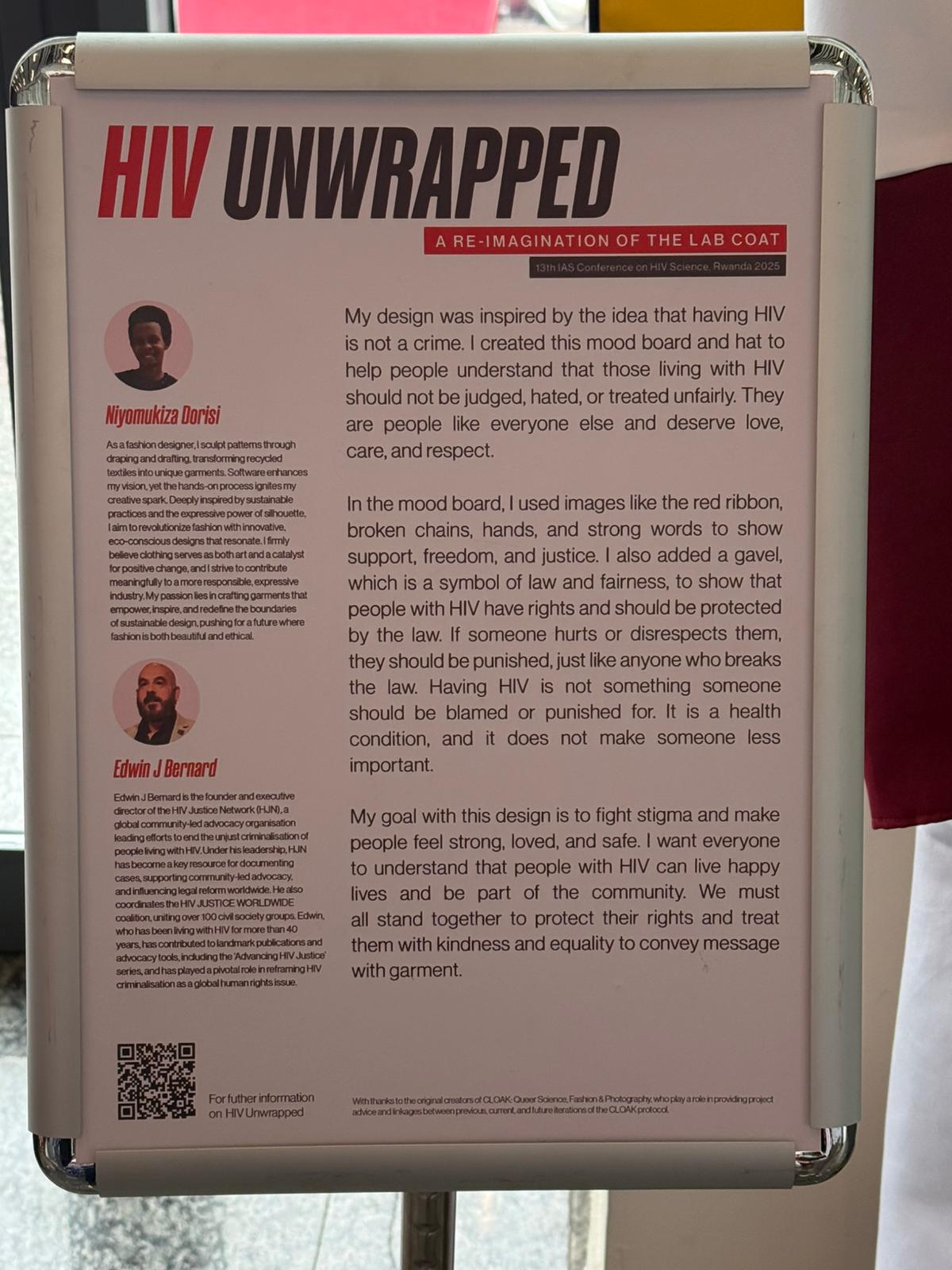
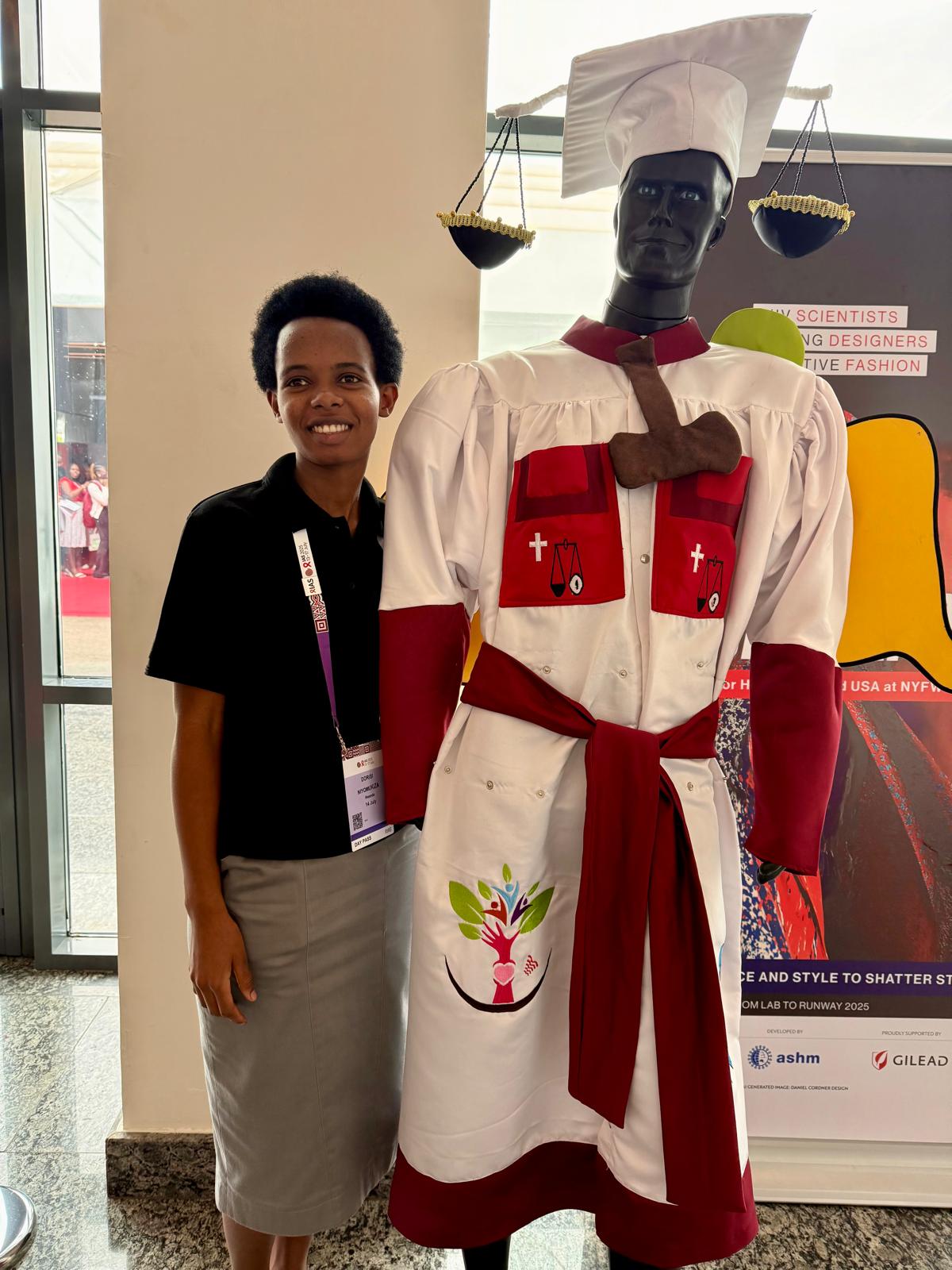
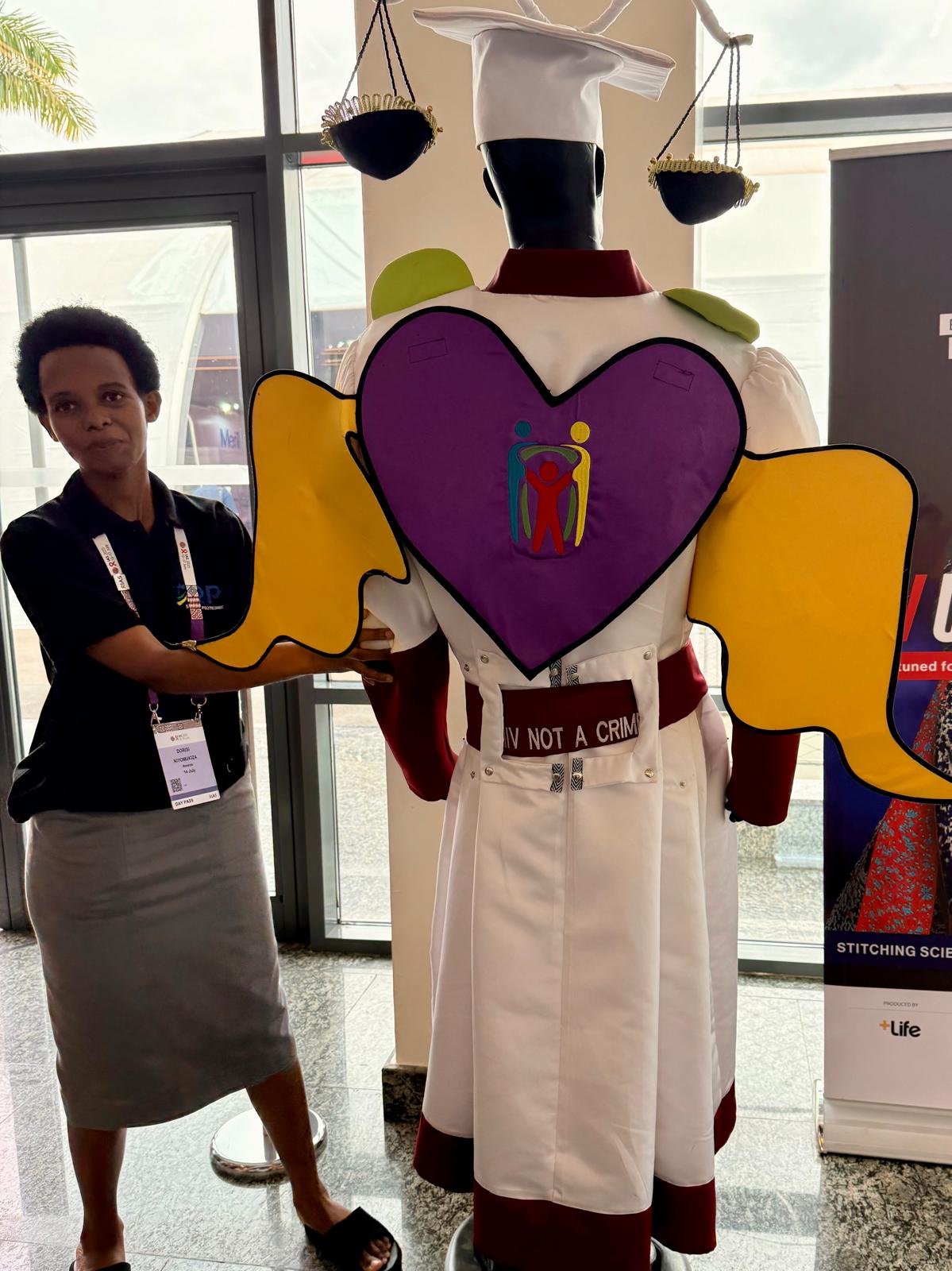
At the intersection of science, art, and activism, HIV Unwrapped is a bold new exhibit reimagining the lab coat as a symbol of resistance, resilience, and representation.

HIV Unwrapped reveals not only the fabric of HIV science, but the human stories stitched within.

Among the collaborations launched today at the 13th IAS Conference on HIV Science in Kigali is a garment created by Kigali-based fashion design student, Dolice Niyomukiza, in partnership with HIV Justice Network’s Executive Director, Edwin Bernard.

Working remotely through online meetings and WhatsApp messages, Dolice and Edwin forged a creative partnership grounded in storytelling, symbolism, and shared commitment.

Dolice’s design, inspired by the ongoing fight for HIV justice, incorporates visual elements representing both the scales of justice and the weight of stigma. 

“My design was inspired by the idea that having HIV is not a crime,” Dolice explains. “My goal was to fight stigma and make people feel strong, loved, and safe.”

Her sketches evolved into a garment that embodies both struggle and strength – a powerful tribute to those unjustly criminalised because of their HIV status.

“Dolice listened deeply,” said Edwin. “She translated complex legal and social issues into fabric, texture and form. Her design doesn’t just speak – it demands to be heard.”

Dolice is one of 12 students from Rwanda Polytechnic – Kigali College (IPRC-Kigali) whose designs feature in the exhibition, alongside peers from London’s Central St Martins and Melbourne’s Royal Institute of Technology.

Together, their work weaves a global narrative of creativity and courage, shaped by cross-continental collaboration.

Today’s launch brought many of these young designers together to showcase their work and share their stories.

The event was hosted by Karl Schmid, HIV-positive broadcaster and host of +LIFE, with welcoming remarks from Beatriz Grinsztejn, President of the International AIDS Society.

Additional speakers included Alexis Apostolellis, CEO of ASHM; Dr. Alice Ikuzwe, Deputy Principal of Academics and Training at IPRC-Kigali; and Ophelia Haanyama, a woman living with HIV from Zambia who migrated to Sweden in 1991.

HJN’s Executive Director remarks to the
56th UNAIDS Board (PCB)

These remarks were made during the discussion of the proposed new Global AIDS Strategy (2026-31), the outline of which can be found here.

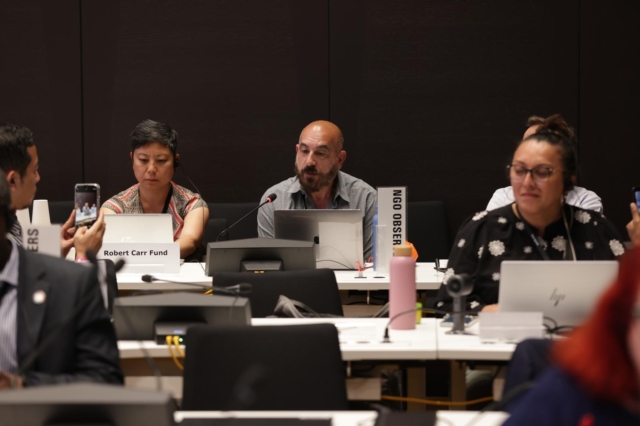
I’m the Executive Director of the HIV Justice Network, speaking on behalf of HIV JUSTICE WORLDWIDE, a coalition of community-led and community-based organisations working to end HIV criminalisation and related injustices.

Last June, I was a panellist during the Thematic Meeting on the Sustainability of HIV Response. You may recall that I highlighted that decriminalisation not only saves lives but it also saves money.

And so we welcome the direction of the new Global AIDS Strategy – especially Priority 2: People-focused – equity, dignity, and access, and Priority 3: Powered communities leading the HIV response, and the related results areas 6: End stigma and discrimination and uphold human rights and gender equality, and 8. Ensure community leadership.

But these priorities and results will remain aspirational unless they are backed by sustained, core funding for community-led networks.

Like UNAIDS itself, the HIV justice movement was born out of crisis, but it is sustained by hope. We know change is possible because we’ve seen it, even under the most difficult conditions. In fact, in just the past five years, 25 jurisdictions in 11 countries have repealed or revised their HIV criminalisation laws – motivated by everything from the futility of enforcement to the need to uphold privacy rights, recognise up-to-date science, and avoid harm to public health.

We have been making progress. But it is patently clear we cannot take any of that progress for granted. Communities, even if they and their organisations are criminalised, will continue to do much of the heavy lifting – reaching those who are excluded, challenging stigma and discrimination, and holding legal systems and governments accountable. That work takes time, trust, and skills – and it’s only possible when core funding is available to sustain expert teams and nurture leadership.

Global networks like ours are crucial in this ecosystem. With core, flexible funding – such as that provided by the Robert Carr Fund which has supported much of our work over the past decade – we support regional and national partners, strengthen the evidence base, build local advocacy capacity, and amplify community voices, including HIV criminalisation survivors. And we complement – not duplicate – Global Fund investments at the country level.

If we want a strategy that results in HIV justice, one that prioritises decriminalisation and is powered by communities, we must also continue to fund those communities that have brought us this far.

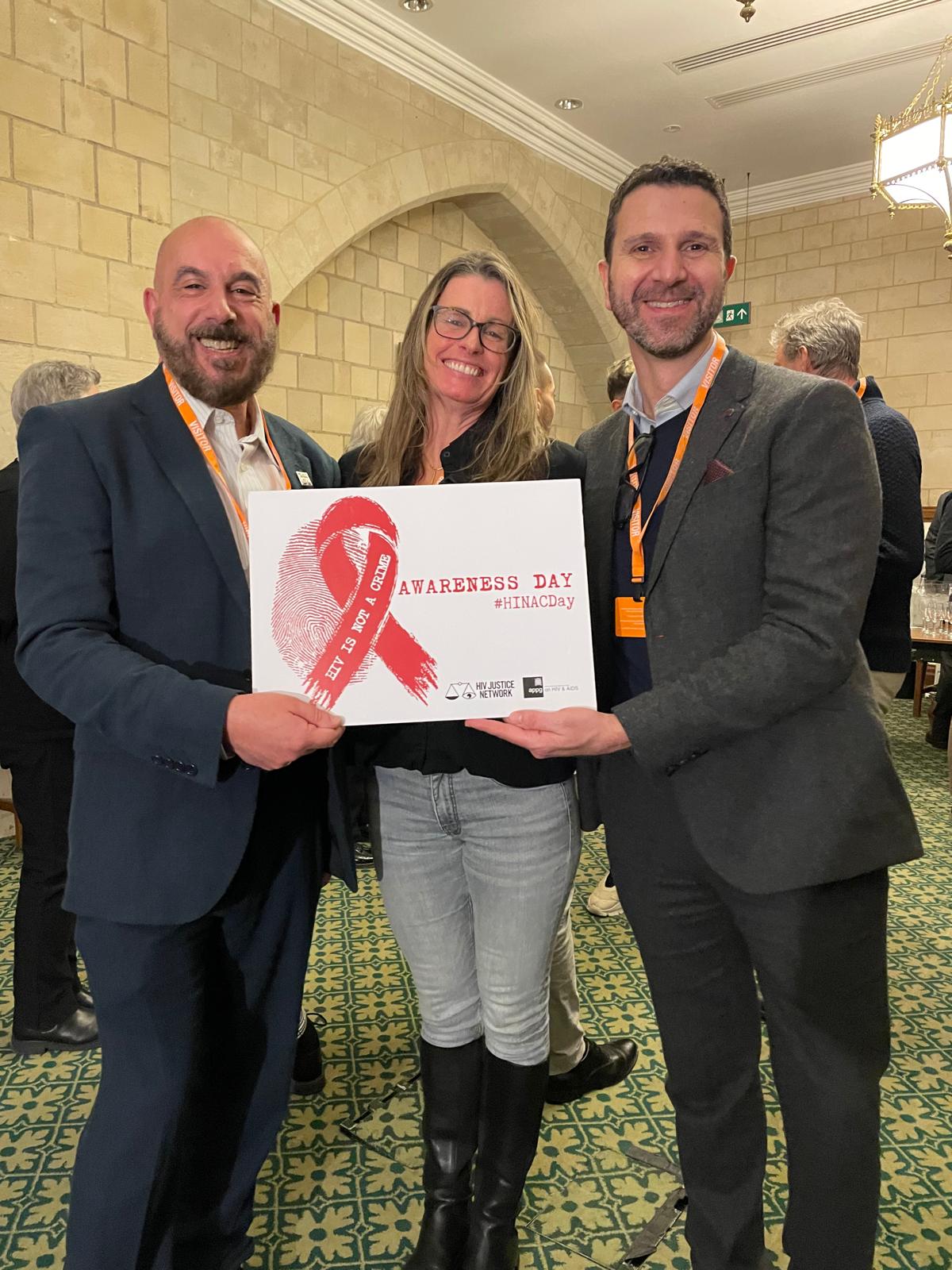
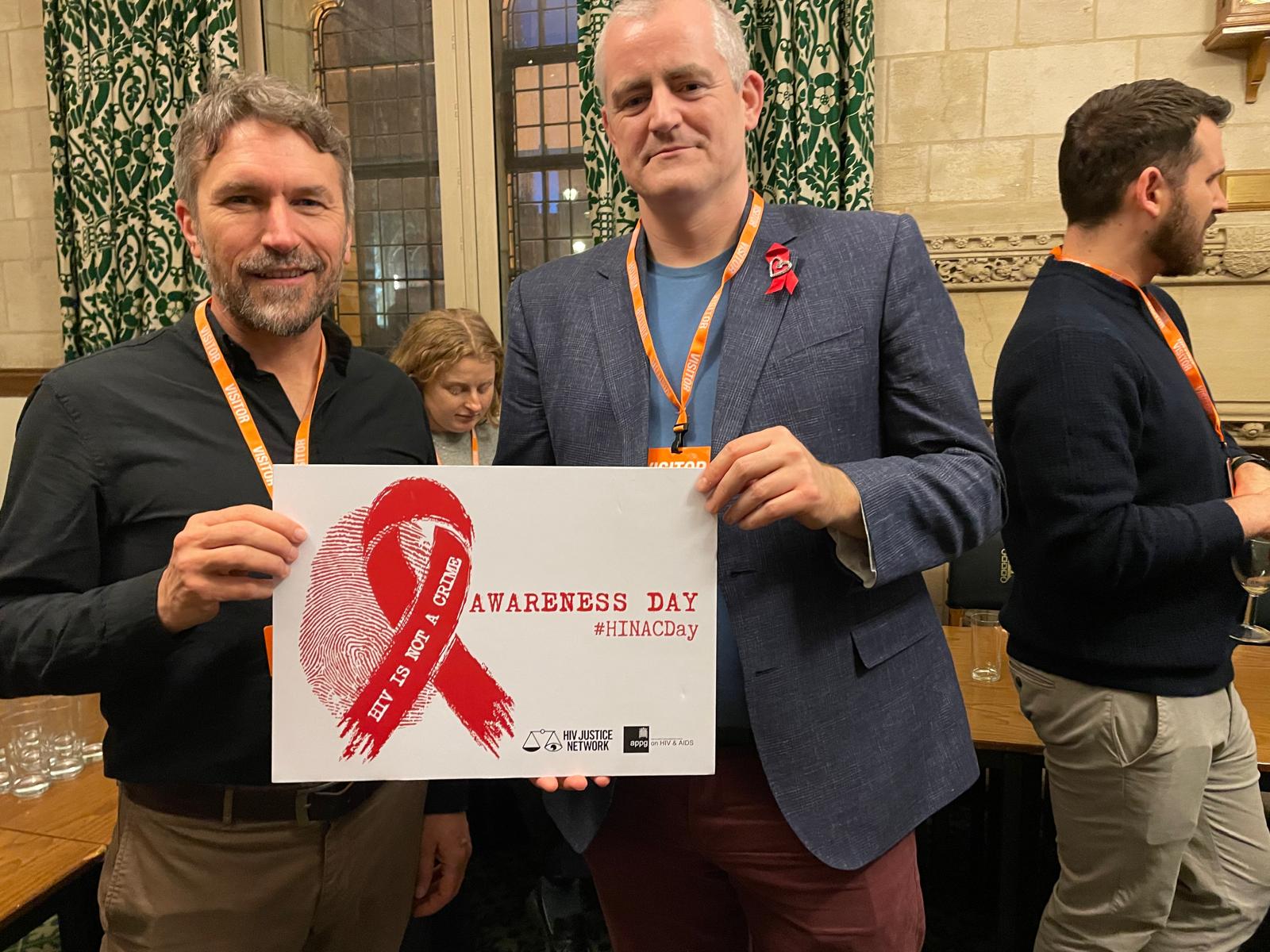
UK Parliamentary Reception Marks HIV Is Not A Crime Awareness Day

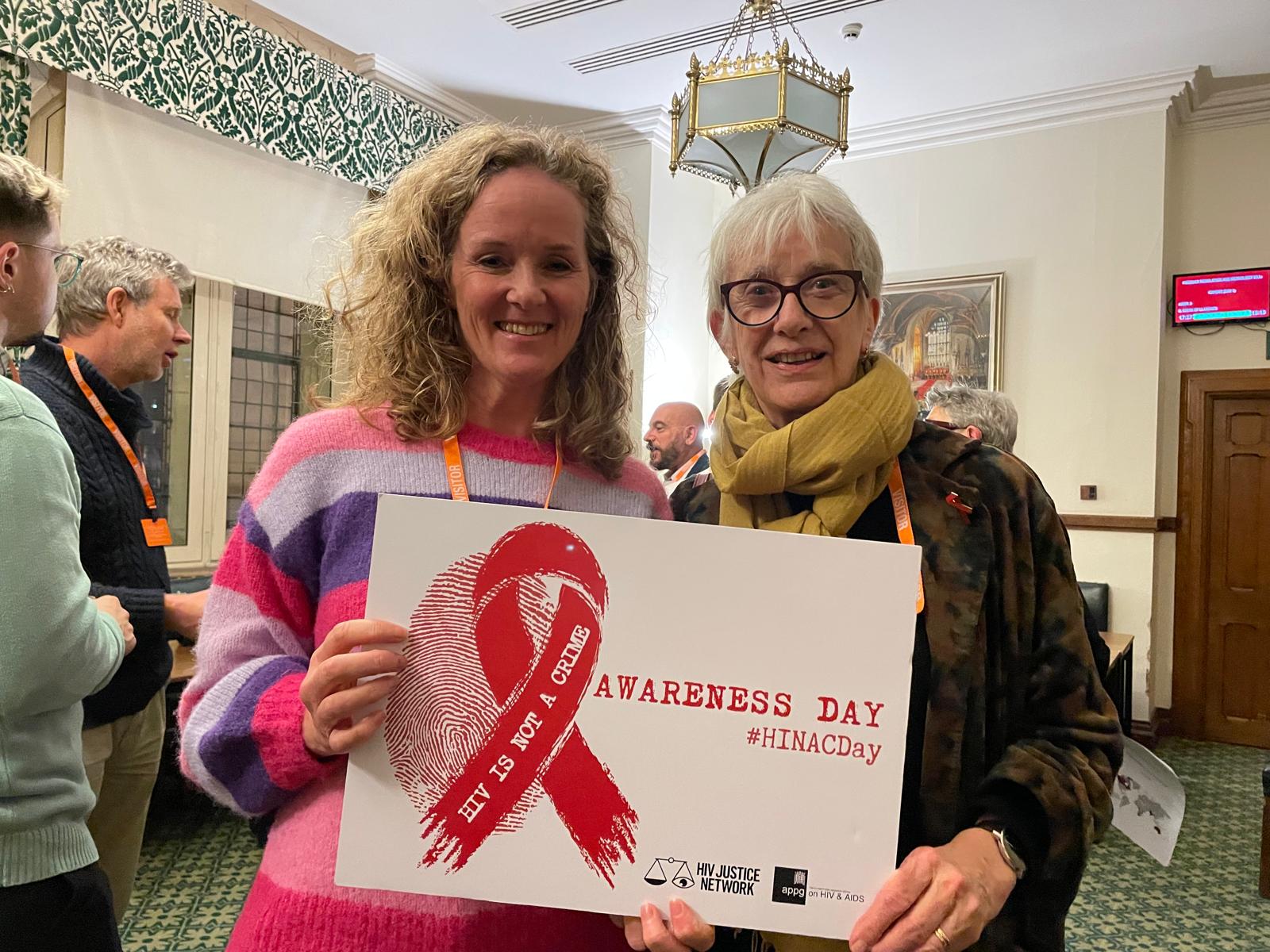
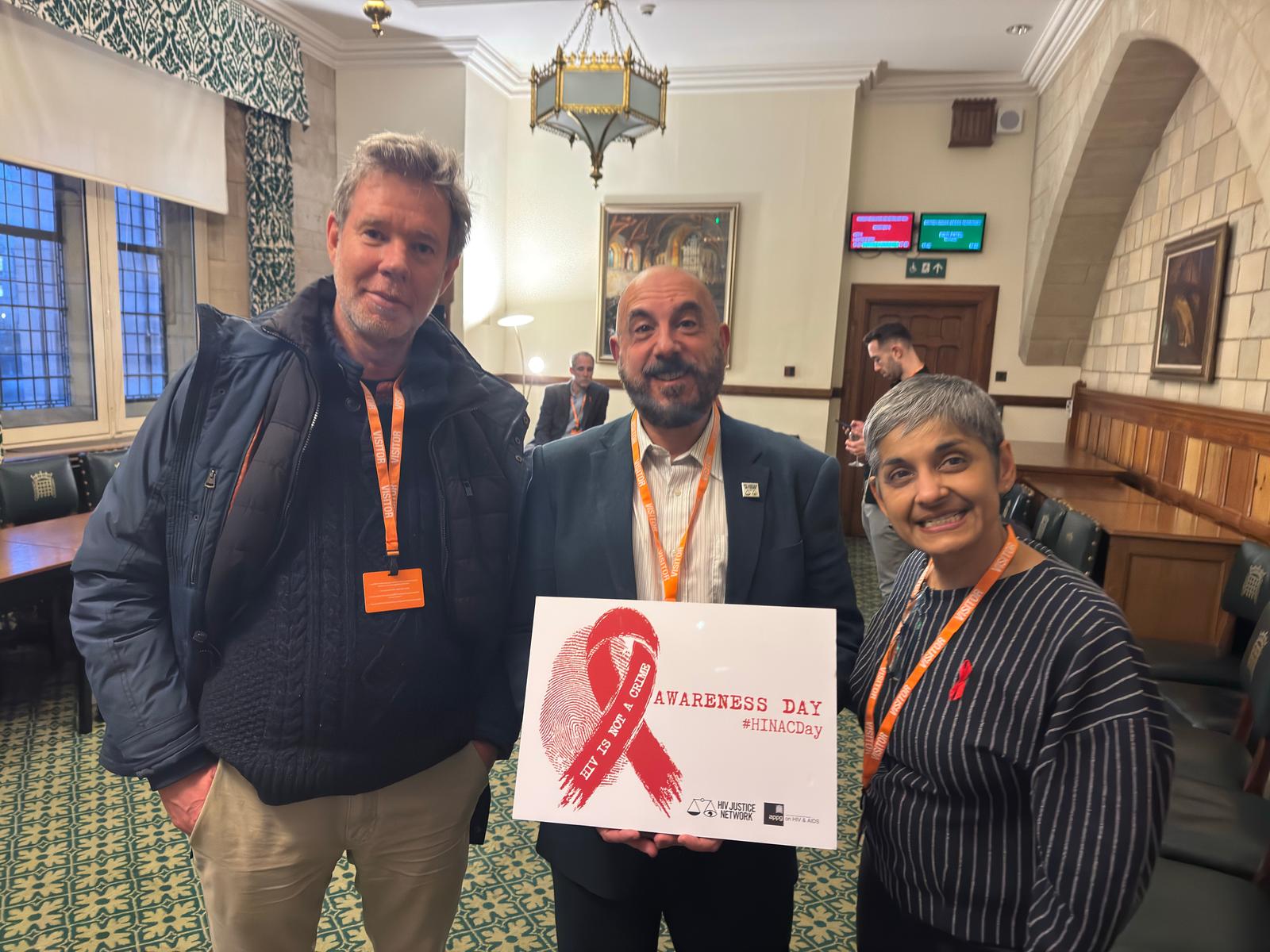
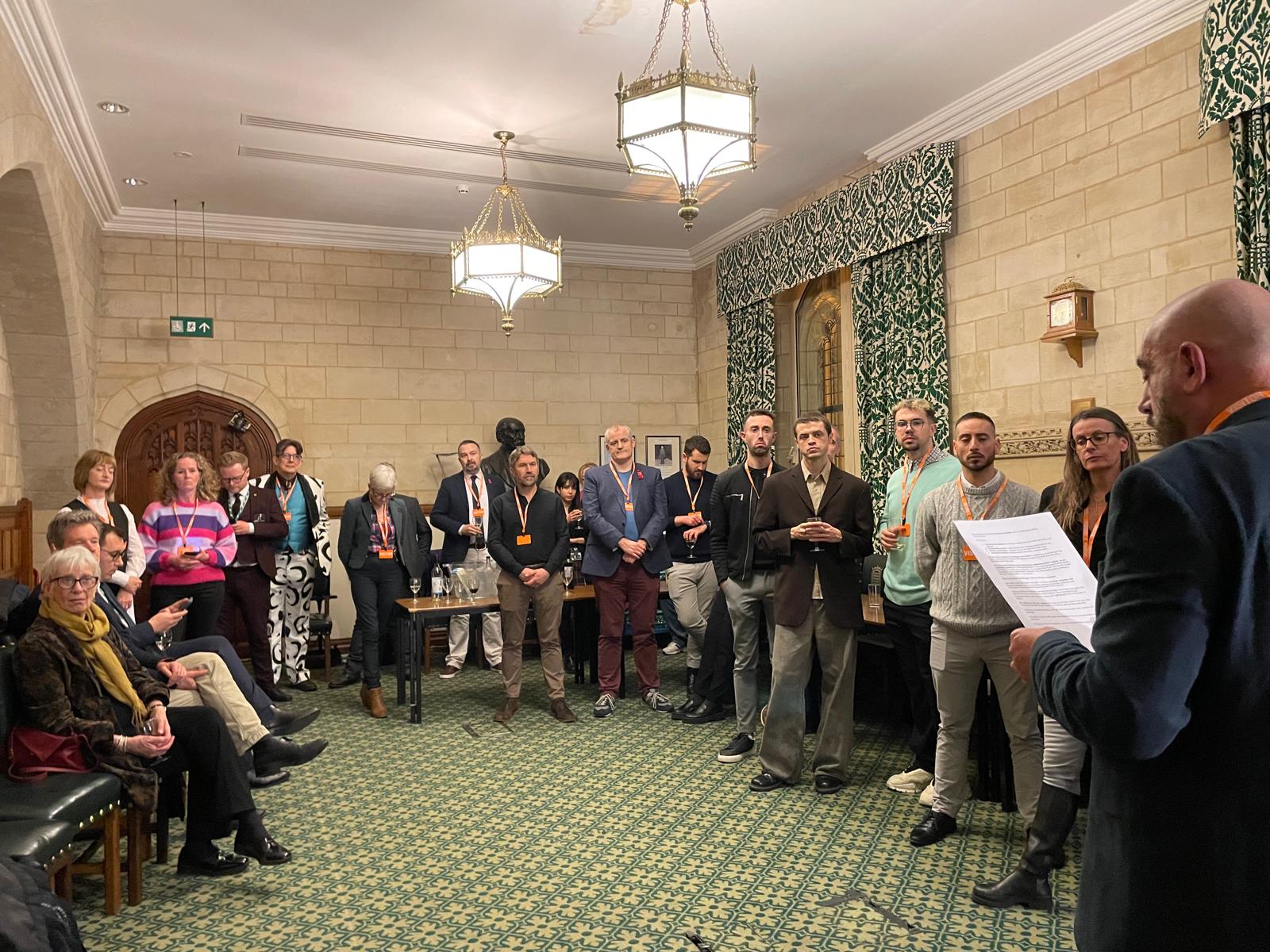
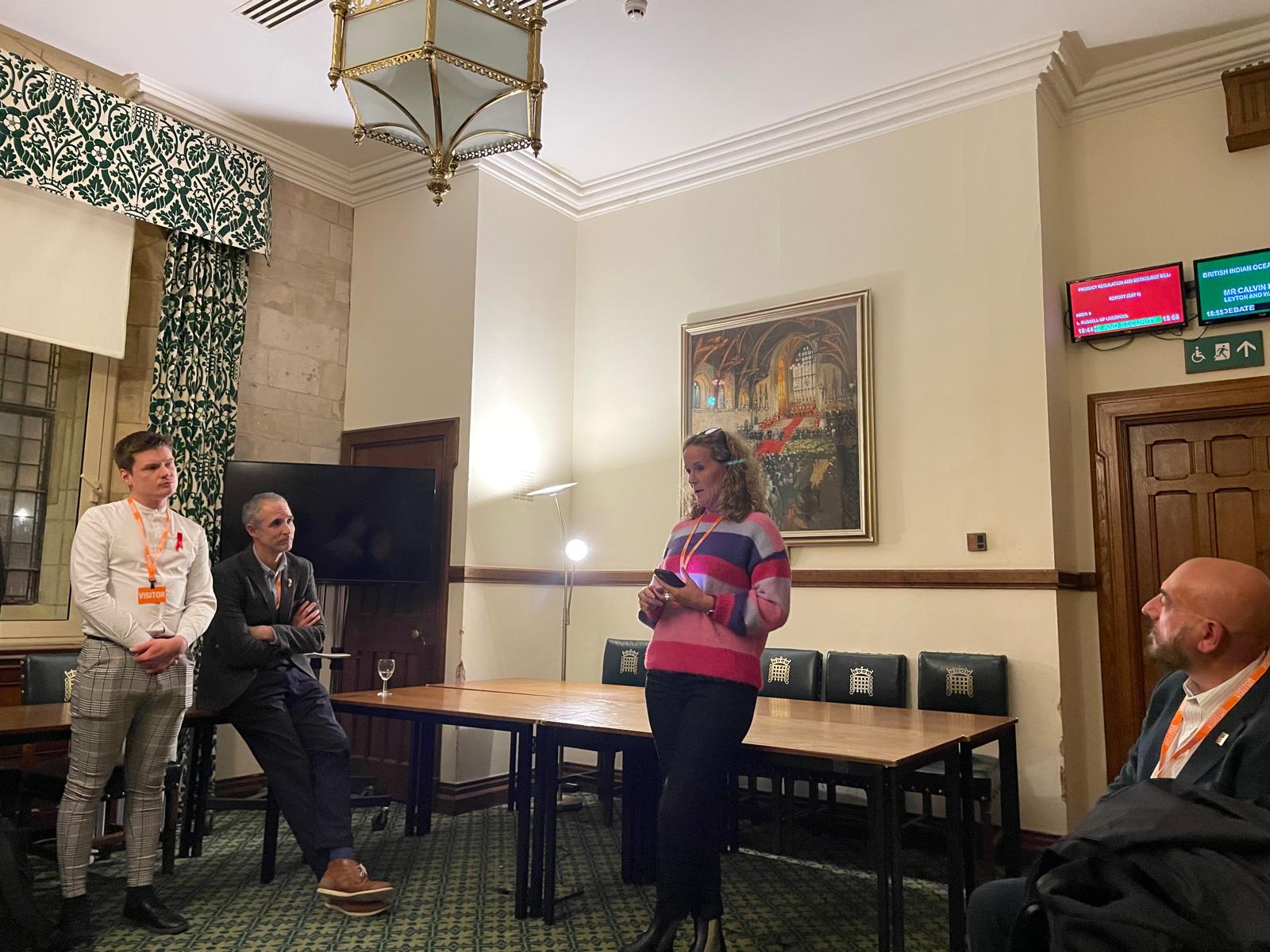
On Wednesday, 26th February, the HIV Justice Network (HJN) co-hosted a parliamentary reception in the UK Parliament in collaboration with the All-Party Parliamentary Group on HIV, AIDS and Sexual Health (APPGA) and the UK’s National AIDS Trust (NAT). The event, held to mark HIV Is Not A Crime Awareness Day, underscored the urgent need to combat HIV criminalisation in an era of rising global anti-rights movements and shrinking HIV funding.

Baroness Barker, Co-Chair of the APPGA, opened the event, acknowledging the significance of addressing HIV criminalisation within the broader context of human rights and public health.

The Global Scale of HIV Criminalisation

HJN’s Executive Director, Edwin J Bernard, was the first speaker, offering insights into the global state of HIV criminalisation, with a particular focus on Commonwealth countries. He highlighted key issues, including:

  • HIV criminalisation is state-sponsored stigma It punishes people living with HIV for acts that wouldn’t be crimes if they were HIV-negative, perpetuating discrimination and undermining public health efforts.
  • The scale of injustice is vast At least 80 countries have HIV-specific criminal laws, and prosecutions have taken place in at least 90 countries, with Commonwealth nations lagging in law reform.
  • Progress is happening, but remains under threat While 17 countries have reformed their laws, critical funding cuts jeopardise continued advocacy and reform efforts.
  • Sustained investment is essential Law reform takes time, and without long-term, flexible funding, the progress made could be reversed, leaving the most marginalised at risk.
  • The time to act is now Policymakers, funders, and advocates must step up to support efforts to end HIV criminalisation and ensure justice for people living with HIV.

Read the full text of his remarks here: HJN Executive Director’s Speech.

Insights from the UK: NAT’s New Report on HIV Criminalisation

Daniel Fluskey, Director of Policy, Research, and Influencing at NAT, presented key findings from NAT’s recently published report, Criminalisation of HIV Transmission: Understanding the Impact (read the report). The report offers several urgent recommendations for reform, including:

  • U=U should be central to legal considerations If an individual has an undetectable viral load, no investigation should take place.
  • Reckless transmission cases can force disclosure Legal proceedings can place individuals in unsafe situations, potentially exposing them to stigma and harm.
  • Police need comprehensive training Investigations must be fair, informed, and necessary to prevent unnecessary criminalisation.
  • Voluntary attendance should replace arrest Arrest should not be the default approach when investigating HIV-related cases.
  • All stakeholders must receive training Including people living with HIV, support staff, and clinicians, to ensure a more informed legal and healthcare environment.

A Personal Story: The Impact of Criminalisation

The event featured a powerful testimony from a man who was unjustly arrested for a crime that never existed—there was no risk, no harm. As a police officer himself, he never imagined he would experience such a humiliating and disproportionate arrest. Multiple officers arrived at his home and charged him with ‘attempted grievous bodily harm’ without explanation or the chance to respond. 

It was only 20 hours into his unlawful detention, during disclosure before his interview, that he was finally told why he had been arrested. At that point, he disclosed his U=U status – evidence that should have prevented his arrest in the first place.

Although he was never formally charged, the case was eventually dismissed as “Entered in Error” after a review of his medical records. Yet, the arrest remains on his record, casting a shadow over his career and deeply impacting his mental health.

“I did nothing wrong,” he concluded, “yet I am still fighting for justice.”

The Forgotten Impact of Past Prosecutions

Sophie Strachan, Director of Sophia Forum, shared her own experience of being diagnosed with HIV while in prison more than two decades ago. She also highlighted the case of the first woman prosecuted in England & Wales for ‘reckless’ HIV transmission. Convicted in 2006 and sentenced to 32 months in prison, she was vilified by the media for a ‘crime’ that would not be prosecuted today under current guidelines.

Nearly 20 years later, this woman remains deeply affected by her conviction. Despite wanting to move forward, her criminal record has made it impossible for her to work or even volunteer. “She is a virtual recluse, terrified that people will still recognise her,” Sophie explained. Her case remains a stark reminder of the lasting impact of unjust prosecutions.

Building Momentum for Change

The reception was attended by members of the UK House of Commons and House of Lords, as well as representatives from UK and international NGOs, philanthropic funders, and advocates working to end HIV criminalisation worldwide.

The discussions reinforced the urgent need for continued advocacy, law reform, and investment to end the unjust criminalisation of people living with HIV. As our Executive Director emphasised: HIV is not a crime. The time to act is now.

US: Lashanda Salinas and Kerry Thomas share their experiences of being incarcerated under HIV criminalisation laws

I want my name back

Lashanda Salinas and Kerry Thomas share their experiences of being incarcerated under state HIV criminalization laws—and talk about how they’re working to change them

In 2006, a former boyfriend accused Lashanda Salinas of never having disclosed her HIV status while they had been dating. Unable to prove she had told him (and that she had an undetectable viral load, meaning she was unable to transmit HIV during sex), Salinas accepted a plea deal and was convicted under Tennessee’s criminal exposure to HIV law. She was sentenced to three years’ probation—and then learned she was required to register as a sex offender. In May 2023, Tennessee Governor Bill Lee signed a bill amending the state’s law, allowing people charged with criminal exposure of HIV to be removed from the registry. Less than two months later, Salinas’s name was taken off the list. She’s started to open up about her experience, talking with audiences across the country, from small groups of individuals living with HIV to state and federal elected officials. She is an active member of the Tennessee HIV Modernization Coalition, a Health Not Prisons advocate, member of The Elizabeth Taylor AIDS Foundation Council of Justice Leaders and is a graduate of Justice Institute 3.0, a program of The Sero Project, a national advocacy and HIV decriminalization organization for people with HIV.

Kerry Thomas has been living with HIV for 36 years, having served 15 years of a 30-year prison sentence at the Idaho State Penitentiary. Although he was undetectable and had used a condom, he was convicted of not telling the woman he had had sex with of his HIV status. Like many state laws that criminalize HIV, Idaho’s law took no account of Thomas’s undetectable status and that no transmission of the virus had occurred. Now 60, Thomas is the community decriminalization strategist for The Sero Project. He also contributes to several organizations, including the Center for HIV Law and Policy’s Aging Advisory Council, the U.S. People Living with HIV Caucus, the Idaho Coalition for HIV Health and Safety and the Vera Institute of Justice’s Designed for Dignity project.

The two advocates talked about their experiences and insights in a Zoom conversation for POSITIVELY AWARE in November. The 80-minute exchange has been excerpted and edited for brevity and clarity. —Rick Guasco

Kerry Thomas: Let’s start with a little bit of your story, wherever you want to start.

Lashanda Salinas: Back in 2006 I was dating a gentleman. We met online. Before we met [in person] I told him, I’m HIV-positive—are you okay with that? He said he was okay with it, and we proceeded to date. But the relationship wasn’t what I thought it would be, so we decided to break up. About a week or two after we broke up, two police officers walked into my job and asked to speak to me. The first thing that ran through my head was, What did I do? I had just moved to Nashville a month or so earlier. They tell me, Your boyfriend has filed charges against you stating that you did not tell him you were HIV-positive. I said I had told him. And they’re like, Well, do you have proof? I said that I didn’t. I didn’t think I ever needed proof. That night, they arrested me. I was under a $100,000 bond. There was no way I was going to ask my family to come up with 10% [to be released from custody]. I wasn’t about to do that. So, I stayed in there about two days shy of two months. My public defender came back with a plea deal, three years’ probation. I didn’t want to take the plea because I knew I was innocent, but in order to get out and spend time with my family, because my father had just passed, I took the plea. I thought, I can get out, spend time with my family and not have to worry about anything. When I got out, my probation officer calls me while I’m at work and tells me that I have to register as a sex offender. I’m like, You got the wrong person. She said because I was charged with criminal exposure of HIV, that this was part of the sentence. I was on the sex offender registry for about 17 years, when Governor Lee amended the criminal exposure law to remove the sex offender registration. I was the first person with HIV to come off the registry. And from there, my life has taken off.

Kerry: You mentioned that you didn’t want to ask your family for bond money. Why? Was it financial?

Lashanda: It was financial. I knew that my family wasn’t able to come up with $10,000. I didn’t want to put that on my mom, because she was at the hospital every day to see my father. It was just something I didn’t want to ask them for.

Kerry: Stigma is such a big part of HIV criminalization—someone being able to just make an accusation. What were your thoughts and feelings when the police came to your job?

Lashanda: When they said that my boyfriend had pressed charges because I didn’t tell him I was HIV positive, my heart sank to my feet.

Kerry: I’m assuming you had never been arrested before?

Lashanda: Well, I have, but nothing like this. When you get arrested for a little thing, you pretty much know what the outcome will be. I knew this was a big thing. I thought I would have a bond of maybe $100 and then get out of there. But when I went before the judge and she said $100,000, I was like, Are you serious?

Kerry: If you look at cases across the country, that’s one of the things that we notice, extremely high bonds that are placed again and again. The narrative from the public becomes, Holy cow, why would they give someone such a high bond? She must’ve done something serious. Instantly, it’s no longer about medical facts. It’s about stigma and criminalizing the person, dehumanizing them. Because you’re a person living with HIV, they paint it as if you’re an imminent threat to society. If we let you out on a low bond, you’re going to try to spread this to everybody.

Lashanda: Exactly, and that’s what they did with me. I was trying to get a bond reduction. The prosecutor said, You’ve got family in such and such cities; you’re a flight risk. Because he said flight risk, the judge agreed and there was no bond reduction.

Kerry: One thing I want folks to know because it’s not talked about much, and if it’s something that you’re not comfortable speaking to, I understand. Can you describe what it was like when they put the [handcuffs] on you? Especially from a woman’s standpoint.

Lashanda: Luckily, I had a woman police officer there. When she told me to turn around and put my hands behind my back, and I did that, you could hear a pin drop, it was so quiet. And then you hear the cuffs clink. At that time, I was like, You are about to go to jail for something you really don’t know nothing about. And I’ll never forget the booking process.

Kerry: What was that like?

Lashanda: Oh, my Lord. It made me feel dirty because you’ve got these males patting you down, touching you where you don’t feel comfortable for them touching you, and then they ask you all these questions, like, Have you been arrested before? If you have been arrested, what was it for? When did you get arrested?

Kerry: Do you think that they knew that you were a person living with HIV?

Lashanda: I don’t think they knew because they didn’t treat me any different. But the thing was, after the booking, they put you in what they call a holding cell. That holding cell, to me, was like I was in a dog kennel.

Kerry: Were you in there by yourself?

Lashanda: No. This is where they put everybody. It’s an open space that’s a fenced in pen. I just felt like a dog. After the bond hearing, I was placed in what they call a pod with all these other women. How they heard about my charge before you get there, I will never know.

I went to sleep, woke up the next morning for breakfast, and the lady that was in the room with me said, Oh, you have HIV. I’m like, How do you know I have HIV? What are you talking about?She said, Well, your charges are criminal exposure of HIV. And I’m like, Oh, God, she knows I’m HIV-positive. How is she going to treat me? Is she going to treat me like the judge did? I told her, Yes, I am HIV-positive. I am undetectable. She said she doesn’t know what “undetectable” meant. But you can’t give it to me, can you? she asked. I was like, Just by sleeping in the room with you, on my own in this bed? How am I supposed to give it to you? She said, Well, I heard you can get it by touching something that an HIV-positive person has touched. At that point, I just sat her down and explained it to her. Ma’am, by you touching my toothbrush or touching my towel or whatever, you’re not going to get HIV. It doesn’t work that way. The sad part was that the lady was 50-something years old; I was in my late 20s at the time and was having to explain this to her.

In there, you’re always thinking, What’s the next step? What do I need to do to get myself out of the situation? You hear about the public defenders having a bad rep, they don’t help you with your case or they don’t care. But I have to applaud my public defender. After my bond hearing, her next step was to have somebody from Vanderbilt [University], from their infectious disease department, come and basically state, She’s undetectable, there is no way she can pass HIV on to anybody. But then the plea came—three years’ probation. I didn’t want to take it, but I did.

Kerry: Why did you?

Lashanda: I took that plea only to get out and be with my family.

Kerry: There’s a public narrative that only guilty people take a plea, only guilty people need a lawyer. So, if you didn’t take the plea?

Lashanda: A year and a half in a women’s prison and a year and a half on probation. I was thinking of taking the plea, but then I was like, No, I’m innocent. I’m not taking that plea.And then I had to request a furlough—that’s what I thought I was going to court for that day, but there was the plea with three years’ probation. I’m sitting there debating, Okay, do you want to take this plea or do you take the furlough, go to the funeral and come back.

Kerry: Whose funeral was it?

Lashanda: It was for my father. [Salinas’ father died in the hospital while she was in custody.] I was thinking, Lashanda, what do you want to do? You know you’re innocent, but people are making it out that you’re guilty, that you did not tell [your boyfriend]. If I take this plea, are people going to think that I’m guilty? I made the decision to take the three years’ probation just to get out and be with my family because that seemed like the only way I could get out.

Kerry: Do you bake? Have you ever made bread?

Lashanda: No, I’ve never made bread.

Kerry: You get the dough, you spin it around, put it on the table and you start kneading it. You soften

it up a bit. That’s what they do at the prosecutor’s office. I call it knead ’em and plead ’em. They put you

in difficult conditions. They’re kneading you, then they hit you with a plea deal. That’s knead ’em and plead ’em. That’s why I’ll push back on anyone who says only guilty people take a plea. No, not when you’re in that oven.

It’s amazing to me how our stories are so similar. This is my 14th month since returning to the community after serving 15 years under Idaho’s criminalization statute. They didn’t play around. I had a $1 million bond. Basically, you’re saying, This dude ain’t getting out. And then you compound that with the ignorance surrounding HIV. If he’s got a $1 million bond, he must be a real threat to society.

I remember going for sentencing the day after I accepted the plea. I was sentenced to 30 years of incarceration. Similar to your circumstances, one of the reasons I took the plea was because at the time, both my parents were elderly. Because of the bond, the media attention on my case was through the roof. As naïve as I was, I thought the best thing to do to cut off the media attention was to accept the plea, go to the judge and for the judge to make an honest decision. Not one time in the sentencing hearing did anything about HIV come up. It was about villainizing the individual. Not one time in the sentencing does the fact that you’re undetectable come up.

Lashanda: It becomes about you and your character, exactly.

Kerry: We need to talk about the scientific facts, the medical facts, about HIV.

I think it’s important that folks understand that both of us are doing amazing things now. Maybe you can share a little bit of some of the projects you’ve worked on after incarceration.

Lashanda: Where do I start?

Kerry: How about start with why? Why did you choose to get involved in HIV decriminalization advocacy?

Lashanda: I chose to get involved after I realized that so many people were being criminalized. There’s advances in medication for HIV, and I realized that the laws didn’t match today’s science. I knew there were people out there who wanted to speak, but were afraid.

Kerry: Afraid of what?

Lashanda: Afraid of being stigmatized, of being told, you’re dirty. At first, I was scared to speak out because I was like, Now everybody in the world is going to know I’m HIV-positive. So I had a conversation with myself, had a conversation with my family to ask how they felt about it. Everybody said they were okay. I put on the whole armor of God to do this. I will take the beatings and the backlash on behalf of people who feel they cannot speak for themselves.

Kerry: I think we’re similar that way. And what I had to realize is that part of my recovery, for lack of a better term, has been I do it because no one should ever have to go through the experience of HIV criminalization. I’ve been very blessed that almost from the moment of my arrest to this day, that I’ve had a lot of support. I’m thankful for that.

The question for me is, What do I want my son to think of me? When I was arrested, my son was 14 years old. He had just turned 14. I made a conscious choice to do my time with dignity. How I’m gonna do my time is how I define myself as an adult, as a man. I’m not talking about machismo stuff, but I’m gonna live my life the best I can, on my terms. Part of the willingness to have a conversation like this is to reclaim that. I want my name back, I want some respect on my name.

Lashanda: Exactly. I want that back.

Kerry: That’s my motivation. That is decriminalization to me.

I was very fortunate to have an opportunity to work with The Sero Project upon my release. I worked with them for 12 years while I was incarcerated. I did 15 [years], 12 of those years was being a part of The Sero Project, on their board and in other capacities. That has been my focus, my outreach into the community. I love that you said that you’re motivated to advocate for the many people who don’t have the capacity.

Lashanda: When I was in jail, I had no resources whatsoever. There was no support besides my family, but I needed somebody else there. I didn’t have anybody to tell me what criminal exposure to HIV was, no one to give me advice as to what I should do. When I felt like I needed to cry, I had nobody.

Kerry: And there was nobody there to tell you that it was going to be okay.

Lashanda: Exactly. Nobody, not even me. I didn’t say that to myself because of the simple fact I didn’t know if it was gonna be okay.

Kerry: I’m often asked, How did you do 15 [years]? You know what? I can’t do 15 years, but I can do today. And God willing, I can do tomorrow. That literally became my mantra, I can do today.Sometimes

I had to break it down—I can do this. I can do this hour. Sometimes it was, I can do this minute.

Lashanda: Exactly.

Kerry: Early on, I said, There’s no such thing as a bad day. I never had 24 hours of that. I might’ve had an hour here, an hour there. I’ve had multiple bad moments in the course of a day, over the course of a lifetime, but God, I’m blessed. There’s something to be thankful for every day, if not every moment, and that speaks to gratitude.

One thing that The Sero Project does is that we have our HINAC [HIV Is Not A Crime] 6 training academy [to be held May 31–June 3 at North Carolina State University in Raleigh]. It’s more than just an academy. It’s about coming together in a sense of community. The training is teaching us how to love each other and work together.

Lashanda: I think of it as, I’m going somewhere to visit with my family, to come together with one goal. We’re going to see how we can take this a step further.

Kerry: I always say HIV is not a crime, but choosing to be ignorant of it is. What is it that motivates you to swing your feet out of bed?

Lashanda: It all boils down to somebody needs me. So I’ve got to swing my feet out of this bed and get started. If everybody else can do it, I can do it as well.

‘There’s advances in medication for HIV, and I realized that the laws didn’t match today’s science.’

Lashanda Salinas

Kerry: Yes, you can. You can reach out to organizations like Sero, reach out to your local clinic, to your state’s legislature. You can reach out and get training. You can stand up.

Lashanda: I think I want to do one-on-one advocacy training. I don’t know what that looks like yet…

Kerry: Why not?

Lashanda: Because when I started, there was no blueprint. I was just throwing it out there. And it just so happened that Sero caught me.

Kerry: If you want to do one-on-one advocacy training, we can plan for that. I choose the term mentorship. I’ll even take it further and call it peer support. Because that’s what it takes, having one-on-one life conversations with folks. That’s what moves the needle.

Lashanda: This is one of the ways to get started in advocacy. Reach out to an organization. It all starts with reaching out.

Kerry: It’s empowering. Just like with our HIV care, we have to become an active participant in our own survival. Surviving criminalization is the same thing. You gotta be an active participant in your own survival.

For more information about the HIV Is Not A Crime 6 summit, GO TO seroproject.com/hinac.

Uzbekistan: Successful advocacy is reshaping HIV legislation and profession bans

“‘A woman came to us, she asked for help with the legal process’” – Interview with Evgenia Korotkova

Translated from Russian with Google translate. Scroll down for the original article. 

Do you want to know how an activist living with HIV went from a public defender in cases under Article 113 of the Criminal Code to a community expert who, after speaking at a feminist forum, is influencing the humanisation of legislation on people living with HIV in Uzbekistan?

Read about it in Svetlana Moroz’s interview with Yevgeniya Korotkova on the significant reduction of the list of prohibited professions for people living with HIV in Uzbekistan.

S.M.: Zhenya, let’s start from the beginning. In 2020, a woman who faced criminal prosecution for working as a hairdresser came to your organisation for help. Tell us about this woman, why did she come to you specifically?

E.K.: I remember very well when we first started to focus on the issue of HIV criminalisation under Article 113 of the Criminal Code. At that time, we were actively collecting cases of people who had been prosecuted under this article. At some point we came across an article on the website of the Ministry of Internal Affairs. It said that an orphaned teenager living with HIV had sexual relations with a teenage girl and she became pregnant. The main message of the article was directed at parents – they should keep an eye on their children and have preventive conversations with them.

However, the article was full of stigmatising, incorrect and distorted information. Amidst the outrage, we decided to write a post on our organisation’s page, where I gave my comments. This post also included an appeal to people living with HIV who were affected by Part 4 of Article 113 of the Criminal Code of the Republic of Uzbekistan. We informed that they could contact us for legal assistance and counselling.

The response to the post did not take long. One of the first to appeal was a woman who worked as a hairdresser. She told us that her case had already been taken to court and at the time of the investigation she didn’t even have money for a lawyer. We started looking for ways to help and were able to find money to pay for a lawyer. The lawyer took on her case and filed a request to review the materials.

In the process of discussions with the woman, we came to the conclusion that I would participate in the court as a public defender from our organisation. It was the first such experience for me. We did not know that we even had the opportunity to represent someone’s interests in this way. So we prepared a motion in which we indicated that in addition to the lawyer, the interests of the woman would be represented by a public defender – that is me.

This case was a serious test for me. We discovered a new form of assistance that we had not even realised existed before.Now we know that the involvement of a public defender can be key in such cases and really helps people.

S.M.: How did this case get to court? Who sued this woman? How did they find out about her HIV status?

E.K.: How exactly this case ended up in court, we learnt only during the trial. It turned out that a police officer came to the woman’s workplace with some list. He showed her that she was on the list and said that it included people who violated the law. In particular, it was about those who were HIV-positive and worked in a hairdresser’s shop, which was allegedly against the law.

In fact, it meant the transfer of health data to law enforcement agencies without the consent of the patient. And at the trial they did not even tried to hide this fact. During the trial, the prosecutor who was in charge of the case directly stated that the information about her HIV status had been obtained from the AIDS Centre.

S.M.: How was the trial? What was the verdict?

E.K.: The trial was held in closed mode, because the case concerned doctor-patient confidentiality and confidentiality of the diagnosis. We were very lucky that we managed to attract doctors who supported our side and defended the woman.She was strictly following the ARV regimen, so she had an undetectable viral load. In court, a doctor acted as an expert who clearly explained that under such conditions, infection was impossible. He also emphasised that there were no casualties at the time of trial.

Even the investigator pointed out in the case file that the woman did not use scissors or razors in her work – only a haircutting machine. She did not use cutting or stabbing objects that could theoretically create a threat of infection. It is important to note that the witnesses who were called from her work did not testify negatively. They confirmed that the woman performed her duties professionally and without impropriety.

In my arguments, I relied on this evidence to argue that our defendant could not have transmitted HIV infection while working as a hairdresser. During the hearing, the judge asked me, ‘As a public defender, would you, yourself,  have gone to this woman to cut your hair?’ I explained that HIV transmission would have required a number of unlikely conditions: she would have had to be off therapy, and she would have cut herself and me badly. Only then could there be a theoretical threat of infection. But even then, the probability of transmission would be extremely low.

I would like to note separately that the Makhali committee gave our defendant serious support. They filed many petitions in her defence, despite knowing her HIV status. The women’s committee also got involved in the process and filed additional motions in favour of our client.

However, the woman was still given a suspended sentence of two and a half years. This decision was taken because of the existence of Article 113, under which she was tried. The court took into account that she had a minor child, and this influenced the mitigation of the sentence.

I still remember how the judge, while announcing the verdict, emphasised the importance of our advocacy work. He said that our organisation should work on changing the list of prohibited professions because it contradicts modern legislation. These words were the starting point for a great advocacy process that took us three years. This case not only showed us the need to protect people in specific situations, but also gave a start to changes at the systemic level.

S.M.: How does this woman live now? How does she feel?

E.K.: You can imagine, she worked in her favourite profession for more than 30 years. It was a terrible blow for her – to lose the job on which she had built her whole life. Given that she had a minor child and was a single mother and the sole breadwinner in the family, all the responsibility fell on her shoulders. After the trial, it was very difficult for her to find a suitable job. She did everything she could: she cleaned houses, worked as a governess, tried a lot of professions.

It was not easy for her to recover from the trial. She underwent a long psychological rehabilitation, and we, on our part, also supported her by providing the services of a psychologist. This period was very difficult for her. When the legislation was finally changed, I was the first to send her the amended document. But unfortunately, she never returned to the profession. Instead, she started her own small business, determined to start her life with a clean slate.

We continued and still maintain a relationship with her. After the trial, she took part in the Judges’ Forum where she spoke openly and told her story. She shared how an unfair piece of legislation had affected her life and it was an act of courage and hope for change. She was motivated by the desire to help others who are HIV-positive so that they would no longer have to face the hardships and humiliation that she went through.

We realised that this case was not only about criminal law issues, but also touched on socio-economic rights. It showed how much stigma and restrictive laws can affect a person’s life, depriving them of a source of income and the ability to work in a profession. Nevertheless, her story has become an important part of our advocacy work and has helped draw attention to the need for change in the law.

S.M.: We have another milestone in this story – in 2022, Uzbekistan, the third country in Central Asia (after Tajikistan and Kyrgyzstan) to receive, among other things, a recommendation to decriminalise HIV transmission from the UN CEDAW committee. Your country received this recommendation, largely due to your participation and our joint shadow report from the community. Can we assume that the recommendations received have influenced the advocacy process in the context of HIV decriminalisation, namely the revision of the list of prohibited professions?

E.K.: I had only three minutes to address the CEDAW Committee and I remember very well how we prepared my oral statement. Every second mattered. It seems to me that all our efforts were interconnected, especially considering how seriously the state takes the recommendations of international structures. In recent years, the country has really seen progress in supporting women.

From 2019, laws have started to be adopted to ensure equal rights for men and women and to combat discrimination and violence against women. I see that the country is emphasising women’s economic independence and expanding our educational and professional opportunities. Special attention is being paid to women’s access to leadership positions, which opens up new perspectives for us.

I believe that the final recommendations of the CEDAW Committee may have played a role in the state’s attention to the list of prohibited professions. This list has long been in need of revision, as it restricted women’s rights and hindered their professional development. The work in this direction is ongoing, and I hope that our efforts will help more women to avoid such restrictions and achieve justice.

S.M.: So, the year is 2024. Something has happened that probably you and we ourselves did not expect – the list of prohibited professions for people living with HIV in Uzbekistan has been changed (reduced) by the order of the Minister of Health. How did this become possible?

E.K.: According to the new order, HIV-positive people can now work as dentists, as long as they are not involved in surgical interventions. This move was a significant change, especially for us, as we had a case where a man working as a dental technician was prosecuted just because of his HIV status.

In November 2023, there was a big feminist forum where I gave a speech that was well received. One of the newspapers wrote about me as a leader living with HIV. After this publication, the presidential administration became interested in my story. I was invited to a meeting to discuss the most pressing issues facing women and people living with HIV.

At the meeting, I tried to use this opportunity to draw attention to the list of prohibited professions. I explained that this piece of legislation is not only of no public benefit, but also destroys people’s lives by restricting their ability to work in their profession. My arguments resonated. I had the impression that I was able to convince them that this order had long ago lost its relevance.

In the course of the discussion, it became clear that the officials with whom I spoke had a progressive approach and were ready to support the initiative to review and amend the list of prohibited professions. Their readiness for dialogue and understanding of the importance of the issue inspired me and gave me hope for further positive changes.

S.M.: Do I understand correctly that officials of the Ministry of Health had no resistance to this initiative? Before that, doctors used to hand over data on people with HIV to the police. I can’t forget the case when a woman (nurse) was simply summoned to the district department in the middle of the working day, checked the list of her contacts in the phone book, asked who she was sleeping with, threatened with an article, etc. – such ‘preventive’ humiliating methods.

E.K.: After the adoption of the new, shortened list of prohibited professions, we started to conduct trainings for medical workers. In the process, we encountered some resistance – among the participants there were epidemiologists who did not support the changes. They argued that the risk of HIV transmission still existed despite the new data and international standards. Such statements rather demonstrated their lack of awareness of the issue. Later, their colleagues, doctors with more experience, even advised them to refrain from making such statements in order not to mislead other participants.

Particularly important for us was the participation of the chief epidemiologist of the Republican AIDS Centre in these trainings. He presented information about the changes in the list of professions in the most professional and accessible way possible, which helped to reduce mistrust and resistance among health workers. His presentations played an important role in disseminating correct knowledge.

We also held meetings with the staff of the Ministry of Internal Affairs, in particular with representatives of the moral department, which supervised cases related to Article 113 of the Criminal Code. They were the ones who had previously initiated cases against HIV-positive hairdressers, leading to their criminal prosecution. These discussions were important for us because they allowed us to convey to law enforcement officials that the old norms no longer meet modern realities and only contribute to the stigmatisation of people living with HIV.

S.M.: We know that you worked on the bill that has already been submitted from your NGO Ishonch va Haet to the parliament. You have also received a response, thankfully. How do you assess the prospect of amending the Criminal Code with regard to Article 113?

E.K.: I am an optimist and I am sure that the changes will definitely happen, it is only a matter of time. It is already evident that people involved in legislative reforms realise that some laws are outdated and need to be revised. It is good to see that the country is actively aiming to update the legislative systems and bring them in line with modern realities.

I believe that our voice will be heard. Especially since these changes are being called for not only by civil society, but also by the scientific and medical community, as well as international organisations. These are not just recommendations invented in a narrow circle of activists/v – they are a global agenda, reflecting progress and the realisation that HIV infection is now a chronic disease that can be lived with thanks to affordable and effective treatment.

Importantly, positive developments are already taking place in the country. Progressive initiatives on gender equality, protection of the rights of women and people living with HIV demonstrate the state’s commitment to improving the quality of life of its citizens. These changes give me confidence that the reform will also affect the legislative acts that still restrict people in their rights and freedom of choice of profession.

I believe in my state and its rational approach. I see that there is a dialogue going on and it is bearing fruit. We are moving towards change, and I am convinced that it will be positive for everyone.

S.M.: One last question. Looking back at your path from a public defender to a community expert who submits a draft of legislative changes to the parliament, tell us how you came to this? Who/what is behind it?

E.K.: Behind all our efforts there are always people – people who need help and support. I myself am a woman living with HIV, and although I have not experienced criminalisation directly, I have had many examples of stigma and discrimination in my life. One of the people I defended in court is now an employee of our organisation. It is stories like these that give me the strength and inspiration to keep going.

Deep down, I dream of a perfect world. No one can stop me from at least trying to make it so. My main motivation has always been to ensure that people living with HIV no longer face discrimination and stigma, that their rights are respected and not violated just because of their diagnosis.

I am convinced that the state should work in the interests of those who live in it. And today we really have good prospects.We see the existence of political will and civil society, which is actively involved in promoting change and has real weight.This is a favourable time for change.

The state is showing a desire to hear us and understand our problems. Moreover, we are not just talking about problems, we are helping to find solutions, and this process becomes an additional motivation for me. When we are listened to and really heard, it is inspiring. It means that our efforts matter and lead to change.

Order of the Minister of Health of the Republic of Uzbekistan

On approval of the List of types of professional activities prohibited for persons infected with the human immunodeficiency virus

[Registered by the Ministry of Justice of the Republic of Uzbekistan on May 07, 2014. Registration № 2581]

Order of the Minister of Health of the Republic of Uzbekistan

On approval of the List of types of professional activities prohibited for persons infected with the human immunodeficiency virus

[Registered by the Ministry of Justice of the Republic of Uzbekistan on February 19, 2024. Registration № 3497]

Types of professional activities prohibited for persons infected with the human immunodeficiency virus

List:

1. Professions related to the procurement and processing of blood and its components.

2. Professions related to the production of blood and its components, sperm and breast milk.

3. Professions related to blood transfusion.

4. Professions related to the following medical procedures: injections; dialysis; venesection;, catheterization.

5. Professions related to cosmetic and plastic surgery.

6. Professions related to dental procedures.

7. Professions related to childbirth.

8. Professions related to abortions and other gynecological operations.

9. Professions related to hair and shaving, piercing, manicure, pedicure and tattooing.

Types of professional activities prohibited for persons infected with the human immunodeficiency virus

List:

1. Professions related to the procurement, processing and transfusion of human blood and/or its components.

2. Professions related to all types of surgery.

3. Professions related to childbirth.

4. Professions related to the following medical procedures: dialysis; venesection; catheterization.


«К нам пришла женщина, она просила помощи с судебным процессом»

Интервью с Евгенией Коротковой

Хотите узнать, как активистка, живущая с ВИЧ, прошла путь от общественной защитницы по делам по 113-й статье Уголовного Кодекса до экспертки сообщества, которая после выступления на феминистском форуме влияет на гуманизацию законодательства в отношении людей, живущих с ВИЧ, в Узбекистане?

Читайте об этом в интервью Светланы Мороз с Евгенией Коротковой, посвященном существенному сокращению списка запрещенных профессий для людей, живучих с ВИЧ, в Узбекистане.

С.М.: Женя, давай начнем с начала. В 2020 году к вам в организацию за помощью обратилась женщина, которая столкнулась с уголовным преследованием за то, что она работала парикмахером. Расскажи про эту женщину, почему она пришла именно к вам?

Е.К.: Я хорошо помню, как мы только начали уделять внимание проблеме криминализации ВИЧ в рамках статьи 113 Уголовного кодекса. Мы тогда активно собирали кейсы людей, которые были привлечены по этой статье. В какой-то момент наткнулись на статью на сайте МВД. В ней говорилось о том, что подросток-сирота, живущий с ВИЧ, вступил в половую связь с подростком девочкой, и она забеременела. Основной посыл статьи был направлен на родителей — мол, следите за детьми и проводите с ними профилактические беседы.

Однако статья была переполнена стигматизирующей, некорректной и искаженной информацией. На фоне возмущения мы решили написать пост на странице нашей организации, где я дала свои комментарии. В этом посте также было обращение к людям, живущим с ВИЧ, которые пострадали по части 4-й статьи 113 УК РУз. Мы сообщали, что они могут обратиться к нам за юридической помощью и консультациями.

Реакция на пост не заставила себя долго ждать. Одной из первых обратилась женщина, работавшая парикмахером. Она рассказала, что ее дело уже передано в суд, а на момент расследования у нее даже не было средств на адвоката. Мы начали искать возможности помочь и смогли найти деньги на оплату адвокатских услуг. Адвокатка взялась за ее дело и подал запрос на ознакомление с материалами.

В процессе обсуждений с этой женщиной мы пришли к выводу, что я буду участвовать в суде как общественная защитница от нашей организации. Это был для меня первый такой опыт. Мы не знали, что у нас вообще есть возможность представлять чьи-то интересы таким образом. И мы подготовили ходатайство, в котором указали, что помимо адвоката интересы женщины будет представлять общественная защитница — то есть я.

Этот случай стал для меня серьезным испытанием. Мы открыли для себя новую форму помощи, о существовании которой раньше даже не догадывались. Теперь мы знаем, что участие общественного(ой) защитника/цы может оказаться ключевым в подобных делах и реально помогает людям.

С.М.: Как это дело попало в суд? Кто подал в суд на эту женщину? Как они узнали о ее ВИЧ статусе?

Е.К.: То, как именно это дело оказалось в суде, мы узнали только в ходе судебного процесса. Оказалось, что к женщине на работу пришел сотрудник милиции с каким-то списком. Он показал ей, что она числится в этом списке, и заявил, что туда включены люди, нарушающие закон. В частности, речь шла о тех, кто имеет ВИЧ-положительный статус и работает в парикмахерской, что якобы противоречит закону.

Фактически это означало передачу данных о состоянии здоровья правоохранительным органам без согласия пациентки. И на суде этот факт даже не пытались скрыть. В ходе разбирательства прокурор, который вел дело, прямо заявил, что сведения о ее ВИЧ-статусе были получены из Центра СПИДа.

С.М.: Как проходил суд? Какой был приговор?

Е.К.: Судебное разбирательство проходило в закрытом режиме, поскольку дело касалось врачебной тайны и конфиденциальности диагноза. Нам очень повезло, что удалось привлечь врачей, которые поддержали нашу сторону и встали на защиту женщины. Она строго следовала режиму приёма АРВ-терапии, благодаря чему у нее была неопределяемая вирусная нагрузка. В суде в качестве эксперта выступил врач, который ясно объяснил, что при таких условиях инфицирование было невозможно. Он также подчеркнул, что на момент разбирательства не было ни одного пострадавшего.

Даже следователь указал в материалах дела, что женщина не пользовалась в работе ножницами или бритвами — только машинкой для стрижки. Она не применяла режущие и колющие предметы, которые могли бы теоретически создать угрозу заражения. Важно отметить, что свидетели, которых вызывали с ее работы, не давали негативных показаний. Они подтверждали, что женщина выполняла свои обязанности профессионально и без нарушений.

В своих прениях я опиралась на эти доказательства, утверждая, что наша подзащитная не могла передать ВИЧ-инфекцию, работая парикмахером. Во время заседания судья задал мне вопрос: «Вы, как общественная защитница, сами бы пошли стричься к этой женщине?» Я объяснила, что для передачи ВИЧ потребовался бы целый ряд маловероятных условий: она должна была бы не принимать терапию, при этом и себя, и меня сильно порезать. Только в таком случае могла бы возникнуть теоретическая угроза заражения. Но даже тогда вероятность передачи была бы крайне низкой.

Отдельно хочу отметить, что махалинский комитет оказал нашей подзащитной серьезную поддержку. Они подали множество ходатайств в ее защиту, несмотря на знание ее ВИЧ-статуса. К этому процессу также подключился комитет женщин, который внес дополнительные ходатайства в пользу нашей клиентки.

Однако женщине все же назначили условный срок — два с половиной года. Это решение было принято из-за существования статьи 113, по которой ее судили. Суд учел, что у нее есть несовершеннолетний ребенок, и это повлияло на смягчение приговора.

До сих пор помню, как судья, оглашая приговор, подчеркнул важность нашего адвокационного направления. Он сказал, что наша организация должна работать над изменением списка запрещенных профессий, потому что он противоречит современному законодательству. Эти слова стали отправной точкой для большого адвокационного процесса, который занял у нас три года. Это дело не просто показало нам необходимость защиты людей в конкретных ситуациях, но и дало старт изменениям на системном уровне.

С.М.: Как сейчас живет эта женщина? Как она себя чувствует?

Е.К.: Представляешь, она проработала в своей любимой профессии более 30 лет. Для нее это было страшным ударом — лишиться работы, на которой она строила всю свою жизнь. Учитывая, что у нее был несовершеннолетний ребенок, а она — мать-одиночка и единственная кормилица в семье, вся ответственность легла на ее плечи. После суда ей было очень тяжело найти подходящую работу. Она бралась за все, что могла: убирала дома, работала гувернанткой, перепробовала массу профессий.

Восстановиться после судебного процесса ей было нелегко. Она проходила длительную психологическую реабилитацию, и мы со своей стороны также оказывали ей поддержку, предоставив услуги психолога. Этот период был очень непростым для нее. Когда наконец изменили законодательство, я первой отправила ей документ с поправками. Но, к сожалению, она так и не вернулась в профессию. Вместо этого она открыла свой маленький бизнес, решив начать жизнь с чистого листа.

Мы продолжали и до сих пор поддерживаем с ней отношения. После суда она приняла участие в Форуме судей, где выступила с открытым лицом и рассказала свою историю. Она поделилась тем, как несправедливая законодательная норма отразилась на ее жизни, и это стало для нее своего рода актом мужества и надеждой на перемены. Её мотивацией было желание помочь другим людям с ВИЧ-положительным статусом, чтобы они больше не сталкивались с теми трудностями и унижениями, через которые прошла она.

Мы понимали, что этот случай касался не только вопросов уголовного права, но и затрагивал социально-экономические права. Он показал, как сильно стигматизация и ограничительные законы могут повлиять на жизнь человека, лишив его источника дохода и возможности работать по профессии. Тем не менее, ее история стала важной частью нашей адвокационной работы и помогла привлечь внимание к необходимости изменений в законодательстве.

С.М.: У нас есть еще одна веха в этой истории — в 2022 году, Узбекистан, третья страна в ЦА (после Таджикистана и Кыргызстана), которая среди прочего получила рекомендацию декриминализировать передачу ВИЧ от комитета ООН CEDAW. Твоя страна получила эту рекомендацию, во многом, благодаря твоему участию и нашему совместному теневому отчету от сообщества. Можем ли мы считать, что полученные рекомендации повлияли на адвокационные процесс в контексте декриминализации ВИЧ, а именно пересмотр списка запрещенных профессий?

Е.К.: У меня было всего три минуты на выступление перед членами Комитета CEDAW, и я прекрасно помню, как мы готовили мое устное заявление. Каждая секунда имела значение. Мне кажется, что все наши усилия были взаимосвязаны, особенно с учетом того, насколько серьезно государство относится к рекомендациям международных структур. В последние годы в стране действительно заметен прогресс в вопросах поддержки женщин.

С 2019 года начали приниматься законы, направленные на обеспечение равноправия мужчин и женщин и борьбу с дискриминацией и насилием в отношении женщин. Я вижу, что в стране делается акцент на экономическую независимость женщин и расширение наших возможностей в образовании и профессиональной деятельности. Особое внимание уделяется доступу женщин к руководящим должностям, что открывает новые перспективы для нас.

Я верю, что заключительные рекомендации Комитета CEDAW могли сыграть свою роль в том, что государство обратило внимание на перечень запрещенных профессий. Этот список давно нуждался в пересмотре, так как он ограничивал права женщин и препятствовал их профессиональному развитию. Работа в этом направлении продолжается, и я надеюсь, что наши усилия помогут еще большему числу женщин избежать подобных ограничений и добиться справедливости.

С.М.: Итак, 2024 год. Случилось то, что, наверное, вы и мы сами не ожидали – приказом министра здравоохранения изменен (сокращен) список запрещенных профессий для людей, живущих с ВИЧ, в Узбекистане. Как это стало возможным?

Е.К.: Согласно новому приказу, ВИЧ-положительные люди теперь могут работать стоматологами, если они не занимаются хирургическими вмешательствами. Этот шаг стал значимым изменением, особенно для нас, поскольку у нас был случай, когда мужчину, работающего зубным техником, привлекли к уголовной ответственности только из-за его ВИЧ-статуса.

В ноябре 2023 года прошел большой феминистский форум, на котором я выступила с речью, вызвавшей широкий отклик. В одной из газет обо мне написали как о лидерке, живущей с ВИЧ. После этой публикации моей историей заинтересовались в администрации президента. Меня пригласили на встречу, чтобы обсудить наиболее острые проблемы, с которыми сталкиваются женщины и люди, живущие с ВИЧ.

На встрече я постаралась использовать этот шанс, чтобы привлечь внимание к списку запрещенных профессий. Я объяснила, что этот законодательный акт не только не приносит общественной пользы, но и разрушает жизни людей, ограничивая их возможности работать по профессии. Мои доводы нашли отклик. У меня сложилось впечатление, что я смогла убедить их в том, что этот приказ давно утратил свою актуальность.

В процессе обсуждения стало очевидно, что чиновники, с которыми я общалась, проявили прогрессивный подход и готовы поддержать инициативу по пересмотру и изменению списка запрещенных профессий. Их готовность к диалогу и понимание важности вопроса вдохновили меня и дали надежду на дальнейшие позитивные изменения.

С.М.: Я правильно понимаю, что у чиновников Минздрава не было сопротивления этой инициативе? До этого врачи передавали милиции данные о людях с ВИЧ. Не могу забыть случай, когда женщину (медсестру) просто посредине рабочего дня вызвали в райотдел, проверяли список ее контактов в телефонной книге, спрашивали с кем она спит, угрожали статьей, и т.д. — такие «профилактические» унизительные методы.

Е.К.: После принятия нового, сокращенного списка запрещенных профессий мы начали проводить тренинги для медицинских работников. В процессе мы столкнулись с определенным сопротивлением — среди участников встречались эпидемиологи, которые не поддерживали изменения. Они утверждали, что риск передачи ВИЧ все равно существует, несмотря на новые данные и международные стандарты. Такие заявления, скорее, демонстрировали их недостаточную осведомленность в вопросе. Позже их коллеги, врачи с большим опытом, даже советовали им воздержаться от таких высказываний, чтобы не вводить в заблуждение других участников.

Особенно важным для нас стало участие главного эпидемиолога Республиканского центра СПИД в этих тренингах. Он представил информацию об изменениях списка профессий максимально профессионально и доступно, что помогло снизить уровень недоверия и сопротивления среди медработников. Его выступления сыграли важную роль в распространении правильных знаний.

Мы также проводили встречи с сотрудниками МВД, в частности с представителями нравственного отдела, который курировал дела, связанные со статьей 113 УК. Именно они ранее инициировали дела против ВИЧ-положительных парикмахеров, приводя к их уголовному преследованию. Эти обсуждения были для нас важны, поскольку позволили донести до сотрудников правоохранительных органов, что старые нормы больше не отвечают современным реалиям и только способствуют стигматизации людей, живущих с ВИЧ.

С.М.: Мы знаем, что ты работала над законопроектом, который уже подан от вашей неправительственной организации «Ишонч ва Хает» в парламент. Вы еще ответ получили, с благодарностью. Как ты оцениваешь перспективу внесения изменений в УК в отношении 113-й статьи?

Е.К.: Я — оптимистка и уверена, что изменения непременно произойдут, это лишь вопрос времени. Уже сейчас видно, что люди, занимающиеся реформами в области законодательства, осознают, что некоторые законы устарели и требуют пересмотра. Приятно видеть, что страна активно нацелена на обновление законодательных систем и приведение их в соответствие с современными реалиями.

Я верю, что наш голос будет услышан. Тем более, что к этим изменениям призывает не только гражданское общество, но и научное и медицинское сообщество, а также международные организации. Это не просто рекомендации, придуманные в узком кругу активисток/в — это глобальная повестка, отражающая прогресс и понимание того, что ВИЧ-инфекция сегодня является хроническим заболеванием, с которым можно жить благодаря доступному и эффективному лечению.

Важно, что в стране уже происходят позитивные сдвиги. Прогрессивные инициативы в области гендерного равенства, защиты прав женщин и людей, живущих с ВИЧ, демонстрируют стремление государства к улучшению качества жизни своих граждан. Эти перемены дают мне уверенность, что реформа затронет и законодательные акты, которые до сих пор ограничивают людей в их правах и свободе выбора профессии.

Я верю в свое государство и его рациональный подход. Вижу, что идет диалог, и он приносит плоды. Мы движемся в сторону перемен, и я убеждена, что они будут положительными для всех.

С.М.: Последний вопрос. Оглядываясь на твой путь от общественной защитницы до экспертки сообщества, которая подает в парламент проект законодательных изменений, расскажи, как ты к такому пришла? Кто/что за этим стоит?

Е.К.: За всеми нашими усилиями всегда стоят люди — люди, которые нуждаются в помощи и поддержке. Я сама женщина, живущая с ВИЧ, и, хотя напрямую не сталкивалась с криминализацией, в моей жизни было немало примеров стигмы и дискриминации. Один из тех, кого я защищала в суде, теперь стал сотрудником нашей организации. И такие истории дают мне силы и вдохновение двигаться дальше.

В глубине души я мечтаю об идеальном мире. Никто не может запретить мне хотя бы пытаться сделать его таким. Моя главная мотивация всегда была в том, чтобы люди, живущие с ВИЧ, больше не сталкивались с дискриминацией и стигмой, чтобы их права уважались и не нарушались только из-за их диагноза.

Я убеждена, что государство должно работать в интересах тех, кто в нем живет. И сегодня у нас действительно есть хорошие перспективы. Мы видим наличие политической воли и гражданского общества, которое активно участвует в продвижении изменений и имеет реальный вес. Это благоприятное время для перемен.

Государство проявляет желание услышать нас и понять наши проблемы. Более того, мы не просто говорим о проблемах, мы помогаем находить решения, и этот процесс становится для меня дополнительной мотивацией. Когда нас слушают и действительно слышат — это вдохновляет. Это значит, что наши усилия имеют значение и ведут к изменениям.

Приказ Министра здравоохранения Республики Узбекистан

Об утверждении Перечня видов профессиональной деятельности, запрещенных для лиц, зараженных вирусом иммунодефицита человека

[Зарегистрирован Министерством юстиции Республики Узбекистан 07 мая 2014 года. Регистрационный № 2581]

Приказ Министра здравоохранения Республики Узбекистан

Об утверждении Перечня видов профессиональной деятельности, запрещенных для лиц, зараженных вирусом иммунодефицита человека

[Зарегистрирован Министерством юстиции Республики Узбекистан 19 февраля 2024 года. Регистрационный № 3497]

Виды профессиональной деятельности, запрещенные лицам, инфицированным вирусом иммунодефицита человека

СПИСОК

1. Профессии, связанные с заготовкой и переработкой крови и ее компонентов.

2. Профессии, связанные с получением крови и ее компонентов, спермы и грудного молока.

3. Профессии, связанные с переливанием крови.

4. Профессии, связанные со следующими медицинскими процедурами: инъекции; диализ; венесекция; катетеризация.

5. Профессии, связанные с косметическими и пластическими операциями.

6. Профессии, связанные со стоматологическими процедурами.

7. Профессии, связанные с родами.

8. Профессии, связанные с абортами и другими гинекологическими операциями.

9. Профессии, связанные с прической и бритьем, пирсингом, маникюром, педикюром и татуировкой.

Виды профессиональной деятельности, запрещенные лицам, инфицированным вирусом иммунодефицита человека

СПИСОК

1. Профессии, связанные с заготовкой, переработкой и переливанием крови человека и (или) ее компонентов.

2. Профессии, связанные со всеми видами хирургии.

3. Профессии, связанные с родами.

4. Профессии, связанные со следующими медицинскими процедурами: диализ; венесекция; катетеризация.


HJN’s Executive Director’s remarks at the UNAIDS Board Meeting on the sustainability of the HIV response

UNAIDS Programme Coordination Board (PCB) Thematic Meeting on the Sustainability of HIV Response

Round Table 1: The context and urgency of sustainability planning and response

Remarks from Edwin J Bernard, Executive Director, HIV Justice Network, Netherlands on community leadership to address human rights barriers

I am a gay man who acquired HIV 41 years ago in 1983. It was a significant year in other ways too:

  • HIV was first identified as the cause of AIDS
  • WHO held its first global AIDS meeting
  • Richard Berkowitz and Michael Callen published ‘how to have sex in an epidemic’ inventing condom-based safer sex
  • And a small group of people living with AIDS became the first community leaders in the HIV response, creating the Denver Principles, the blueprint for GIPA and MIPA principles now embedded in UNAIDS’ approach to community leadership to address human rights barriers.

Communities involve many different groups, working locally, nationally, regionally and globally. We are communities of women, men and youth living with HIV in all our diversities, as well as communities of gay men and other men who have sex with men, communities of sex workers, communities of transgender people, communities of people who use drugs. We are the key populations

And then there are communities of allies – human rights defenders who understand that public health is human rights and vice versa.

Despite member states committing to removing these human rights barriers in the 2021 Political Declaration – the 10-10-10 targets – we are far from getting anywhere close to achieving these targets because there are still far too many human rights barriers.

These are far too numerous to list, but they include gender inequality and gender-based violence; discrimination when receiving healthcare, in the workplace, in education, and in humanitarian settings; not being able to enter or migrate to a country of which you are not a citizen because of your HIV status; and the growing number of countries with so called ‘foreign agent’ laws that are closing civic space and stifling community leadership.

On top of these, every single member state criminalises one or more of the key populations, fully or partially, and 79 countries have HIV-specific criminal laws that unjustly criminalise HIV non-disclosure, exposure or unintentional transmission.

Ending HIV criminalisation is the focus of my organisation, the HIV Justice Network, and the global HIV JUSTICE WORLDWIDE coalition that we co-ordinate.

We can do this work thanks primarily to the Robert Carr Fund, which recognises the importance of community-led regional and global networks and our key role in addressing human rights barriers impacting the HIV response.

Dismantling discriminatory systems that have been built over decades and that oppress people living with and affected by HIV takes time and money – and needs community leadership.

So, if sustainability means a move to country-led integrated health systems, this will also mean that all the criminalised and marginalised people I’ve just mentioned will be even more left behind than they currently are.

But there’s a cheap and simple solution: decriminalisation!

A 2022 study from the Alliance for Public Health found that cost savings from decriminalisation of drug use could greatly reduce HIV transmission through increased coverage of opioid agonist therapy and antiretroviral therapy among people who use drugs in eastern Europe and central Asia.

Another 2022 study, from the Williams Institute, on the enforcement of HIV criminalisation laws in Tennessee of so called ‘aggravated prostitution’ – when a sex worker arrested for soliciting is found to be living with HIV – and criminal HIV ‘exposure’ – when a person living with HIV is prosecuted for allegedly not disclosing their HIV status before sex that may or may not risk transmission – estimated that the total cost of incarceration in prison for these unjust HIV-related crimes was $3.8 million.

And a 2021 study found that decriminalising sex work in Washington DC would generate over USD 5000 paid in income taxes by each sex worker – because sex work is work, after all! – plus more than USD20,000 in criminal legal system savings per sex worker a year.

If you decriminalise you not only save money you also ensure that every single person living with, or affected by HIV, gets the HIV services they need.

Following the science and basing laws and policies on public health and not morality or stigma saves money.

So, member states, if you just stop wasting money on ineffective, counterproductive criminalisation and invest in proven treatment and prevention programmes, sustainability of the HIV response is within sight.

To get to 2030, and beyond, to end AIDS as a public health threat, we need to ensure that we don’t forget the dignity and rights of people living with and affected by HIV  – easy to cut funding for, and hard to measure – and make sure that we include ending all of forms of HIV-related stigma, discrimination and criminalisation and strive for all forms of equality and empowerment.

In the drafting room on Tuesday, the NGO Delegation added criminalisation to the list that included stigma and discrimination, but the final draft you will vote on later today no longer includes mention of criminalisation as a barrier to testing. I implore you commit to ensure that my recommendation to decriminalise to sustain the HIV response is included in any and all decision points that will come out of this meeting.

Key messages summary

  • Human rights, gender justice and all the other10-10-10 societal enabler targets are essential, non-negotiable aspects of sustainability.
  • Community leadership is essential to reach 2030 and to sustain the HIV response beyond that date.
  • Don’t underestimate – or create more barriers for – communities. We are the experts in understanding what is needed to successfully achieve the end of AIDS.
  • Support communities by funding us, including replenishing the Robert Carr Fund.
  • The single most cost-effective intervention for every member state is to decriminalise, decriminalise, decriminalise!

HIV Is Not A Crime Awareness Day goes global!

Next Wednesday 28th February is HIV Is Not A Crime Awareness Day.

For the first time, HIV Is Not A Crime Awareness Day – which began two years ago in the United States – has gone global! This year’s theme is: “You care about ending HIV criminalisation – you just don’t know it yet!”

That’s why we’ll be producing a very special episode of our webshow, HIV Justice Live! on this important new date for global HIV decriminalisation activism, where I’ll be joined on my ‘virtual sofa’ by an inspiring group of community-based expert activists – Florence Riako Anam (GNP+); HIV and human rights consultant, Michaela Clayton; Mikhail Golichenko (HIV Legal Network); and Andy Tapia and Kerry Thomas (SERO Project) – to explain why HIV criminalisation impacts us all, and what you can do about it.

We’ll be streaming live to YouTube and Facebook, so you’ll be able to interact with us during our Q&A session. By March 1st, Zero Discrimination Day, the show will also be available on our YouTube channel where it will be subtitled in English, allowing for automatic translation into any language.

HIV Is Not A Crime Awareness Day was the brainchild of our long-time HIV JUSTICE WORLDWIDE partner, the SERO Project’s co-Executive Director, Kamaria Laffrey. HIV Is Not A Crime Awareness Day was launched two years ago in collaboration with the Elizabeth Taylor AIDS Foundation, community activists and public policy organisations across the United States and grown in size and prominence ever since.

HIV Is Not A Crime Awareness Day takes place on 28th February for several reasons. It’s a date that bridges two major US awareness months – Black History Month in February and Women’s History Month in March. And it’s also a symbolic nod to the legacy of the late Hollywood icon and early AIDS activist, Elizabeth Taylor, who was born on 27th February.

HIV Is Not A Crime Awareness Day is an opportunity to amplify the voices of those who have been criminalised based on their HIV status; to remind people of the negative impacts of HIV criminalisation on health and rights; to celebrate the work of many individuals who are part of the growing global movement to end HIV criminalisation; and to recognise that there’s still much to do to achieve HIV JUSTICE WORLDWIDE.

You can find out what other events are taking place on and around HIV Is Not A Crime Awareness Day by visiting a dedicated Facebook page or by following the hashtag #HINACDay.