LGBTQ+ collective seeks progress in reform to eliminate crime that criminalizes people with HIV in Baja California
The group called on the State Congress’s Diversity Committee to put the bill seeking to repeal the offence of “risk of transmission” to a vote.
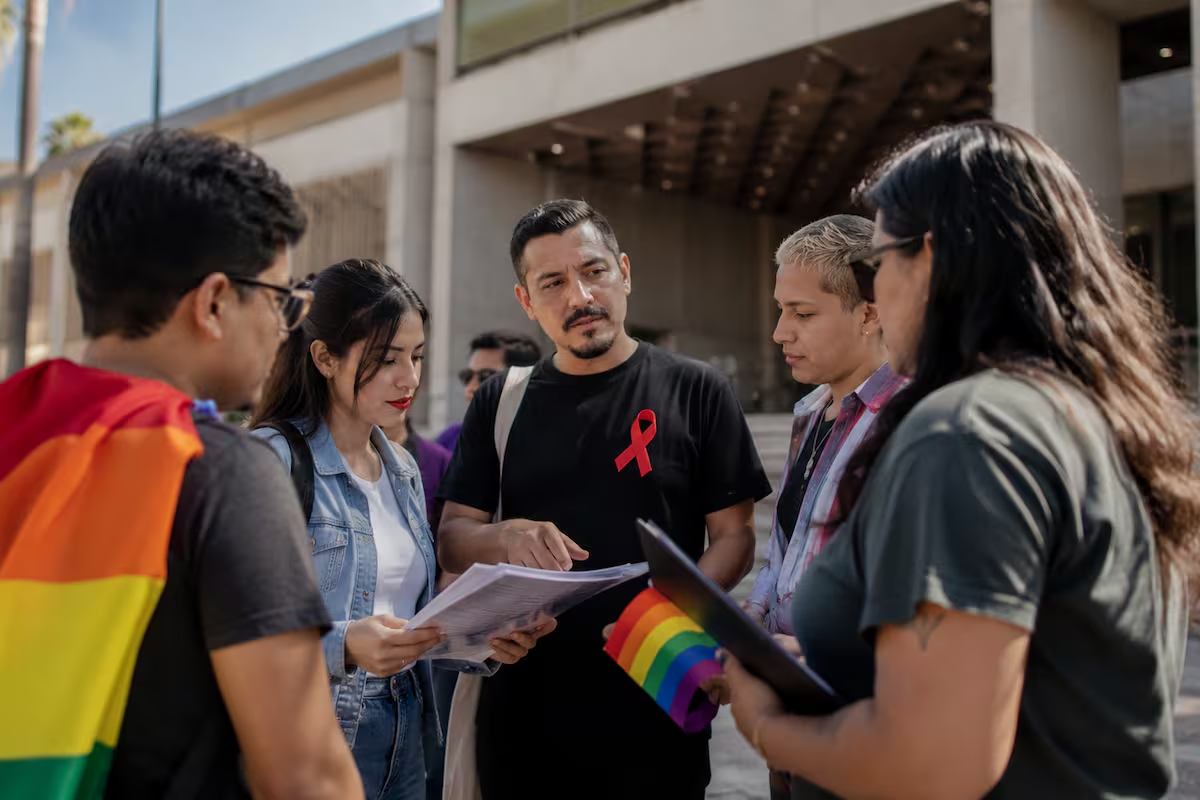
Mexicali, B.C.–The reform to remove the offence of “risk of transmission” from the Baja California Penal Code has been stalled for almost a year, denounced the Arcoíris Collective, which is calling on the State Congress to put it to a vote, arguing that the current legislation criminalises people living with the human immunodeficiency virus (HIV).
Javier Russell, leader of the Colectivo Arcoíris, explained that the amendment was tabled last year and has already gone through the relevant legislative process; however, he stated that it only remains to be brought before the plenary session for a vote, and therefore called on members of the State Congress to stop keeping it “on ice”.
“It is essentially a request to the Baja California Congress’s Diversity Committee to put the bill repealing the ‘risk of contagion’ provision to a vote; this bill was tabled last year and has already gone through the legislative process; all that remains is for it to be voted on,” said the collective’s leader.
Russell pointed out that Article 160 of the State’s Criminal Code penalises people with infectious diseases, a provision which, he asserted, has been rendered obsolete by scientific advances and constitutes a form of discrimination against those living with HIV.
The group’s leader indicated that treatments are now available that enable a person with HIV to achieve an undetectable viral load, thereby reducing the risk of transmission; he therefore considered that maintaining such regulations contradicts scientific knowledge and human rights.
Similarly, Russell recalled that Mexico has made international commitments under the 2030 Agenda to achieve the 95-95-95 target, which aims for 95 per cent of people living with HIV to know their status, for 95 per cent of them to receive treatment, and for 95 per cent of those on treatment to achieve an undetectable viral load.
The activist pointed out that retaining the current laws criminalises people on the basis of their health status and runs counter to these objectives and to the national policies promoted to combat stigma and discrimination.
Finally, Javier Russell reiterated his call to the members of the Diversity Commission to ensure that the bill is debated and put to a vote, given that its approval would bring state legislation into line with scientific advances and the country’s commitments regarding health and human rights.