Last month, I wrote about the limits of relying on “U=U” as the primary message for HIV decriminalisation. In doing so, I also reflected on how “U=U” has transformed the lives of people living with HIV. Grounded in compelling science and amplified through years of advocacy, it has become a powerful message of hope, dignity and self-acceptance. Its success also demonstrates something broader: science changes lives only when it is translated into policy, practice and public understanding.
HIV criminalisation reminds us that translating science into justice remains unfinished. Forty-five years into the HIV epidemic, advances in HIV science have fundamentally transformed our understanding of transmission, treatment and prognosis. Yet people living with HIV continue to be investigated, prosecuted and imprisoned based on outdated assumptions about risk and harm.
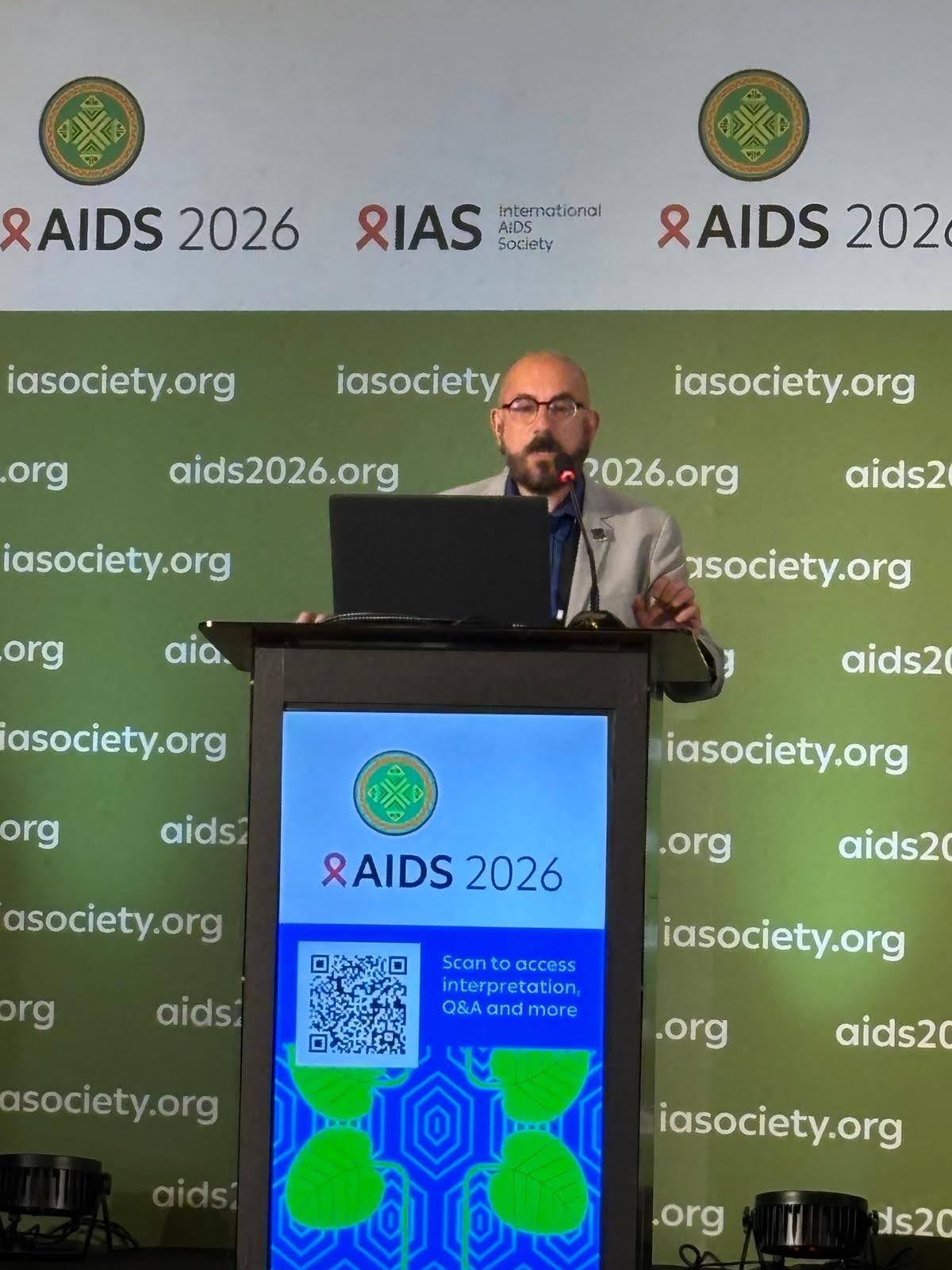
This contradiction formed the basis of my presentation yesterday at AIDS 2026, the 26th International AIDS Conference in Rio de Janeiro. The question I posed was simple: Why does HIV criminalisation persist despite contemporary HIV science? The answer, I argued, lies in what I call the translation gap: the persistent failure – or refusal – to translate contemporary HIV science into law, policy and practice.
Scientific evidence does not change society on its own. It changes society only when institutions choose to translate it into legal standards, public policy and everyday practice. That process is never purely technical; it is shaped by politics, power and values.
The evidence for this is clear. Over the past decade, 50 jurisdictions across 28 countries have moved towards HIV decriminalisation through legislative reform, constitutional and supreme court decisions, and updated prosecutorial guidance. Together, these reforms demonstrate that when contemporary HIV science is effectively translated into law and policy, legal systems do change.
But progress has been highly uneven. In some parts of the world, reform has accelerated. In others, it has barely begun. At the same time, the HIV Justice Network’s Global HIV Criminalisation Database continues to document new prosecutions around the world, suggesting that the pace of reform has slowed.
The challenge facing the HIV justice movement has therefore evolved. In many countries, the problem is no longer simply HIV-specific criminal laws. Increasingly, criminalisation is sustained through the interaction of criminal law, public health systems, policing, politics, and stigma.
Our recent research illustrates this shift. In Uzbekistan, for example, HIV criminalisation often begins long before anyone enters a courtroom. Mandatory registration, public health surveillance, referrals from healthcare providers to law enforcement, and the use of medical records as evidence all demonstrate how healthcare systems themselves can become part of the machinery of criminalisation.
Recognising this changes what justice requires. Contemporary HIV science requires greater legal precision. Non-disclosure is not the same as intent. Perceived risk is not the same as actual risk. An allegation of HIV transmission is not proof of who transmitted HIV, and establishing the direction of transmission often requires scientific evidence that courts fail to consider or misinterpret. Even where harm has occurred, criminal punishment is not automatically the appropriate response.
But science alone cannot produce these changes. Translation depends on institutions that value evidence, independent courts, governments willing to act and civil society organisations able to advocate for reform. Increasingly, these conditions are being undermined by broader attacks on public health, human rights and democratic institutions.
This is where structural violence helps explain why the translation gap persists. Scientific evidence alone is insufficient because law does not operate independently of politics or power. Organised anti-rights movements have become increasingly influential in reshaping the political environments in which legal reform takes place. As civic space shrinks and scientific expertise is challenged, translating contemporary HIV science into law becomes increasingly difficult.
Yet communities continue to create pathways to justice. Even where legal reform is blocked, advocates document prosecutions, provide legal literacy and paralegal support, engage international human rights mechanisms, influence global health policy and support those living under punitive laws. Communities do not simply wait for the law to change; they continue creating opportunities for justice despite the obstacles they face.
That is why the next phase of HIV decriminalisation is not simply about changing more laws. It is about closing the translation gap. Yesterday we launched the Guidance on Good Practices in HIV Decriminalisation. The Guidance brings together contemporary HIV science, legal expertise and the experience of communities around the world to support countries wherever they are on the journey towards HIV decriminalisation.
Closing the translation gap requires more than scientific evidence. It requires practical tools that help governments, courts, advocates and communities translate that evidence into action. The Guidance is designed to be one of those tools.
The success of “U=U” demonstrates what is possible when science is translated into practice. The persistence of HIV criminalisation demonstrates what happens when the translation of science into justice is resisted. Closing that translation gap is now the central challenge for HIV justice. The new Guidance is intended to help meet that challenge by helping ensure that science is translated into justice.