Overview
In February 2026, Benin adopted a new legal framework governing HIV-related offences, replacing the 2005 HIV-specific legislation. Under the new law, criminal liability is significantly narrowed and applies only in clearly defined circumstances. Disclosure is now framed as encouraged but voluntary, particularly where there is risk of violence, abandonment, or abuse.
Article 50 provides that any person who deliberately transmits HIV is liable to imprisonment of two to three years but expressly excludes criminal responsibility for HIV transmission or exposure in several situations, including where there is no significant risk of infection (such as condom-protected sex), where the person has an undetectable viral load or is on effective antiretroviral treatment, where the person was unaware of their HIV-positive status at the time of the alleged act, where reasonable precautions were taken to prevent transmission, or where the person disclosed their HIV status prior to the sexual act.
Article 51 establishes specific offences relating to the voluntary transfusion of HIV-infected blood, punishable by three to five years’ imprisonment and a fine ranging from three to fifteen million CFA francs, without prejudice to civil damages. Where such transfusion results from negligence, imprudence, lack of skill, or failure to comply with regulations, the penalty is reduced to three to six months’ imprisonment and a fine of three to five million CFA francs. The victim’s presence at the hearing is optional.
Overall, the new law moves from strict non-disclosure criminalisation toward a science-based model, limiting criminal liability to intentional transmission and recognising U=U and prevention measures.
There has been at least one case of aggravated sentencing in Benin where a person’s HIV-positive status has been used to elevate the seriousness of the offence. There have been no other known documented HIV criminalisation cases in Benin.
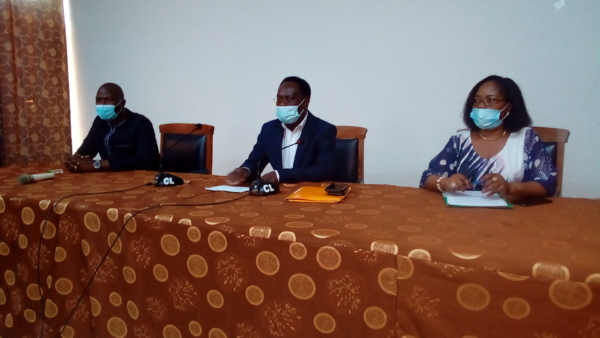
In November 2020, UNDP held a workshop in Cotonou, Benin, during which experts shared scientific data and information on the role of the criminal law in the response to HIV, with particular reference to the Expert Consensus Statement. The workshop was aimed at supporting local stakeholders in Francophone Africa, and particularly Benin, to determine the appropriate response to the HIV epidemic. During this meeting, the Executive Secretary of the National Council for the Fight against AIDS (CNLS), Tuberculosis and Hepatitis, Melchior Aïssi, acknowledged that the government wished to “humanise” the approach to HIV/AIDS in the country, as the current law perpetuated stigmatisation and discrimination. The workshop thus laid important groundwork for the legislative changes that have since narrowed the scope of HIV criminalisation in Benin.
Laws
LOI N° 2026- 02 DU 09 FEVRIER 2026 portant prévention, prise en charge et élimination de l'infection au VIH/SIDA en République du Bénin.
Article 15: Toute personne dépistée positive au VIH est encouragée, sauf risque de violence, d’abandon ou d’abus, à en informer son partenaire sexuel, avec l’appui d’un conseiller si nécessaire. La notification au partenaire est volontaire.
Article 17: Lorsqu’une personne vivant avec le VIH ne suit pas les prescriptions du prestataire de soins, ou lorsqu’elle ne notifie pas l’information à son partenaire, ou lorsqu’elle refuse d’autoriser son prestataire de soins à le faire, le prestataire de soins porte l’information au procureur de la République compétent.
Article 50: Toute personne qui transmet délibérément le VIH est punie d’un emprisonnement de deux à trois ans, sans préjudice des dommages et intérêts.
Nul n’est pénalement responsable selon la présente loi ou toute autre loi applicable de transmission ou d’exposition au VIH pour :
– un acte qui ne comporte pas de risque important d’infection par le VIH tel que les relations sexuelles protégées par un préservatif;
– des relations sexuelles lorsque le partenaire séropositif a une charge virale indétectable et/ou fait l’objet d’un traitement antirétroviral efficace;
– des relations sexuelles lorsqu’il ignorait qu’il était séropositif au moment de l’infraction présumée;
– des relations sexuelles lorsqu’une personne vivant avec le VIH a pris les précautions nécessaires pour prévenir la transmission du virus;
– des relations sexuelles lorsqu’une personne vivant avec le VIH a partagé sa séropositivité avant l’acte en question.
Article 51: Quiconque est responsable d’une transfusion volontaire de sang infecté par le VIH à une personne, est puni d’un emprisonnement de trois à cinq ans et d’ une amende d e trois millions (3.000.000) à quinze millions (15.000.000) de francs CFA, sans préjudice des dommages et intérêts.
Si l’acte est commis par négligence, imprudence, maladresse ou inobservation des règlements par toute personne, le coupable est puni d’un emprisonnement de trois à six mois et d’une amende de trois millions (3.000.000) à cinq millions (5.000.000) de francs CFA, sans préjudice des dommages et intérêts. La présence de la victime à l’audience est facultative.
Law No. 2005-31 of April 5, 2006 on the Prevention, Care and Control of HIV AIDS in the Republic of Benin
Article 4: […] Every person who has been tested positive for HIV has the obligation to inform his or her partner (s), with the support of a counselor if necessary. […]
Article 27: Anyone who knows that he or she is infected with the AIDS virus and knowingly has unprotected sex with a partner who is not aware of his HIV status, even if he or she is HIV-positive ( ve), shall be punished by imprisonment of five (05) to ten (10) years and a fine of one million (1,000,000) francs to five million (5,000,000) francs CFA.
Article 30: Anyone who knows that he or she is infected with the AIDS virus who, when using violence, coercion or surprise, engages in unprotected sexual intercourse of any kind with a person, will be punished with criminal imprisonment from five (05) to twenty (20) years and a fine of three million (3,000,000) francs to ten million (10,000,000) CFA francs. If the act was committed under threat by one or more persons, by a legitimate, natural or adoptive ascendant of the victim or by a person who abused the authority conferred upon him by his duties, on a vulnerable person, a disable adult or minor, the sentence will a life sentence in prison.
Acknowledgements
Stéphanie Claivaz-Loranger & Cécile Kazatchkine
Report presenting the results of a survey on HIV criminalization in African countries where French is spoken conducted from May to September 2017.
HIV Justice Network's Positive Destinations

Visit the Benin page on Positive Destinations for information on regulations that restrict entry, stay, and residency based on HIV-positive status, as well as access to HIV treatment for non-nationals.