Nearly six months after the tightening of the law on homosexuality, the era of repression in Senegal
Behind the debates on sovereignty, religion and fundamental rights, another question remains: what human and public health cost will Senegal have to pay for this tightening of the law?
Nearly six months after the vote on 11 March 2026 on the reform significantly toughening penalties for same-sex relations, Senegal is assessing the initial consequences of this legislative turning point. Arrests, legal proceedings, concerns amongst human rights defenders and pressure on those working to combat HIV: beyond its political symbolism, the new version of Article 319 of the Criminal Code is now having very tangible effects.
It should first be recalled that the vote was decisive. On 11 March 2026, the Senegalese National Assembly adopted, by an overwhelming majority, the bill amending Article 319 of the Criminal Code: 135 votes in favour, none against and only three abstentions. The reform was subsequently promulgated by President Bassirou Diomaye Faye on 27 March and published in the Official Gazette three days later.
However, Senegal was by no means starting from a position of decriminalisation – far from it. Since 1966, and under the clear influence of France, same-sex sexual relations had already been punishable as ‘acts against nature’, with sentences ranging from one to five years’ imprisonment. It is worth recalling at this point that the French Republic, through its Director of the Judicial Police, seriously considered that “homosexuality (was) intrinsically linked to criminality. ’ With the 1982 Act, French society has evolved considerably, and many countries around the world have changed their perspective on the matter, particularly since the World Health Organisation removed homosexuality from its list of mental disorders in 1990.
The reform of last March has significantly strengthened Senegal’s legal framework. From now on, the offences in question are punishable by five to ten years’ imprisonment. The legislature has also broadened the scope of the legislation by criminalising ‘advocacy’ as well as the funding or support intended to ‘promote or glorify’ homosexuality, bisexuality or transsexuality in particular. The law also provides for penalties against public denunciations made in bad faith.
A few months later, the main development relates less to the text itself than to the climate in which it is being applied. Arrests had begun even before it came into force. In February, several men were arrested in connection with ‘unnatural acts’, against a backdrop of intense media coverage and political mobilisation in favour of tougher legislation. Reuters reported that 27 men had been arrested between 9 and 24 February.
Following the law’s enactment, this trend continued. According to Le Monde, more than a hundred people believed to belong to the LGBT community had been arrested since the beginning of February. The newspaper also reported that the first conviction under the new legislation had been handed down as early as 11 April: a six-year prison sentence for a man prosecuted after being caught with another man in the suburbs of Dakar.
The crackdown then widened. At the end of July, eight women aged between 21 and 31 were arrested and brought before the courts on charges including ‘unnatural acts’. Their arrest marked a significant shift: until then, men had been far more prominent in proceedings relating to homosexuality.
One of the most closely followed cases involves nearly a hundred men initially implicated in a wide-ranging investigation launched at the start of the year. As the investigation progressed, some particularly serious charges were dropped against some of the accused. In early August, however, several media outlets reported that 71 men were still to be brought before the courts for offences relating in particular to ‘unnatural acts’, whilst 28 others had had the charges against them in this regard dropped. Recently, the Senegalese daily Libération, in its 31 August edition, reported on page 3: ‘47 defendants referred to the criminal court in the case of the alleged homosexuals arrested in Saint-Louis.’ This development illustrates one of the key issues for the coming months: assessing how the courts will interpret and apply the new provisions. Whilst the parliamentary vote established a particularly strict framework, it is now case law that will gradually define its contours.
To understand this reform, one must also look beyond the courts. In Senegal, the issue of homosexuality is not merely a legal debate between the majority and the opposition. It touches on religious, cultural and identity-related considerations that are deeply rooted in a predominantly Muslim society. In the weeks leading up to the vote, religious organisations and civil society movements had organised rallies calling for tougher penalties. Politicians, particularly those in power, had also framed this reform as an assertion of Senegal’s cultural sovereignty in the face of what they portray as Western pressure.
This aspect partly explains the near-unanimous nature of the vote in the National Assembly, with no MP voting against it. However, this domestic political consensus stands in stark contrast to the reactions of international human rights organisations. They have condemned the legislation, which they regard as discriminatory and likely to encourage arbitrary arrests, stigmatisation and violence against LGBT people. Front Line Defenders, in particular, has warned of the risks now facing human rights defenders working on these issues.
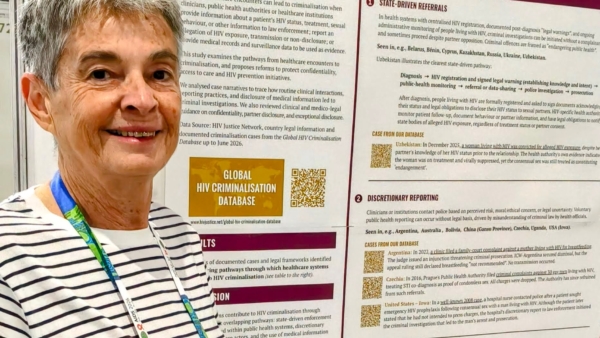
Another issue of concern to those working on the ground is public health. Senegal has long been cited for the success of its HIV prevention policy. However, organisations working with the most vulnerable communities fear that the crackdown may drive some gay men to avoid testing centres, prevention services or support groups. People interviewed in recent months have explained that they fear their personal data, telephone conversations or simply their use of certain facilities could lead to them being viewed with suspicion. Le Monde has, in particular, reported testimonies from people living with HIV who say they are now reluctant to visit healthcare facilities for fear of being identified or arrested. The issue therefore goes beyond that of individual freedoms: it could also become a public health concern if a section of the populations most at risk of HIV were to turn away from prevention and treatment services on a long-term basis.
Investigative methods are also a sensitive issue. Several accounts mention mobile phones being examined by investigators, with messages, photographs, videos or contacts being used in certain proceedings. This situation contributes to a climate of mistrust within the communities concerned. The consequences are difficult to quantify but are already noticeable: people are going further underground, social media is being used with caution, socialising has decreased and, for some, there is a desire to leave the country. Moreover, the pressure is not limited to those directly facing prosecution. As early as May, Le Monde reported that some lawyers were reluctant to defend people accused of homosexuality, due to social, family or religious pressure.
The shift in Senegal is not an isolated phenomenon. In recent years, several West African countries have adopted or considered tougher legislation against same-sex relationships or LGBT activism. Burkina Faso, Mali and Niger, in particular, have strengthened or introduced new criminal laws, whilst Ghana has also seen significant legislative debates on the issue. This regional trend goes hand in hand with a broader political discourse centred on the defence of ‘family values’, cultural sovereignty and the rejection of what is presented as a Western attempt to impose new social norms. In Senegal, this rhetoric finds particularly fertile ground. However, it also places Dakar in a delicate position vis-à-vis certain international partners who regard the criminalisation of consensual same-sex relationships as contrary to international human rights commitments.
At this stage, the impact of the reform cannot be reduced to the number of convictions handed down. The most profound change may lie elsewhere. By increasing penalties and broadening the range of behaviour liable to prosecution, the legislature has sent an extremely strong political signal. This has been heard by law enforcement and the judiciary as well as by those directly affected. For supporters of the legislation, the reform represents the culmination of a long-standing demand: to bring the law into line with the values that the majority of the population seeks to uphold and to prevent any public promotion of homosexuality. For its critics, on the other hand, it institutionalises discrimination and creates an environment in which a presumed sexual orientation may be enough to expose a person to denunciation, ostracism or a criminal investigation.
Almost six months after the historic vote on 11 March, one thing is already clear: Senegal has not merely increased a penalty set out in its Criminal Code. It has made the issue of homosexuality a major political, social and judicial issue. The next stage will now be played out in the courts. The trials resulting from the large-scale wave of arrests in 2026 will reveal just how far the new law can be taken in its application. And behind the debates on sovereignty, religion and fundamental rights, another question will remain: what human and public health cost will Senegal have to pay for this crackdown?