Canada: Speech from Canadian Minister of Health at AIDS2018 welcomes the Expert Consensus Statement on the Science of HIV in the Context of the Criminal Law

Remarks for Ginette Petitpas Taylor, Minister of Health – AIDS 2018 Conference Symposia“Anti-fragile: Strengthening the HIV Response through Addressing Stigma, Prejudice and Discrimination

Speech

Amsterdam, Netherlands

July 26, 2018

Introduction

Good morning.

Hello everyone. I hope everyone is doing well this morning.

I would like to thank the International AIDS Society for inviting me. It is my honour to represent Canada among such a distinguished group.

We have a lot to talk about, and we also have a lot to learn.

Central to this are the perspectives and lived experience of people living with and affected by HIV and AIDS.

To those of you who have chosen to share your stories today — thank you.

You exemplify what it means to be “anti-fragile”.

You turned your challenges into strength.

I am inspired by your determination, courage and resilience.

Over the past 30 years, we have come a long way.

Thanks to the dedication and passion of people like you, we have made once unthinkable progress toward a world without AIDS.

I am proud to say that Canada has been at the forefront of this response, through the work of our civil society as well as such extraordinary champions as Stephen Lewis, Dr. Julio Montaner and, of course, Dr. Mark Wainberg. Sadly, Dr. Wainberg is no longer with us and we keenly feel his loss at this conference.

I also want to acknowledge the invaluable global contribution of people living with HIV.

Together, we have achieved a great deal. But we still have more to do.

Many people still don’t know their status, face barriers to treatment, and lack the support they need to live healthy, active lives.

Despite our efforts, something is getting in the way.

I have spoken with many people living with HIV in my time as Canada’s Minister of Health, including during my time here this week.

And while I have heard of the many struggles faced, one thing I’ve heard repeated is that stigma is holding us back.

Stigma is a significant barrier

Stigma has many faces.

We all know about HIV-related stigma, but it is compounded by other forms of stigma.

Racism. Homophobia. Transphobia.

Stigma about mental illness.

Internalized stigma.

Discrimination against people who inject drugs and those who engage in sex work.

These are just a few of the many different faces of stigma and discrimination, which have devastating effects.

Stigma can isolate people from their intimate partners, families and communities.

Stigma can keep people from getting health care.

Stigma masks HIV …and helps fuel the AIDS epidemic worldwide.

We need to stop stigma in all its forms to ensure that all people living with HIV know their status and get the treatment they need.

A rights-based approach

So, what’s the solution? A key part of the answer lies at the intersection of human rights and public health.

Treatment alone is not enough. Fighting stigma requires an integrated approach — one that puts human rights first.

In Canada, protecting and promoting human rights is part of the social fabric of our country — and it’s essential to the way we govern.

As such, human rights guide our response to HIV in Canada and abroad.

We are working to rebuild trust with marginalized communities.

While this is an ongoing process, we’ve already taken significant steps.

One key priority is renewing our “Nation-to-Nation” relationship with Canada’s Indigenous peoples — a process based on a ‎recognition of rights, cooperation and partnership.

Another priority is LGBTQ2 rights. In November 2017, our Prime Minister formally apologized to the LGBTQ2 community for a history of federal legislation, policies and practices that were oppressive and discriminatory.

Last summer, we passed a law that prohibits discrimination against transgender Canadians and protects them against hate crimes.

We have also made significant changes to Canada’s drug policy to recognize the needs of people who use drugs.

In 2016, we restored harm reduction to the core of public health approach to the opioid crisis.

We also introduced the Good Samaritan Drug Overdose Act to provide some legal protection for individuals who seek emergency help during an overdose.

We hope this Act will help reduce fear of police attending overdose events and encourage people to help save a life.

Recently, we led the charge at the United Nations Commission on Narcotic Drugs to address stigma towards people who use drugs.

Along with nineteen of our allies, we passed a resolution that stresses the importance of fighting stigma and ensuring that no one is denied health care because of it.

Finally, we have taken steps to prevent the criminalization of HIV non-disclosure.

We know that – U=U. Undetectable = Untransmittable. This means that there is effectively no risk of sexual transmission of HIV when an individual is being treated and maintains a suppressed viral load.

Having considered the evidence, the Government of Canada has determined that the criminal law should not apply to individuals engaging in sexual activity without disclosing their HIV status, if they maintain a suppressed viral load.

My colleague, the Minister of Justice, is working with her provincial counterparts towards addressing the criminalization of HIV.

Because we know that HIV criminalization is a manifestation, and driver, of stigma.

As such, the Government of Canada welcomes the work undertaken by experts to develop the Expert Consensus Statement on the Science of HIV in the Context of the Criminal Law which was released yesterday, and supports its conclusions that more caution be exercise when considering criminal prosecution.

The U=U message needs to be heard and has to be shared.

We have a responsibility to do reduce stigma in all its forms.

I challenge my fellow ministers of health to share this message in their respective countries.

STBBI Framework

Canada’s response to HIV takes an integrated approach involving sexually transmitted and blood borne infections, which share common risk factors and transmission routes.

Just last month, Canada launched a new Pan-Canadian Framework for Action on Sexually Transmitted and Blood-Borne Infections.

This Framework will help guide our collective efforts, including our annual investment of more than $87.5 million to reduce these infections.

Meeting our targets

At the heart of this framework are the globally recognized 90-90-90 targets.

I was happy to report on Canada’s progress just last week. Good news – Canada has achieved one of our global targets and are making progress toward the other two.

Based on 2016 data, it was estimated that just over 63,000 people are living with HIV in Canada.

Of these cases, we estimate that 86% have been diagnosed, 81% are being treated and, of these, 91% are achieving viral suppression.

I’m proud of our progress — but I know that we still have work to do to achieve our goals.

We need to get to 90 across the board, and our government supports a number of initiatives to help us get there.

For example, the Know Your Status initiative in Saskatchewan has been successful in promoting HIV testing in Indigenous communities using culturally appropriate models and is showing it is possible to decrease new diagnoses in these communities.

Other important initiatives are supported by our National Microbiology Laboratories, which work with Indigenous partners to make culturally appropriate HIV testing accessible in Canada’s rural and remote communities — which if you know anything about our country’s geography, is no small challenge.

We are also supporting efforts to address stigma and discrimination in the health sector through the development of resources and training for front-line health providers to help them provide safe — non-stigmatizing —services for people living with or at risk for HIV.

International contribution

As we take action at home, we are also looking beyond our borders and supporting the global response to HIV and AIDS.

We have and will continue to support the Global Fund to fight AIDS, Tuberculosis and Malaria.

We have pledged $804 million over three years, which will help ensure people with HIV and AIDS have access to the treatment they need, no matter where they live.

I am proud that our Government supports these and other initiatives— but I also recognize these alone are not enough.

We need to keep sharing knowledge and, most importantly, we need to engage in a meaningful dialogue with people living with HIV and AIDS.

Nothing about us without us

That’s why we support organizations like the Canadian Positive People Network, a group that represents people living with HIV in Canada.

Partnerships like this help facilitate dialogue between policy makers, health care providers and people living with HIV.

As we move forward, we also have to ensure that our work is guided by the voices of youth leaders. I had the great pleasure yesterday of meeting with a group of brilliant, inspired youth from around the world.

Young people: You are the global champions in the fight against stigma, not just for the future, but for today. We need your passion, your engagement and your inspiration… to get to 90 90 90, and then to end this epidemic, for good.

Moving ahead together

We have an opportunity to elevate that conversation — to explore challenges and share solutions.

Everyone has a role to play.

Together, we can build more inclusive societies by ending stigma, prejudice and discrimination.

I wish you fruitful discussions today.

Thank you very much and enjoy the rest of the conference! 

From: Public Health Agency of Canada

Bringing Science to Justice: End HIV Criminalisation Now

News Release

Networks of people living with HIV and human rights and legal organisations worldwide welcome the Expert Consensus Statement on the Science of HIV in the Context of Criminal Law

Amsterdam, July 25, 2018 — Today, 20 of the world’s leading HIV scientists released a ground-breaking Expert Consensus Statement providing their conclusive opinion on the low-to-no possibility of a person living with HIV transmitting the virus in various situations, including the per-act transmission likelihood, or lack thereof, for different sexual acts. This Statement was further endorsed by the International AIDS Society (IAS), the International Association of Providers of AIDS Care (IAPAC), the Joint United Nations Programme on HIV/AIDS (UNAIDS) and 70 additional experts from 46 countries around the world.

The Expert Consensus Statement was written to both assist scientific experts considering individual criminal cases, and also to urge governments and criminal justice system actors to ensure that any application of the criminal law in cases related to HIV is informed by scientific evidence rather than stigma and fear. The Statement was published in the peer-reviewed Journal of the International AIDS Society (JIAS) and launched at a critical moment during the 22nd International AIDS Conference, now underway.

“As long-time activists who have been clamouring for a common, expert understanding of the current science around HIV, we are delighted with the content and widespread support for this Statement,” said Edwin J Bernard, Global Co-ordinator of the HIV Justice Network, secretariat to the HIV JUSTICE WORLDWIDE campaign. “Eminent, award-winning scientists from all regions of the world have come together to provide a clarion call for HIV justice, providing us with an important new advocacy tool for an HIV criminalisation-free world.”

The Statement provides the first globally-relevant expert opinion regarding individual HIV transmission dynamics (i.e., the ‘possibility’ of transmission), long-term impact of chronic HIV infection (i.e., the ‘harm’ of HIV), and the application of phylogenetic analysis (i.e., whether or not this can be used as definitive ‘proof’ of who infected whom). Based on a detailed analysis of scientific and medical research, it describes the possibility of HIV transmission related to a specific act during sexual activity, biting or spitting as ranging from low to no possibility. It also clearly states that HIV is a chronic, manageable health condition in the context of access to treatment, and that while phylogenetic results can exonerate a defendant when the results exclude them as the source of a complainant’s HIV infection, they cannot conclusively prove that one person infected another.

“Around the world, we are seeing prosecutions against people living with HIV who had no intent to cause harm. Many did not transmit HIV and indeed posed no actual risk of transmission,” said Cécile Kazatchkine, Senior Policy Analyst with the Canadian HIV/AIDS Legal Network, a member and key partner organisation of the HIV JUSTICE WORLDWIDE campaign. “These prosecutions are unjust, and today’s Expert Consensus Statement confirms that the law is going much too far.”

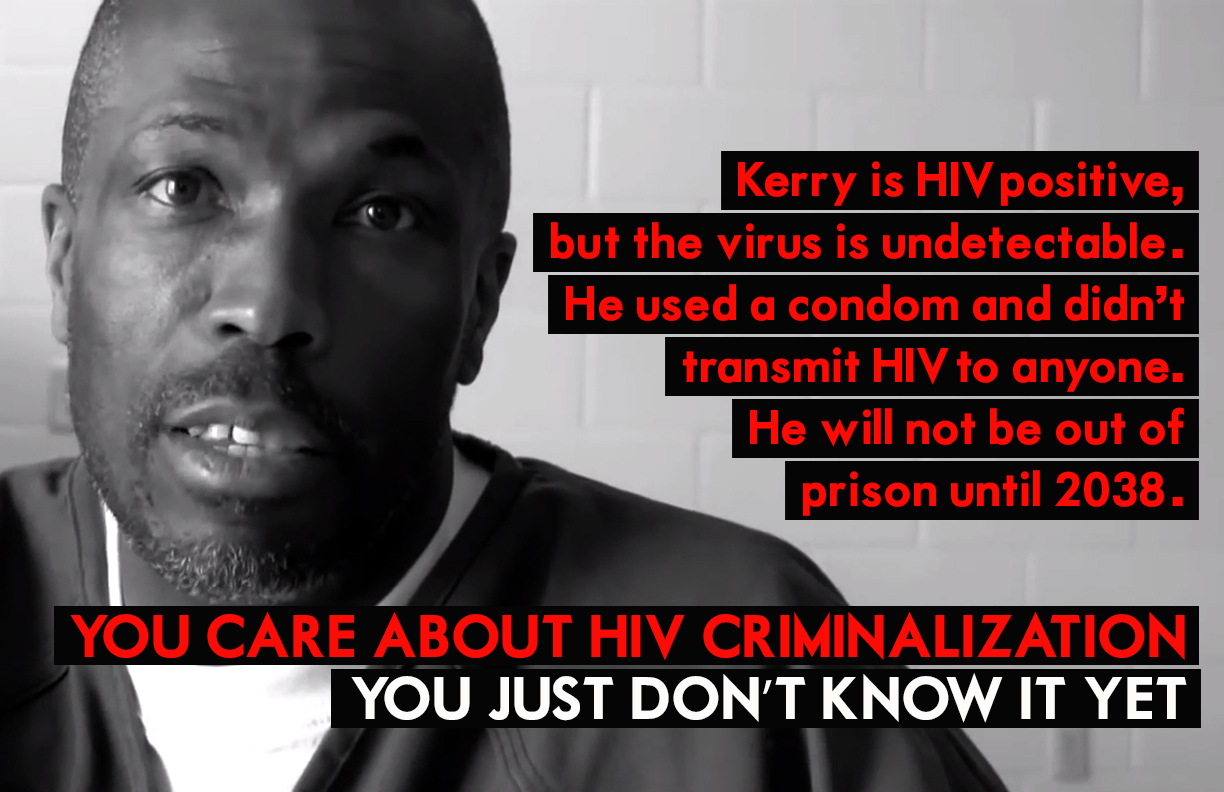
Countless people living with HIV around the world are currently languishing in prisons having been found guilty of HIV-related ‘crimes’ that, according the Expert Consensus Statement, do not align with current science. One of those is Sero Project Board Member, Kerry Thomas from Idaho, who says: “I practiced all the things I knew to be essential to protect my sexual partner: working closely with my doctor, having an undetectable viral load, and using condoms.  But in terms of the law, all that mattered was whether or not I disclosed. I am now serving a 30-year sentence.”

FINAL_KERRY_NOT-A-CRIME-POSTERWhile today’s Statement is extremely important, it is also crucial to recognise that we cannot end HIV criminalisation through science alone. Due to the numerous human rights and public health concerns associated with HIV criminalisation, UNAIDS, the Global Commission on HIV and the Law, the UN Committee on the Elimination of Discrimination against Women, and the UN Special Rapporteur on the Right to Health, among others, have all urged governments worldwide to limit the use of the criminal law to cases of intentional HIV transmission. (These are extremely rare cases wherein a person knows their HIV-positive status, acts with the intention to transmit HIV, and does in fact transmit the virus.)

We must also never lose sight of the intersectional ways that — due to factors such as race, gender, economic or legal residency status, among others — access to HIV treatment and/or viral load testing, and ability to negotiate condom use are more limited for some people than others. These are also the same people who are less likely to encounter fair treatment in court, within the medical system, or in the media.

“Instead of protecting women, HIV criminalisation places women living with HIV at increased risk of violence, abuse and prosecution,” says Michaela Clayton, Executive Director of the AIDS and Rights Alliance for Southern Africa (ARASA). “The scientific community has spoken, and now the criminal justice system, law and policymakers must also consider the impact of prosecutions on the human rights of people living with HIV, including women living with HIV, to prevent miscarriages of justice and positively impact the HIV response.”

HIV criminalisation is a pervasive illustration of systemic discrimination against people living with HIV who continue to be stigmatised and discriminated against on the basis of their status. We applaud this Statement and hope it will help end HIV criminalisation by challenging all-too-common mis-conceptions about the consequences of living with the virus, and how it is and is not transmitted. It is indeed time to bring science to HIV justice.

To read the full Expert Consensus Statement, which is also available in French, Spanish and Russian in the Supplementary Materials, please visit the Journal of the International AIDS Society at https://onlinelibrary.wiley.com/doi/full/10.1002/jia2.25161

VIsit the HIV JUSTICE WORLDWIDE website to read a short summary of the Expert Consensus statement here: http://www.hivjusticeworldwide.org/en/expert-statement/

To understand more about the context of the Expert Consensus Statement go to: http://www.hivjusticeworldwide.org/en/expert-statement-faq/

HIV JUSTICE WORLDWIDE is a growing, global movement to shape the discourse on HIV criminalisation as well as share information and resources, network, build capacity, mobilise advocacy, and cultivate a community of transparency and collaboration. It is run by a Steering Committee of ten partners AIDS Action Europe, AIDS-Free World, AIDS and Rights Alliance for Southern Africa (ARASA), Canadian HIV/AIDS Legal Network, Global Network of People Living with HIV (GNP+), HIV Justice Network, International Community of Women Living with HIV (ICW), Southern Africa Litigation Centre (SALC), Sero Project, and Positive Women’s Network – USA (PWN-USA) and currently comprises more than 80 member organisations internationally.

Media session at Beyond Blame preconference outlines stigmatising and harmful media reporting

By Mathew Rodriguez

AMSTERDAM, Netherlands — As a news consumer, how can you tell if a story you’re reading about HIV criminalization is actually fair, or has the interests of people living with HIV in mind? Despite a noticeable shift in better coverage for HIV criminalization cases, activists at the Beyond Blame pre-conference to the International AIDS Conference in Amsterdam reported that too many journalists rely on harmful frameworks when reporting stories about potential HIV exposures and people with HIV whose bodies are criminalized.

Here are a few ways to see whether or not you’re being told a story that is doing way more harm than good for people living with HIV, as outlined by Janet Butler-McPhee, director of communications and advocacy at the Canadian HIV/AIDS Legal Network and Nic Holas, co-founder of Australia’s HIV movement The Institute of Many.

The HIV Monster

Though Butler-McPhee said this narrative is slightly fading, too many journalists still rely on this frame as a way to garner clicks. This narrative paints people with HIV as purposefully hiding their status in order to be deceptive to an HIV-negative person or people. This framework also implies that people with HIV have some innate intent to transmit the virus and that HIV-positive people are all terrifying potential perpetrators of criminal activity.

Aside from othering people with HIV, this narrative also turns HIV-negative people into innocent victims with zero agency in their own lives. These narratives often omit pertinent details about the relationship between the accused and accuser. It turns a complex relationship into victims and villains.

It’s racist AF

HIV criminalization and obvious racism go hand in hand. This is very similar to the HIV monster narrative but also relies on racist tropes to tell its story. For instance, in many countries like Canada and the United States, black men are often painted as vectors of disease who are preying on innocent white women or white gay men. This narrative happens with other marginalized groups, as well.

The story claims HIV criminalization will protect you!

Some stories share the names and information about an HIV-positive person’s HIV criminalization case as a form of “public good” — saying that the public deserves to know someone’s private health information. Butler-McPhee stressed that this is unfortunately rooted in the idea that people with HIV do not have basic rights to privacy and that outing them will do more public good than personal bad — which is wrong . Coverage that relies on outing people with HIV is often inherently racist as well. Their names are published to protect white women.

Stories like this once again put all the onus of public health on HIV-positive people. It also sets HIV apart from every other STI or blood-borne infection, reinforcing the stigmatizing idea that it is somehow scarier or deadlier. Coverage like this also retraumatizes the accused.

Additionally, Holas stressed, local police officers often rely on media to get an accused’s name in headlines and stories to get other potential sex partners to come forward to build a case around them. In cases like this, the media may be unknowingly doing the police force’s work to help criminalize a person with HIV.

The story reports that HIV is easy to transmit and a death sentence.

Any coverage of HIV in 2018 that treats HIV as an automatic death sentence is unscientific and wrong. While it’s true that many people in the global South and even certain regions in the United States might see worse outcomes due to an HIV diagnosis than others, putting the onus on the virus instead of racist socio-economic conditions puts people with HIV at risk. When discussing HIV criminalization, stories too often rely on people’s fear of the virus rather than reality to prove their point.

“It’s easy to disclose your HIV status, so just do it!”

If there’s one thing that HIV criminalization stories prove, it’s that living with HIV in 2018 is a serious risk for personal safety. However, many stories still push the idea that disclosure is the end-all-be-all of living with HIV and that it is the “morally correct” thing to do, even when the story itself is showing the many negative consequences that can come along with HIV disclosure.

These stories also don’t take into the account the pervasive violence and stigma that people living with HIV face daily. As Holas said, these stories revolve around the idea that “if you haven’t done anything wrong, you’ve got nothing to worry about.”  

For those in the media interested in improving their coverage or for advocates looking to make sure their messaging on HIV criminalization is media-ready, the HIV Justice Network does have a guide on HIV criminalization and the media.


Published in INTO on July 23, 2018

Beyond Blame symposium highlights intersectionality of issues related to HIV criminalisation at AIDS 2018

Strategies to oppose the unscientific criminalisation of HIV transmission received a high profile at events in advance of the 22nd International AIDS Conference (AIDS 2018) in Amsterdam this week.

These included the launch by the Global Commission on HIV and the Law of a Supplement to its 2012 Report, Risks, Rights & Health, and the HIV Justice Worldwide symposium, Beyond Blame: Challenging HIV Criminalisation.

Read more at aidsmap.com

Ireland: Following first HIV-related conviction for "intentionally or recklessly causing serious harm" in Ireland, Dr Juliana Adelman reflects on the fear of contagion

 Fear of contagion clouds our thinking about the transmission of HIV

How can we treat people fairly while reducing risk to others of contracting the disease?

There is no legal obligation on a person with HIV to disclose their status, nor is there a law that provides a specific penalty for knowingly transmitting the disease. For the second time this year, this legal situation is being tested in the courts. The defendant is accused of “recklessly or intentionally causing serious harm” by transmitting HIV to two separate sexual partners.

This raises serious questions about our understanding both of HIV the disease and of personal responsibility with regard to health. Is the contraction of HIV, now a treatable long-term condition, “serious harm”? Who is at fault for contracting a disease? What does fault mean? These are very difficult questions and have vexed societies for as long as contagious diseases have circulated them. Sexually transmitted diseases bring another layer of complexity as they also involve attitudes towards sexual activity.

An interesting thing happens in my history of medicine class when we talk about sexually transmitted diseases. The students veer between contradictory positions. On the one hand, they have no sympathy for the system of Magdalene laundries and lock hospitals that incarcerated women with suspected syphilis, often against their will.

Contrasting sympathies

The students say such a system was sexist and motivated by a tendency to blame victims of disease. When we talk about HIV, however, they advocate a different position. This year, one student suggested to the class that people who are HIV-positive should be placed on something akin to a sex offender register. Everyone should know about their status and have the opportunity to avoid them. A kind of walking, permanent, lock hospital.

When I try to point out that their sympathy with syphilitic women in the past seems in stark contrast to their fear of people with HIV in the present, they are confused. How did the person get HIV they ask? Because, they say, there are ways to get the disease that are your fault and ways that are not.

In the 17th century, when syphilis was still a new and poorly understood disease, some doctors blamed women for creating the disease in their own wombs. Kevin Sienna has unearthed a wide range of sources pointing the finger of blame at women, especially women who were too overtly sexual. The “pocky steams” of the prostitute or the unfaithful wife passed the disease to unsuspecting men; no one asked how the women got it in the first place.

Patients isolated

In the 19th century, the Contagious Diseases Acts (1864 to 1869) attempted to stamp out syphilis by arresting and inspecting women suspected of prostitution. Women need not be caught in the act of soliciting sex, but only rumoured or accused. If the medical examination found symptoms of disease, the woman was confined to a lock hospital for treatment. Protests against the Act for how it treated women were immediate and loud and eventually it was repealed.

Yet societies continued to treat sexually transmitted diseases differently than other contagious diseases. Robert Koch identified the bacteria that causes tuberculosis in 1882. Transmission of the disease could be prevented by specific behaviours, including the isolation of contagious patients. Yet some public health advocates resisted efforts to make the disease “notifiable” to authorities for fear that social stigma would prevent victims from seeking treatment. While TB did carry a stigma and patients often spent months and years isolated in sanitoria, its victims elicited more sympathy than fear.

A fear of moral contagion clouds our thinking about the transmission of HIV today. Because the disease is most commonly passed through intravenous drug use and sexual intercourse, we consider it shameful and its victims at least partly responsible for their plight. But we do not distribute that blame equally: heroin addicts, African immigrants, the sexually promiscuous, prostitutes, and gay men have often carried a disproportionate amount of blame. No wonder that most people with HIV would rather keep their diagnosis a secret.

Someone diagnosed with HIV at age 20 is, with treatment, expected to live to 73. That means that there are many people living in our communities, partaking of all aspects of human life, who are HIV positive. How can we treat them fairly while also reducing the risk that others will contract the disease?

Dr Juliana Adelman lectures in history at Dublin City University


US: North Carolina's HIV criminalisation reform protects people who are undetectable but leaves others vulnerable

In North Carolina, an HIV Criminalization Reform Bill Passed, but People Who Aren’t ‘Undetectable’ Remain at Risk

Until recently, North Carolina was one of two-dozen states that directly criminalize HIV exposure, but in a historic move this year, the state updated its HIV control measures to conform with the modern understanding of transmission risk.

North Carolina’s unique journey to HIV criminalization reform might serve as a roadmap for other advocates hoping to modernize their own state’s laws. But it hasn’t been without controversy, with some advocates taking issue with North Carolina’s new carve-out for HIV-positive people who have achieved viral suppression.

Thanks to antiretroviral treatment, people who take a pill every day are no longer capable of transmitting the virus to others, a scientific framework called “undetectable equals untransmittable” or “U=U.” North Carolina’s new rule protects that population completely, but it leaves others vulnerable to legal ramifications.

That’s a problem, some argue, because it might deepen racial disparities that already exist in prison sentences and in viral suppression. According to the Prison Policy Initiative, black North Carolinians make up only 22% of the state’s population yet account for 55% of all people in state prisons and local jails; whites comprise 65% of the state’s population but only 36% of those in state prisons or jails. When it comes to viral suppression, in North Carolina, 62% of all people with HIV are virally suppressed. But 66% of whites living with HIV in the state are undetectable, compared with 61% of blacks and 51% of Latinx people.

“These concerns are valid and need to be addressed,” says Christina Adeleke, communications and development coordinator with North Carolina AIDS Action Network (NCAAN). But addressing these “bigger system issues … is a conversation that’s way bigger than HIV criminalization.”

Adeleke and her colleagues at NCAAN were instrumental in bringing about North Carolina’s reform and presented their process for advocating for reform at the 2018 HIV Is Not a Crime Training Academy in Indianapolis. If it were up to NCAAN’s executive director Lee Storrow, he would repeal HIV criminalization laws outright. But Storrow and Adeleke both emphasize that they are working in a Southern state, where it’s tough to move the needle on HIV criminalization reform.

“We wanted to advance it as far forward as we had the capacity to, without going so far that we wouldn’t achieve anything,” explains Storrow.

“We had to be very mindful to be in lockstep with the state,” Adeleke adds. “Where we landed was as far as we could go at this point.”

According to Storrow, North Carolina now has the most progressive HIV criminal law in the South. He argues that decriminalizing behaviors for people who have achieved viral suppression is an important first step. Additionally, North Carolina’s reform contained other important changes, eliminating stigmatizing words, such as “infected” and “retarded,” and conforming with new federal rules around HIV-positive organ donation.

Now, NCAAN is hoping that North Carolina’s modernized rules will encourage people who are living in the shadows to seek treatment, knowing that they’ll be protected from prosecution if they’re able to take their medications every day.

NCAAN’S Journey

Dozens of HIV criminalization laws were passed in the 1990s and 2000s when fear of the epidemic was at an all-time high. But, today, some lawmakers are rethinking these decades-old rules in the wake of mounting evidence that they’re based on outdated science. California recently modernized its law to reduce HIV transmission from a felony to a misdemeanor — a reform advocates consider a best-case scenario. Meanwhile, other states have moved in a different direction, broadening their HIV criminalization laws to include hepatitis C and other sexually transmitted infections.

But, unlike other states, North Carolina’s HIV criminalization rules are not baked into the legal code. Instead, the rules exist as part of the state’s public health control measures, under the purview of the Commission for Public Health.

In 2017, those control measures were up for review, and NCAAN saw an opportunity to finally modernize the state’s criminalization rules. Initially, state officials only wanted to reform the control measures to include the federal HIV Organ Policy Equity Act (HOPE Act), which legalizes organ donation between HIV-positive people, said Storrow.

However, NCAAN advocated for broader reforms, arguing that the state should decriminalize condomless sex between HIV-positive couples and mixed-status couples who use pre-exposure prophylaxis (PrEP).

Moreover, NCAAN fought to eliminate non-disclosure prosecutions for HIV-positive people who are virally suppressed, based on the contemporary understanding that effective treatment prevents people with HIV from passing the virus to others.

It took months of meetings and many strained conversations to convince some state officials that HIV criminalization rules should be modernized. In part, that’s because many people still believe that HIV is a highly contagious death sentence.

People assume that if you are living with HIV, you are in a constant state of being able to transmit HIV to other people,” says Adeleke. “In reality, if you are on medication and in treatment and virally suppressed, it is physically not possible to do that. You can live a normal life.”

Eventually, a compromise took shape, and the new, modernized rule took effect in January 2018. Storrow says the changes made are meaningful to many North Carolinians, especially couples who are on treatment and no longer need to fear prosecution. But he also called the changes “incomplete,” asserting that there’s a long way to go in the effort to completely decriminalize HIV in his state.

Adeleke hopes North Carolina’s journey can be a model for other Southern states that must balance the desire for radical reform against the backdrop of conservative-leaning leadership.

Adeleke recommends that other advocates working in the South familiarize themselves with specific legislation and public health laws in their own states.

“See who specifically is in charge of making certain decisions; you may find you have allies waiting in certain parts of government who can help you move this along,” she adds.

In North Carolina, the majority of people on the HIV reform task force were people living with HIV, Adeleke says.

“The process was inspiring because it showed how a community can take ownership of a particular topic that’s really affected them,” she says. “To be able to achieve the result we did was exciting.

Sony Salzman is a freelance journalist reporting on health care and medicine, who has won awards in both narrative writing and radio journalism. Follow Salzman on Twitter: @sonysalz.

Published in the Body on June 25, 2018


Canada: The treatment of people living with HIV at the hands of Canada Supreme Court perpetuates stigma and fear

Our Highest Court’s Position On HIV Disclosure Is Steeped In Stigma

It perpetuates fear through a set of decisions that force those living with HIV to disclose their status, even if the risk of transmission is non-existent.

Canada’s reputation as a caring and progressive society has been tarnished by how the nation’s highest court has stigmatized people living with HIV. And, as recent court battles show, the supreme court rulings aren’t just charged and stigmatizing, they are also on shaky legal ground.

During an impassioned lecture at the University of Calgary recently, celebrated human rights advocate and HIV activist Justice Edwin Cameron, of South Africa’s highest court, described the treatment of those living with HIV at the hands of the Supreme Court of Canada (SCC) as a “uniquely Canadian monstrosity.

“Worldwide, despite antiretroviral treatment, about one million people die of AIDS annually. Many of them, roughly but accurately expressed, are dying of stigma,” said Cameron, who was diagnosed with HIV in 1986. His struggle with the virus, and his advocacy work, formed part of his best-selling memoir, Witness To AIDS.

Stigma, he argued, is “a social brand of judgment, an imprint of contempt and ostracism” that perpetuates silence and shame, and even fear of diagnosis, meaning too many people are not accessing the treatment that can restore their health.

The Supreme Court of Canada, charged Cameron, has served to perpetuate that fear with a set of decisions that imposed a legal duty on those living with HIV to disclose their status to partners even if they are receiving antiretroviral treatment, which reduces the virus to virtually undetectable levels.

“Canada has a dubious distinction. After the United States and Russia and eastern European countries,” said Cameron. “It has prosecuted more cases, it has put more people in prison for simple non-disclosure of HIV infection, than any other country. It lags behind only a handful of jurisdictions in absolute numbers of convictions.”

And all the prosecution, which results from non-disclosure being treated in Canada as a criminal offence, is doing more harm than good, according to the Community, AIDS, Treatment, Information Exchange (CATIE), a Canadian group that promotes good practices for treatment and prevention programs for those living with HIV and hepatitis C.

CATIE points out there is zero evidence to show criminal penalties deter participation in behaviours that present risk of transmission. But prosecution is effective in deterring people from getting tested, while giving the public a false sense of security that criminal prosecutions will somehow protect them, Cameron pointed out. CATIE has recorded at least 184 instances of criminal charges in Canadian cases of non-disclosure.

“How can it be that Canada places so injurious a brand mark of stigma on people living with HIV, more so than many other western countries,” stated Cameron.

At the heart of it lie two supreme court decisions — (R v.) Currier and (R v.) Mabior.

‘Rape with no rapist’

Henry Currier of B.C. was charged with aggravated assault for not disclosing his HIV to two women with whom he had consensual, unprotected sex. Neither of his partners contracted the virus but the Supreme Court ruled his failure to disclose his condition constituted fraud, thus negating consent.

“The result was rape with no rapist, but instead only a sexual partner with a medical condition that was neither communicated, nor transmitted to the other partner,” said Cameron. The decision, “punished those with HIV solely for having HIV and for not disclosing it.”

“In doing so (R. v.) Currier created a new monster legal category of aggravated assault with no assault, except emotional exposure to an infectious disease, and no aggravation, except judicial enforcement of societal condemnation of the accused person’s conduct… in not disclosing his infection.”

“This criminal category, the most expansive, judicially created doctrine targeting HIV on the planet, is a uniquely Canadian monstrosity.

The issue of HIV non-disclosure returned to the Supreme Court in 2012 with R. v. Mabior.

Clato Mabior stood trial on 10 counts of aggravated assault involving nine women and was sentenced in 2008 to 14 years for not disclosing his status. Mabior was receiving antiretroviral treatment at the time and none of his partners contracted HIV.

Cameron said the court failed to take into account established medical evidence of the efficacy of antiretroviral treatment and HIV transmission. Furthermore, other people living with more communicable and deadly diseases are not bound to disclose.

“From a moral point of view, Mr. Mabior, like Mr. Currier, are unappealing. But it is not the court’s task to yield to moralism or to invent overbroad criminal doctrines to enforce it.”

Published in the HuffPost on June 14, 2018

US: The criminal law is falling behind, ignoring advances in HIV science

Fighting for HIV justice

Writer and advocate Olivia Ford argues that the modern realities of living with HIV are being overlooked by the criminal justice system.

Advances in global HIV prevention, care, science, and treatment in recent years — and the potential benefits to the lives of people living with, at risk of acquiring and affected by HIV— are astounding. Effective HIV treatment has made healthy and normal lifespans a reality for millions of people living with HIV across the globe, and treatment and human rights advocates continue to work to secure access to these lifesaving treatments for everyone living with HIV.

The science is clear: When taking effective anti-HIV medication, a person living with HIV cannot transmit the virus to a sexual partner. If they are pregnant, the chance that their baby will acquire HIV during birth can drop to less than one percent.

Even without being on treatment or using a condom or other barrier, HIV is difficult to transmit. And if HIV transmission occurs, the person acquiring HIV has a serious but manageable disease and can expect to live a normal lifespan with adequate treatment. Yet these soaring advances — which have saved and extended countless lives — have all-too-often been misunderstood, misrepresented, or ignored within criminal justice systems the world over.

So what is HIV criminalisation?

HIV criminalisation is a term that describes the unjust use of the criminal law (or similar laws, such as public health, civil and/or administrative law) to punish and control the behaviour of people living with HIV based on their HIV status. Behaviour in these cases is most often consensual in nature.

This can happen through HIV-specific criminal statutes, or by applying general criminal laws governing offences such as assault (including sexual assault), reckless endangerment, or even attempted murder, to instances of potential or perceived exposure to HIV. Use of the law in this way ignores robust and widely available scientific and medical evidence related to HIV and its transmission, and to the realities of living with HIV in the modern era of the epidemic.

HIV criminalisation is a growing, global phenomenon. However, it seldom receives the attention it ought to, considering not only that it undermines the HIV response by compromising public health and the human rights of people living with and affected by HIV, but also that there is no evidence of any benefit from these laws.

In many instances, laws that criminalise HIV are exceedingly vague or broad — either in their wording, or in the way they have been interpreted and applied. This opens the door to a host of potential human rights violations against people living with HIV.

Usually these laws are used to prosecute individuals who are aware they are living with HIV and allegedly did not disclose their HIV status prior to sexual relations (HIV non-disclosure); are perceived to have potentially exposed others to HIV (HIV exposure); or are thought to have transmitted HIV (HIV transmission). The laws are often enacted, and applied, based on myths and misconceptions about HIV transmission — as well as stigma against communities living with or affected by HIV.

Some of these laws allow prosecution for acts that constitute no, or a vanishingly low, risk of HIV transmission: spitting, biting, scratching, oral sex, sex with condoms or a low viral load. In many countries a person living with HIV who is found guilty of other “crimes” — notably, but not exclusively, sex work, or someone who spits at or bites law enforcement personnel during their arrest or incarceration — often faces enhanced sentencing even when HIV exposure or transmission was impossible, or virtually impossible.

Two significant problems with most HIV criminal laws and prosecutions are that they typically focus on proof of HIV disclosure, rather than on whether a person had any intent to do harm or whether a perceived harm (i.e., transmission) actually occurred; and felony punishments and severe sentences sometimes treat any level of HIV exposure risk as the equivalent of murder, manslaughter, or rape with a weapon — a patently false and dangerous equivalency. One key aim in reforming HIV criminal laws can be to challenge these two problems by advocating for the corresponding core legal principles that convictions must require proof that the person intended to do harm; and the degree of punishment must be closely related to the level of harm.

As of February 2018, HIV Justice Worldwide estimates that 68 countries currently have laws that specifically allow for HIV criminalisation; including the 29 individual states in the United States with such laws raises the total to 97 jurisdictions. Other jurisdictions have non-specific laws that are still used to criminalise people living with HIV. Prosecutions for HIV non-disclosure, exposure, and transmission have been reported in 69 countries — 116 jurisdictions, including 38 US states and the US military. HIV-related cases can be challenging to track — even more so in countries where such information is not freely available. Therefore, it is impossible to determine an exact number of HIV-related criminal cases for every country in the world.

Much of what is known about individual cases comes from media reports. Mainstream media plays a significant role in reinforcing a society’s prejudices, and HIV criminalisation is just one lens for witnessing that insidious process. Because HIV criminalisation stories may involve salacious details of “sex, drugs, and crime,” media outlets may use dramatic headlines highlighting those details to grab attention in busy media markets. The images and language used in these stories increase the notoriety of specific defendants, and can serve to further marginalise and target individuals who are already members of vulnerable groups.

Where do the criminalisation laws come from?

The world’s first HIV-related prosecutions, and eventually HIV-specific laws, occurred in the mid-late 1980s, when HIV was truly a death sentence for millions of people who acquired the virus. These legal actions grew out of lack of control of the epidemic and widespread ignorance about the nature of HIV transmission. Their enactment was also driven by stigmatising myths of “intentional HIV transmitters” fed by mainstream media reports that often exploited other forms of bias, such as anti-black racism and homophobia.

The number of countries enacting such laws has increased in the decades since, even as powerful HIV drugs became available which dramatically lengthened lifespans for those with access to them, and reduced to zero the risk of HIV transmission from those taking them. Sub-Saharan Africa had no HIV-specific laws when the 21st century began; now nearly half the countries on the continent have a mechanism for prosecuting people living with HIV. This trend has also been presenting in high-income countries in recent years.

Who do these laws target?

Under these overly broad statutes, virtually anyone who is living with HIV could be prosecuted. Laws that criminalise people living with HIV disproportionately affect communities that already face undue levels of policing, incarceration, and human rights abuses — including people of colour; sex workers; women, inclusive of transgender women; and people living at the intersections of these identities.

These laws are often framed as protecting women “victims” from dishonest partners. But laws that criminalise HIV exposure do not protect women. Women living with HIV may face violence if they disclose their HIV status, but risk arrest and prosecution if they do not disclose — or they do disclose, but their partner claims they did not. Many women have been arrested or sent to prison based on accusations by former partners who used HIV criminal laws as a tool of harassment or control, often after the woman attempted to end the relationship.

Because women may be more likely than men to engage with sexual and reproductive healthcare due to pregnancy, women are often the first person in a relationship to be tested for HIV and to know their HIV-positive status. Even just an allegation of being the one to “[bring] HIV into the home” or simply an accusation of non-disclosure that leads to an encounter with the criminal system, can result in a woman losing her housing, property, child custody, and more, creating negative repercussions for her entire family.

Most laws require only that a person knew their HIV status for a successful prosecution. This effectively punishes a person living with HIV for the health-seeking action of knowing their HIV status, and can result in a “he said/she said/they said” battle in court, in which the person who knows their HIV-positive status usually loses.

HIV criminalisation is at odds with public health objectives, such as UNAIDS’ 90-90-90 goals for ending epidemic HIV. Anecdotal evidence as well as several analyses have suggested that fear of prosecution may deter people — especially those from communities highly vulnerable to acquiring HIV — from getting tested and knowing their status, because laws apply mainly to those who are aware they are living with HIV. HIV criminalisation can also block access to HIV care and treatment, undermining counselling and the relationship between people living with HIV and healthcare professionals, because medical records can be made publicly available and used as evidence in court.

There is no evidence that HIV criminalisation laws deter behaviour that can transmit HIV, or reduce the number of new HIV cases. Further, by making it illegal for a person with HIV to have sex without disclosing their status, HIV criminalisation delivers the inaccurate message that all people with HIV are inherently dangerous, and that an adequate prevention strategy is to rely on partners to disclose and avoid those who share the information that they are living with HIV.

In reality, a large proportion of new HIV cases result from unprotected sex with a person who is living with HIV, but has not become aware of their HIV status through testing — or has had barriers to staying connected to HIV care. In a true public health approach, all consenting partners must take responsibility to engage in safer sex.

The above is an extract from Making Media Work for HIV Justice. Read in full here

Published in NAPWHA on June 13, 2018

Canada: Advocates frustrated by lack of clarity of British Columbia's new prosecutorial guidelines on HIV non-disclosure

BC’s HIV non-disclosure rules are falling behind

Advocates for people living with HIV say they are disappointed and frustrated by new guidelines from the BC Prosecution Service on how to handle HIV non-disclosure cases.

Medical and legal experts on HIV issues agree nearly unanimously that criminal law should not be used in HIV non-disclosure cases except in the most extreme circumstances. The BC Prosecution Service — government lawyers responsible for deciding whether to lay criminal charges — say it isn’t their job to update the law.

The new guidelines give little detail about when people with HIV have a legal duty to disclose to sexual partners, or in what situations transmission should be considered an insignificant risk.

The ambiguity over laws on HIV non-disclosure recently raised its head in the case of Brian Carlisle, a BC marijuana activist who was charged last summer with 12 counts of aggravated sexual assault. The charges were later dropped when prosecutors concluded Carlisle could not have transmitted the virus because his viral load was too low.

As Ontario and the federal government move to update their stances to reflect modern medical science and understandings of the disease, BC is stalled at an impasse. The lack of clarity on who might be charged and for what, HIV advocates say, casts a shadow over people living with HIV in the province.

Here’s a quick primer on HIV and the law in Canada:

In the defining case R v Mabior in 2012 the Supreme Court of Canada decided that people should only be charged for non-disclosure if there is a “realistic possibility of transmission.” This could be avoided, the court decided, if an HIV-positive person has a low viral load and also uses a condom. Otherwise, the accused could be found guilty of aggravated sexual assault, a crime punishable by up to 10 years in prison and a lifetime on a sexual offender registry.

HIV advocates have long argued that applying criminal law to HIV non-disclosure is almost always a mistake. Criminalization leads to fear and stigma, they say, and disincentivizes people from getting tested or informing past sexual partners that they might have been exposed to the virus.

Studies have shown that prosecutions disproportionately target gay, Black and Indigenous men, and police sometimes publish online the names, faces and HIV status of people charged with not disclosing they have HIV before they have even seen a day in court.

Advocates say that public health interventions, such as getting offenders access to HIV medication and mental health services, are more effective than the brute force of criminal prosecution.

The medical understanding of HIV has also progressed since Mabior. In 2016, hundreds of scientists around the world issued a consensus statement concluding that people with HIV who take antiretroviral drugs (medications used to manage HIV infection) and thereby achieve an undetectable viral load have effectively no risk of transmitting the virus sexually, even through condomless sex. More than half of people with HIV in Canada are estimated to have an undetectable viral load.

On Dec 1, 2017, World AIDS Day, both the Ontario and federal governments took serious steps to catch up to the science on HIV. Ontario’s attorney general announced that the province would no longer prosecute non-disclosure cases if the suspect has a suppressed viral load. At the same time, a federal Department of Justice report argued that Canada should move away from the “blunt instrument” of the law to managing HIV.

On the same day, newly-appointed BC Attorney General David Eby floated his own trial balloon, telling CBC that the province was ready to rethink the issue. Decriminalization advocates were hopeful. After all, Eby was a past president of the Canadian HIV/AIDS Legal Network, the same organization that had fought against criminalization in the Mabior courtroom.

When BC published new prosecutorial guidelines in March, their hopes were deflated. The policy largely summarizes the conclusions of Mabior, adding that prosecutors should “consider the available medical information specific to the accused.” It isn’t clear what medical conditions would need to be the case for a prosecution to go ahead.

That’s not enough, says Richard Elliott, executive director of the Canadian HIV/AIDS Legal Network.

“They’re really abdicating responsibility, and hiding falsely behind the Supreme Court ruling,” Elliott says. “It’s a kind of intellectual dishonesty.”

Elliott says at the very least the policy should make it clear what counts as a realistic possibility of transmission, ruling out people who wear condoms, have an undetectable viral load, or only have oral sex.

In an email to Xtra, BC Prosecution Service lawyer Daniel McLaughlin says it isn’t the prosecution service’s job to explain how the law will be applied. The service’s policies are simply meant to give prosecutors a guide for how to evaluate cases on an individual basis, and reflect what the criminal law says.

“Policy provides guidance, but it cannot and should not dictate the result in every case,” McLaughlin writes. “Crown counsel need to make decisions that fit the unique circumstances of each case. For this reason, very few policies contain mandatory directives.” Prosecutorial guidelines, McLaughlin says, can’t override the law, and are meant to reflect what judges have decided on the issue.

Elliott disagrees. “There is this line being repeated that ‘We’re just doing what we’re required to do by the Supreme Court in Mabior,’” he says. “And it doesn’t really hold any water. It doesn’t make sense.”

“The ruling in Mabior doesn’t mean that you must prosecute people in all of these circumstances,” Elliott adds. “Just because you can pursue one doesn’t mean you ought to.”

BC has prosecuted far fewer HIV non-disclosure cases than Ontario, but Elliott says even if the Crown chooses not to lay charges, the threat still hangs over the heads of HIV-positive people.

“If you’re not going to prosecute these cases, why not just say it?” he says.

Xtra also reached out to BC Attorney General David Eby’s office. Eby replied in a written statement that he was not involved in the development of the prosecutorial policies. He also said he supports federal reform of the criminal laws, which could “provide clarity and consistency across the country and provide much-needed guidance to police, prosecutors and the judiciary.”

In addition to federal law reform or new guidance from prosecutors, it’s also possible change in HIV law will arrive through the courts. In a recent high-profile case, the Nova Scotia Court of Appeal threw out an aggravated sexual assault conviction against a man after hearing expert testimony that his low viral load meant he effectively could not have transmitted the virus to his sexual partners.

Published in Xtra on June 11, 2018

Chile: While Chilean parliament considers HIV criminalisation bill, newspaper takes a closer look at the arguments

Penalisation of HIV / AIDS transmission: The countries that condemn and the consequences using the law to criminalise HIV (Google translate, for original article in Spanish, scroll down)

The explosive increase of cases of HIV AIDS in Chile between 2007 and 2017 led the Ministry of Health to activate alarms, implementing a multiministerial action plan that seeks to curb the situation.

According to the figures, in a decade 5,816 people would have been infected in Chile.

The situation has also led to the presentation of a series of proposals in Parliament such as the PPD-PRO bench that seeks to establish compulsory sex education in secondary education.

However, one of the most controversial has to do with penalizing transmission, as stated out by the bill introduced by UDI deputies Juan Antonio Coloma and Sergio Gahona.

The measure seeks to apply a minimum to medium prison sentence to those who “knowingly carry the HIV virus and who is in the period can effectively transmit, transmit or endanger life or health through sexual relations to another person without their knowledge or consent. “

IS IT PENALISED IN THE REST OF THE WORLD? 

Onusida figures state that by 2016, a total of 36.7 million people were living with HIV, while 20.9 million were receiving antiretroviral treatment. Meanwhile, in that same year, 1.8 million people were infected worldwide.

Intentional transmission is the only case in which the Joint United Nations Program on HIV / AIDS (UNAIDS) considers it pertinent to apply criminal legislation to people who transmit HIV infection or expose others to the virus.

The agency’s report, which dates from 2007, states that “in other cases, legislators, prosecutors and judges should reject the application of criminal law.”

In addition, it urges States to avoid legislation specifically on HIV, but to apply general criminal law in cases of intentional transmission. In addition, it calls for a clear definition of “intentional transmission,” and to ensure that “the application of general legislation to the transmission of HIV is consistent with its international obligations in the area of Human Rights.

AND IN CASE OF VIOLATION? 

In the case of rape resulting in HIV infection, UNAIDS argues that the sentence could take into account “the aggressor’s serostatus as a legitimate aggravating circumstance only if the person knew that she was HIV-positive at the time of committing the crime”.

WHAT MEASURES ARE PROPOSED INSTEAD OF PENALIZING TRANSMISSION? 

UNAIDS argues that there are more effective measures that penalize contagion, such as strengthening and enforcing laws against rape – inside and outside of marriage – and other forms of violence against women and children; improve the effectiveness of the criminal justice system to investigate and prosecute crimes against women and children; support the equality and economic independence of women.

INTENTIONALITY OF TRANSMISSION? 

The report argues that there are few cases of intentional transmission of HIV, contrary to what the UDI parliamentarians propose, where they state in the bill that “there are many cases in which a person, out of simple amusement or revenge, decides to infect the virus. AIDS to other people and thereby generate immeasurable harm to people and their families, beyond their personal responsibilities. “

From the perspective of the international organisation, “this type of malicious acts are rare in the context of HIV and the available data show that most people living with HIV and knowing their HIV status take the necessary measures to prevent transmission of the virus to the others “.

They also argue that people who do not have access to voluntary counselling and testing, or because they fear to be tested because of the negative consequences that may result from a positive diagnosis, such as discrimination or violence, in such cases, people can transmit HIV without knowing their HIV status and should not face criminal proceedings. “

DIFFICULTY IN FINDING WHO TRANSMITTED TO WHO 

“It is often difficult to establish who transmitted HIV to whom (especially when both parties have had more than one sexual partner) and may depend on only one testimony, so people accused of HIV transmission may be found guilty of error, “says Onusida.

COUNTRIES WHERE THERE IS PENALISATION 

There is a large number of countries where the transmission of HIV is criminalized, including the United States, Uganda, Spain, Mexico, except San Luis Potosi and Aguascalientes, in all the penal codes of the states is stipulated the crime of danger of contagion.

A ranking of countries where there is criminaliSation of the disease dating from 2008, puts first Malta, then Bermuda and New Zealand.

In dozens of countries, various organizations have tried to stop the criminalization of HIV / AIDS, especially considering that this goes against the fight for the disease, because people fear to make their contagion visible or examined. (http://www.24horas.cl)

Published in Por El Ojo De La Cerradura on May 26, 2018

———————————————————–

¿Penalizar el contagio del VIH/SIDA?: Los países que condenan y las consecuencias de poner la enfermedad bajo la ley

El aumento explosivo de casos de VIH sida en Chile entre 2007 y 2017 llevó al Ministerio de Salud a activar las alarmas, implementando un plan de acción multiministerial que busca poner freno a la situación.

Según las cifras, en una década 5.816 personas se habrían contagiado en Chile.

La situación también ha derivado en la presentación de una serie de propuestas en el Parlamento como la de la bancada PPD-PRO que busca que establezca la educación sexual obligatoria en la enseñanza media.

Sin embargo, uno de los que más ha causado controversia dice relación con penalizar el contagio, tal como señala el proyecto de ley ingresado por los diputados UDI Juan Antonio Coloma y Sergio Gahona.

La medida busca que se aplique una condena de presidio menor en grado mínimo a medio a quienes “a sabiendas de ser portador del virus del VIH y que se encuentra en el período que puede efectivamente transmitirlo, contagiare o pusiere en peligro la vida o salud mediante relaciones sexuales a otra persona sin contar con su conocimiento o anuencia”.

¿ES PENALIZADO EN EL RESTO DEL MUNDO?

Las cifras de Onusida sostienen que al 2016, un total de 36,7 millones de personas viven con VIH, mientras que 20,9 millones se encuentran con tratamiento antirretrovírico. En tanto, en ese mismo año, 1,8 millones de personas se contagiaron a nivel mundial.

La transmisión intencionada es el único caso en que el Programa Conjunto de las Naciones Unidas sobre el VIH Sida (Onusida) considera pertinente aplicar la legislación penal a personas que transmiten la infección por VIH o exponen a otros al virus.

El informe del organismo, que data de 2007, sostiene que “en otros casos, legisladores, fiscales y jueces deberían rechazar la aplicación de derecho penal”.

Además, insta a los Estados a evitar legislar específicamente sobre el VIH, sino que aplicar el derecho penal general en casos de transmisión intencionada. Además, llama a definir claramente la “transmisión intencionada”, y asegurar que “la aplicación de la legislación general a la transmisión del VIH sea coherente con sus obligaciones internacionales en materia de Derechos Humanos.

¿Y EN CASO DE VIOLACIÓN?

En caso de violación con resultado de contagio de VIH, Onusida sostiene que la sentencia pueda tener en cuenta “el estado serológico del agresor como legítimo agravante sólo si la persona sabía que era VIH-Positiva al momento de cometer el delito”.

¿QUÉ MEDIDAS SE PROPONEN EN LUGAR DE PENALIZAR EL CONTAGIO?

Onusida sostiene que existen medidas más efectivas que penalizar el contagio, como fortalecer y hacer cumplir las leyes contra la violación -dentro y fuera del matrimonio- y otras formas de violencia contra las mujeres y niños; mejorar la eficacia del sistema penal para indagar y procesar delitos contra mujeres y niños; apoyar la igualdad e independencia económica de las mujeres.


¿INTENCIONALIDAD EN EL CONTAGIO?

El informe sostiene que son escasos los casos de transmisión intencionada de VIH, contrariando lo que proponen los parlamentarios UDI, donde señalan en el proyecto de ley que “no son pocos los casos en que una persona por simple diversión o venganza decide contagiar del virus del SIDA a otras personas y con ello generar un daño inconmensurable a personas y sus familias, más allá de sus responsabilidades personales”.

Desde la mirada del organismo internacional, “este tipo de actos dolosos son raros en el contexto del VIH y los datos disponibles demuestran que la mayor parte de las personas que viven con el VIH y conocen su estado serológico toman las medidas necesarias para prevenir la transmisión del virus a las demás”.

También sostienen que las personas que no tienen acceso a asesoramiento y pruebas voluntarias, “o porque temen someterse a la prueba debido a las consecuencias negativas que puedan derivarse de un diagnóstico positivo, tales como discriminación o violencia, en tales casos, las personas transmiten sin saber el VIH y no deben enfrentarse a un proceso penal”.

DIFICULTAD EN ENCONTRAR A LA PERSONA TRANSMISORA

“A menudo es difícil establecer quién transmite el VIH a quién (especialmente cuando ambas partes han tenido más de una pareja sexual) y tal vez dependa sólo de un testimonio. Por lo tanto, las personas acusadas de transmisión del VIH pueden se declaradas culpables por error”, sostiene Onusida.

PAÍSES DONDE EXISTE PENALIZACIÓN

Existe una gran cantidad de países donde la transmisión del VIH está penalizada, entre los que se encuentra  Estados Unidos, Uganda, España, México, salvo San Luis Potosí y Aguascalientes, en todos los códigos penales de los estados está estipulado el delito de peligro de contagio.

Un ranking de los países donde existe criminalización de la enfermedad que data de 2008, pone en primer lugar a Malta, luego Bermuda y Nueva Zelanda.

En decenas de países, diversas organizaciones han intentado detener la criminalización del VIH/SIDA, especialmente por considerar que esto atenta contra la lucha para la enfermedad, debido a que las personas temen visibilizar su contagio o examinarse. (http://www.24horas.cl)