Mexico: Quintana Roo activists submit proposal for a change in the State HIV criminalisation law

Submission to eliminate the criminalisation of people with HIV (Desplácese hacia abajo para el artículo original)

This initiative has been proposed by the organisation ‘Vida Positiva’.

PLAYA DEL CARMEN, Q. Roo

A proposition to eliminate the criminalization and general criminalization of people with HIV having sex, focussing on cases of willful intent by amending Article 113 of the Criminal Code of Quintana Roo, is being put forward.

This initiative has been proposed by the civil association ‘Vida Positiva’ and delivered to deputy Laura Beristain Navarrete, president of the Commission for Health and Social Welfare of the XV Legislature to be adapted and submitted to the State Congress at the beginning of October.

Rudolf Geers, president of the activist group said that its aims are for the legislation mentioned to be replaced by a new article which sanction the transmission of a chronic or fatal disease deceitfully and when protection methods have not been used.

“What we propose is that the law be changed to only prosecute cases of actual transmission, removing talks of risks, and cases where there was actual deception and where people did not use protection, in order to qualify the intent of the situation. In the case of pregnant women, to only prosecute cases where the mother had the express intention of infecting the baby. There was one prosecution in January this year, “said the leader of Vida Positiva.

On this matter, Deputy Beristain Navarrete said it was an issue that will be analyzed in a responsible manner, which will be reviewed properly to be subsequently pass on to the committee because every project must be adapted for proper submission, especially when concerning such a sensitive issue as health risks.

Background information

Meanwhile, Geers highlighted that looking at the history of the law, this Article has only served to motivate cases of blackmail and extortion, which have threatened to expose people because of their HIV status, even without evidence, and even when cases did not proceed, the name of the person with the condition had been made public.

“This year, we have had  reports of four cases and the advice was to ignore them and just 3 years ago, a lawsuit under this law was recorded. Furthermore this legislation is based on a federal law adopted in 1991; a time when it was a deadly disease with no treatment; It also violates several national and international standards and is counterproductive to an effective response to HIV.

According to CENSIDA, this measure was taken internationally, including in Mexico since the last decade of the last century as a preventive measure against transmission or as a punishment of behaviours that are perceived as ‘willful’, however, we can state that this has not worked with punitive measures, and without public health policies.

“We need to increase resources and efforts with recommended HIV prevention strategies, improve the quality and comprehensiveness of care and reduce stigma and discrimination towards key populations and people living with HIV and other STIs, considering them as part of the solution and contributiors to a fair, inclusive and democratic Mexico”, stated the  National Center for the Prevention and Control of HIV and AIDS on the criminalisation of HIV and other STIs transmission.

Rudolf Geers, president of the civil association Vida Positiva stressed that in these cases the responsibility to prevent further transmission is shared; anyone who has casual sex should use a condom.

—————————————————————————

Proponen eliminar la criminalización de las personas con VIH

Esta iniciativa ha sido propuesta por la asociación civil ‘Vida Positiva’.

PLAYA DEL CARMEN, Q. Roo.- Proponen eliminar la criminalización y la penalización general de las personas con VIH por tener relaciones sexuales, especificando casos de intencionalidad consumada, mediante la modificación del artículo 113 del Código Penal de Quintana Roo.

Esta iniciativa ha sido propuesta por la asociación civil ‘Vida Positiva’ y entregada a la diputada Laura Beristaín Navarrete, presidenta de la Comisión de Salud y Asistencia Social de la XV Legislatura para su adecuación y presentación ante el Congreso del Estado a inicios del mes de octubre.

Rudolf Geers, presidente de dicha agrupación activista explicó que se tiene como objetivo que dicha legislación se sustituya por un nuevo artículo el cual sancione una transmisión de una condición de salud crónica o mortal con engaño y sin usar métodos de protección.

“Lo que nosotros proponemos que se cambie esta ley para que solo se castigue en caso de existir una transmisión, quitar la palabra peligro,  castigando los casos en que hubo engaño y que no usaron protección, para poder calificar la intencionalidad de la situación. En el caso de la mujer embarazada, solo cuando la madre tiene la intención expresa de infectar al bebé sea castigado. De estos tuvimos un caso en enero de este año”, dijo el dirigente de Vida Positiva A.C.

Antecedentes registrados

Al respecto la diputada Beristain Navarrete señaló que es un tema que se estará analizando de manera responsable, que se revisará de manera adecuada para posteriormente pasarla a comisión, ya que todo proyecto hay que adecuarlo para su correcta presentación, en especial un tema delicado en referencia a riesgos sanitarios.

Por su parte, Geers aseguro que de acuerdo a los antecedentes registrados, este artículo solo ha servido para motivar casos de chantajes y extorsiones, que han amenazado con exponer a personas por su condición de VIH, incluso sin pruebas y aunque posteriormente no proceda la demanda, pero si haciendo público el nombre de la persona con este padecimiento.

“De estos hemos tenido este año reportes de cuatro casos y el consejo simplemente fue ignorarlos y hace 3 años se registró un caso de una demanda por esta ley. Además esta legislación, está basada en una federal de 1991; época en que era un padecimiento mortal al no haber tratamiento; además viola varias normas nacionales e internacionales y es contraproducente para una respuesta eficiente ante el VIH.

De acuerdo a CENSIDA, esta medida había sido tomada a nivel internacional, incluyendo a México desde la última década del siglo pasado como una medida de prevención de transmisión o castigo de conductas que se perciben como ’dolosas’, sin embargo, aseguran que esto no tendrpa éxito con medidas punitivas si no políticas de salud públicas.

Prevención y control

“Es necesario incrementar recursos y esfuerzos en las estrategias recomendadas para prevenir la transmisión del VIH, mejorar la calidad y la integralidad de la atención y disminuir el estigma y la discriminación hacia las poblaciones clave y las personas afectadas por el VIH y otras ITS, considerándolas como parte de la solución y contribuyendo a un México justo, incluyente y democrático”, señala sobre la penalización por transmisión del VIH y otras ITS en Centro Nacional para la Prevención y Control del VIH y el Sida.

Rudolf Geers, presidente de la asociación civil Vida Positiva enfatizó que en estos casos la responsabilidad para evitar nuevas transmisiones es compartida; cualquier persona que tenga relaciones sexuales casuales sebe de usar condón.

US: American Association of Nurses in AIDS Care publishes new Clinician Guidelines to HIV Criminalization

ANAC believes HIV criminalization laws and policies promote discrimination and must be reformed. The American Nurses Association (ANA) has co-endorsed ANAC’s position statement opposing HIV criminalization and joined ANAC in calling for the end to unjust laws that criminalize HIV.  Thirty three states still have laws criminalizing HIV exposure.  These laws fuel stigma by institutionalizing discrimination and are based on outdated beliefs.  People living with HIV are still being arrested for HIV exposure.  ANAC is a member of the Positive Justice Project, a national coalition to end HIV criminalization in the U.S.  Read ANAC’s policy statement calling for the modernization of HIV Criminalization laws.

ANAC, with support from the Elton John AIDS Foundation has developed a downloadable tool: Clinician Guidelines to HIV Criminalization.

Download the clinician guidelines here. 

Australia: Queensland people living with HIV organisation, QPP, issues position statement on HIV criminalisation (press release)

Queensland Positive People (QPP) is a peer-based advocacy organisation which is committed to actively promoting self-determination and empowerment for all people living with HIV (PLHIV) throughout Queensland.

Below is their press release issued on 6 April 2016 in the light of the recent High Court ruling related to intent in HIV transmission cases.

Position Statement

The criminal law is an ineffective and inappropriate tool to address HIV non-disclosure, exposure or transmission. International best practice acknowledges that public health frameworks are best placed to encourage a shared responsibility for HIV transmission, and public health interventions seek to effect change in risk-taking behaviour among those who have difficulty taking appropriate precautions to prevent the transmission of HIV.

Urgent legal review of State and National guidelines for determining if an individual poses a reckless risk of HIV transmission is required following the scientific acceptance that PLHIV on treatment with an undetectable viral load pose a negligible risk of transmitting HIV via sexual intercourse. Despite scientific consensus on this issue, Australian criminal law has failed to acknowledge the contemporary science of HIV transmission and instead relies on incorrect, out of date and stigmatising perspectives of HIV that do not acknowledge that with proper adherence to HIV medication, it is a manageable chronic illness with a full life expectancy.

To explain why Australian criminal law lags behind United Nation recommendations and criminalises HIV transmission, Cipri Martinez, President of the National Association of People with HIV Australia (NAPWHA) states “stigma, fear and discriminatory perceptions of HIV influence the decision to proceed with criminal charges– a statement clearly evidenced by a lack of criminal prosecution or media attention regarding the transmission of other notifiable conditions such as syphilis or hepatitis.” HIV is treatable, but criminal charges perpetuate the inaccurate position that HIV is still a death sentence and therefore deserving of a severe punishment.

Current Status

A decision has been handed down in the High Court regarding a Queensland criminal HIV transmission case.

Whilst inappropriate to comment on the specifics of the case, the NAPWHA and Queensland Positive People (QPP) highlight that the trying of HIV transmission through the courts is a complex and fraught issue.

The overly broad use of the criminal law has far reaching negative impacts upon the HIV response. In line with UNAIDS guidance, NAPWHA and QPP urge that any application of the criminal law in the context of HIV must not undermine public health objectives.

Cipri Martinez states that “The use of the criminal law in responding to HIV transmission has been widely regarded as a blunt and ineffective tool with adverse implications for public health. In line with the recommendations of the UN Global Commission on HIV and the Law, the criminal law should only be reserved for cases where an individual exhibits clear malicious intent to transmit HIV with the purpose of causing harm.”

“There are alternatives to the criminal justice system to address HIV transmission or allegations that a person living with HIV is placing other people at risk of HIV, such as public health legislation” Martinez said.

Public health interventions are intended to prioritise education; support behaviour change; provide management as required; and actively utilise affected communities as a far more effective alternative to punitive and stigmatising legal sanctions.

NAPWHA and QPP support HIV prevention strategies being driven by an evidence-based, best practice model of public health interventions.

Criminalising HIV transmission sends unbalanced messages about the shared responsibility for prevention, creates disincentives for people to get tested and does, in fact, discourage disclosure of HIV status. These outcomes undermine prevention efforts and actually increase the risk of further HIV transmission.

Criminalising transmission does not acknowledge the complex factors that may impact an individual’s ability to disclose status or take the necessary precautions to prevent HIV transmission.

QPP President, Mark Counter agrees with NAPWHA’s position, saying “Public health interventions acknowledge the complex factors unique to each case, such as power imbalances, impairment, discrimination or other social determinants of health that may confuse or limit an individual’s ability to prevent transmission.”

National and State HIV strategies have identified the shared goals of achieving virtual elimination of HIV transmission in Australia by 2020.

“We are all working towards the shared goal of reducing HIV transmissions. The only way we are going to achieve this goal is by continuing to implement evidence-based human rights responses to HIV. These responses include educating the public about HIV and empowering people to avoid transmission or live successfully with HIV. The broad use of the criminal law does not help us achieve these goals” Counter says.

We need to be expanding programs which have been proven to reduce HIV transmission whilst protecting the human rights of people living with HIV and those who are HIV negative. Further, we need to encourage and empower people living with an unknown status to get tested and to ensure HIV prevention services are available to all that need them.

One of the unfortunate side effects of criminal prosecutions is the misinformed and stigmatising media that can accompany the reporting of these cases.

“We call on media outlets to appropriately report on HIV transmission cases with facts and not fear. Inaccurate statements not only undermine our efforts to educate the public about HIV, but also create an environment of fear for people living with HIV or people thinking about testing. It is vital that we encourage people to test – not discourage or frighten them from testing” Counter said.

For assistance in reporting appropriately on HIV, journalists should refer to the Australian Federation of AIDS Organisations HIV Media Guide.

Stop the Prague Public Health Authority’s persecution and intimidation of people living with HIV [Press release]

Pan-European Networks of communities of people living with and affected by HIV, doctors and scientists call upon the Government of the Czech Republic to immediately stop the Prague Public Health Authority’s persecution and intimidation of people living with HIV, and to return to evidence-based and proven practices in HIV prevention, testing and care in the Czech Republic.

Brussels, 19 February 2016 –  The signatories of this open letter, representing communities of people living with, and affected by HIV, doctors and scientists addressing HIV and co-infections in Europe, are extremely concerned that the Prague Public Health Authority has initiated a police investigation into the sex lives of 30 men living with HIV on the sole grounds that these men have been diagnosed with a sexually transmitted infection (STI).

We understand that the Czech police are currently conducting investigations and are considering pressing charges against these men claiming that they have violated the provisions of Sections 152 and 153 of the Czech Criminal Code.

There is no evidence that punitive approaches to regulating the consensual sexual behaviour of people with living HIV are an effective HIV prevention or public health tool, but there is evidence that such approaches can be counterproductive by further stigmatising people with HIV, sending those in need of testing and treatment underground, harming individual and public health.

In addition, the release of medical information to the police appears to be a grave violation of personal freedoms of individuals living in the Czech Republic. The initiation of criminal prosecution against people living with HIV for alleged intentional gross bodily harm – despite the lack of a single complainant – raises grave concerns regarding the inappropriate application of criminal law to people living with HIV.

We also understand that a number of non-governmental organizations have recently spoken out against the acts of the Prague Public Health Authority and subsequent police investigation and they will approach the Czech liaison at the UN High Commissioner for Human Rights. Please also note that the responsible UNAIDS representative has already been informed and will receive further briefing from us.

With this letter we express our outrage at these human rights violations, and support the groups within the Czech Republic who initially raised objections and are working to support both people with HIV and the public health of all those living in the country.

Our main objections to the recent development are based on several arguments:

  • It violates the fundamental human right to personal integrity and privacy (Art 7 Sec. 1 of the Charter of Fundamental Rights and Freedoms), and breaches the Czech Republic’s international obligations under the existing National HIV/AIDS Strategy;
  • It is counterproductive to public health, ignoring well established WHO and UNAIDS recommendations on appropriate use of public health and criminal law as it relates to HIV. Evidence shows that criminalisation of HIV non-disclosure, potential or perceived exposure or non-intentional transmission deter people from getting tested and force them to hide their HIV status and/or sexual orientation, thus reducing opportunities for treatment which greatly reduces infectiousness.
  • There is a substantial body of evidence to show that the overly broad HIV criminalisation, in any form, is harmful for both individuals and society as it leads to increased latency of the epidemic, deters people from getting tested and treated, and thus ultimately contributes to a growing epidemic. We recognize that there has been a constant and alarming increase in the rate of new HIV infections in Europe in the last ten years. However, the active discrimination and violation of the human rights of any group of society will not contribute to the curbing of the epidemic.
  • The proposed prosecution of people living with HIV for alleged intentional spread of infectious diseases, or in fact the transfer of any health-related data of individual from the health care system to law enforcement organisations is potentially a violation of the European Union’s Data Protection Directive.

We demand that the Government of the Czech Republic adheres to the international principles and treaties, and scientific evidence universally accepted in the practice of HIV prevention, and we also demand that the current level of HIV care in the country is maintained and improved to assure at-risk groups feel that getting tested for HIV is and should be a reasonable decision for them. Nothing is as effective in linking to and retention in care than disseminating the right information, and fighting stigma and discrimination against people living with HIV, or any other groups such as men having sex with men. The active discrimination and legal persecution of people with HIV is in diametrical opposition to this evidence.

The signatories will continue to support local non-governmental organisations and other actors in their efforts to prevent HIV criminalization becoming a public health policy. We call on the Government of Czech Republic to ensure that the Prague Public Health Authority reverses this policy and ends police investigations of people with HIV simply for being diagnosed with an STI and instead relies on good public health practice as the most effective strategy to deal with HIV/AIDS.

Speaking on behalf of millions of people living with and affected by HIV across Europe, as well as experts in HIV science, public health and human rights, the signatories are ready to provide advice, guidance and the collection of good practices relating to HIV prevention to the government.

Contact:

HIV Justice Network:  Edwin J Bernard, edwin@hivjustice.net

European AIDS Treatment Group: Tamás Bereczky on tamas.bereczky@eatg.org

Download and share the letter (with references). Also available on the EATG website

Open Letter to Prague Public Health Authority

Footnote: At the request of Czech AIDS Society a number of organisations representing European networks of communities of people living with and affected by HIV, doctors and scientists wrote today to head of Prague’s Public Health Authority to raise our concern about the initiation of a police investigation into the sex lives of 30 men living with HIV on the sole grounds that these men have been diagnosed with a sexually transmitted infection (STI).

We hereby would like to stress that disseminating the right information, and fighting stigma and discrimination against people living with HIV, or any other groups such as men having sex with men has proved have proved to be effective in responding to the epidemic, to link to and retain persons in care. The active discrimination and legal persecution of people with HIV is in diametrical opposition to this evidence.

Letter to Dr. Zdeňka Jágrová, Hygienicka, Head of the Prague Public Health Authority

Infectious Disease Society of America (IDSA) and HIV Medicine Association (HIVMA) Position on the Criminalization of HIV, Sexually Transmitted Infections and Other Communicable Diseases (2015)

This statement was issued by the Infectious Diseases Society of America (IDSA) and the HIV Medicine Association (HIVMA) on the urgent need to repeal or modernize HIV-specific criminalization statutes and laws criminalizing transmission or exposure to sexually transmitted infections and other communicable diseases.

[Feature] Beyond Blame: Challenging HIV Criminalisation

Beyond Blame: Challenging HIV Criminalisation

A pre-conference meeting for AIDS 2014

In July 2014, at a meeting held to just prior to the International AIDS Conference in Melbourne, Australia around 150 participants from all regions of the world came together to discuss the overly broad use of the criminal law to control and punish people living with HIV – otherwise known as ‘HIV criminalisation’.

The meeting was hosted by Living Positive Victoria, Victorian AIDS Council/Gay Men’s Health Centre, National Association of People Living with HIV Australia and the Australian Federation of AIDS Organisations, with the support of AIDS and Rights Alliance of Southern Africa, Canadian HIV/AIDS Legal Network, Global Network of People Living with HIV, HIV Justice Network, International Community of Women Living with HIV, Sero Project and UNAIDS.

The meeting was financially supported by the Victorian Department of Health and UNAIDS.

This highlights video (12 mins, 50 secs) was directed, filmed and edited by Nicholas Feustel, with interviews and narration by Edwin J Bernard.  The video was produced by georgetown media for the HIV Justice Network.

Download the highlights video from:http://vimeo.com/hivjustice/beyondblame

Below is a feature story based on the transcript of the highlights video, with additional links and information. You can also read Felicita Hikuam’s excellent (and remarkably quickly-written) summary of the day in ‘Mujeres Adelante’ and Daniel Reeders’s impressive collection of tweets from the meeting.

FEATURE STORY

A day to come together, find solutions, and move forward
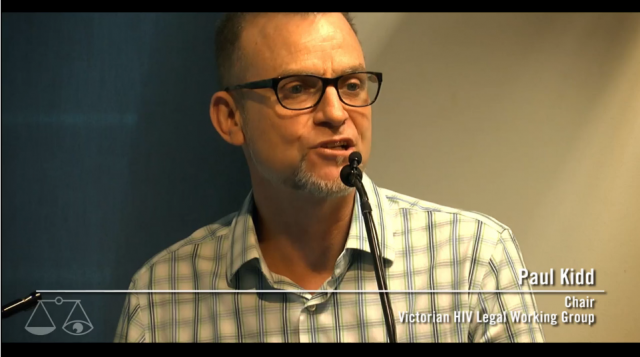
Paul Kidd: On behalf of Living Positive Victoria, the Victorian AIDS Council, Australian Federation of AIDS Organisations, and the National Association of People with HIV Australia, welcome to Beyond Blame: Challenging HIV Criminalisation. We hope today’s event is inspiring and productive and that it kicks off the discussion about HIV criminalisation that will continue through the week and beyond.
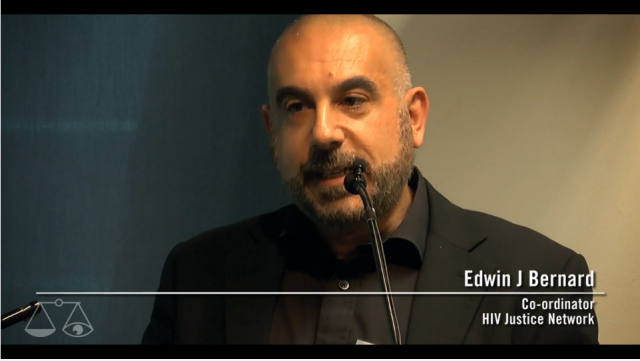
Edwin Bernard: I think this is the largest HIV Criminalisation Pre-Conference to date at an International AIDS Conference. So the idea of the meeting is to bring people together. People who are working on this issue, who are interested in learning more about it, and we’re going to really work hard to come together, find solutions, and move forward.
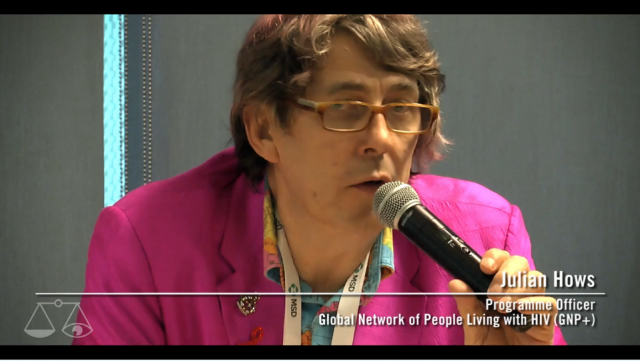
Julian Hows: GNP+ has been involved in this issue of criminalisation since 2002, 2003, when we noticed an increase in the rates of prosecution in Europe effectively and started the first scan of the 53 signatory countries of the European Convention on Human Rights.

This has since become the Global Criminalisation Scan, an international ‘clearing-house’ of resources, research, and initiatives on punitive laws and policies impacting people living with HIV.
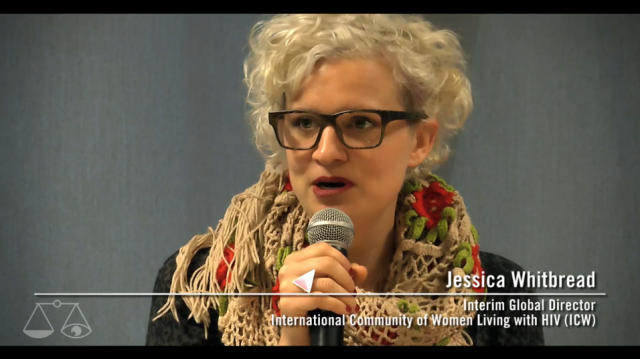
Jessica Whitbread: And ICW are really, really excited to be here and part of this. Criminalisation is a huge issue for us. Over 50% of people living with HIV are women and many of these laws initially and still continue to be created as a way to protect women when actually they put us more at risk.

Getting the criminal law changed and out of the HIV response

The meeting began with a surprise announcement by the Minister of Health for Victoria, David Davis, about Australia’s only HIV-specific criminal law, Section 19A of the Victorian Crimes Act. Read more about the campaign to reform the law here.
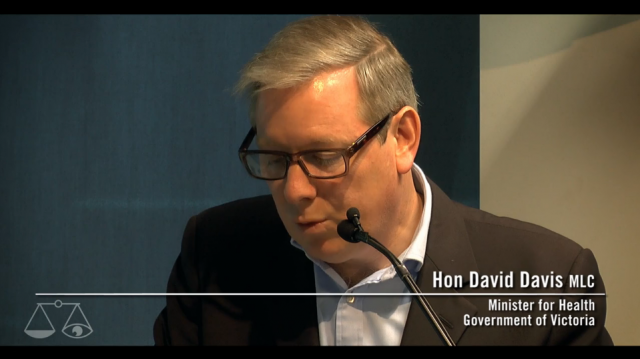
David Davis: And as a further step in our efforts to reduce the impact of HIV and reduce stigma and discrimination, the coalition government will amend section 19A of the Crimes Act 1958 to ensure that it is non-discriminatory.

Following the announcement Victoria’s Shadow Health Minister, Gavin Jennings, committed to removing (and not just amending) Section 19A within the next 12 months, should Labor win the state election in November.

A keynote address by the Honourable Michael Kirby, a former Justice of the High Court of Australia, and a member of the Global Commission on HIV and the Law, reminded us why an overly broad criminal justice apporach to prevention does more harm than good.
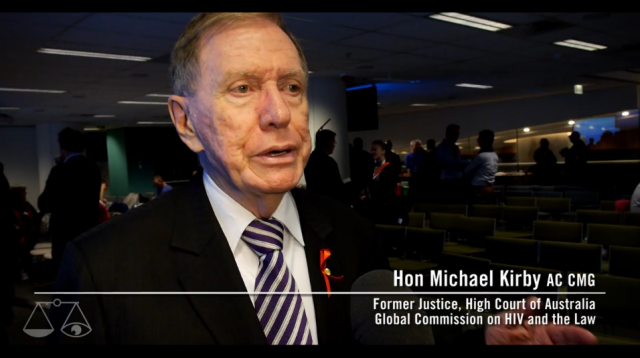
Michael Kirby: In the big picture of this great world epidemic, the criminal law has a trivial role to play. What is most important is getting the law changed and out, not getting the law into the struggle against HIV and AIDS.

The Iowa example: laws are subject to change and should be subject to change

The meeting then focused on Iowa in the United States where both law reform and judicial rulings have limited the overly broad use of the criminal law.

Matt McCoy: You know, in Iowa, we had a very bad law on the books, but it’s not unlike a lot of other places in the country in the United States and in the world. So there was no need for transmission, and with it, the penalty was so extreme, a mandatory lifetime sex offender registry and 25 years in prison.

Watch the video that Senator McCoy showed at the meeting explaning how law reform in Iowa happened.
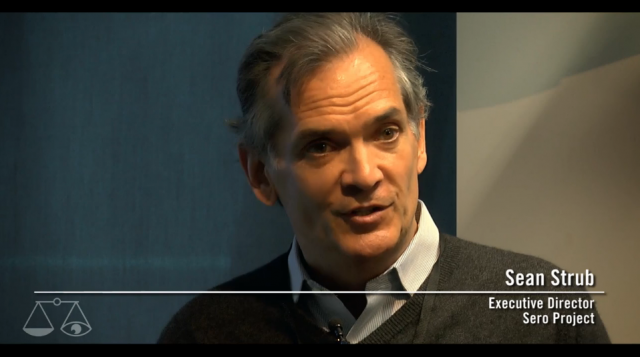
Sean Strub: Iowa is a conservative farm-belt state. And the effort there began with a small group of people with HIV who started organising others with HIV and educating their own communities and then educating public health officials and reframing the issue in terms of a public health issue rather than simply an issue of justice for people with HIV. Last month, we held a conference at Grinnell College in Grinnell, Iowa. It was the first national conference on HIV criminalisation in the US. The Friday before our conference began, Governor Branstad in Iowa signed a criminalisation reform measure and made Iowa the first state in the United States to subtantively reform and modernise their statute.

Two videos of the HIV Is Not A Crime conference (also known as the Grinnell Gathering) are available.  One shows the opening ceremony and can be viewed on the Sero website.  A second video highlights the voices of US HIV criminalisation survivors featured at the meeting, and can be viewed on the Sero website.

Nick Rhoades: About a week after the conference was over, the timing was just a little bit off, nonetheless, it’s fantastic. My conviction was overturned by the Iowa Supreme Court. Yeah. Thank you… It’s kinda groundbreaking, their decision, and I, first of all, think that it’s going to have an effect beyond Iowa’s borders, but it basically said that there has to be more than a theoretical chance of transmission to be prosecuted under the law. And previously, that’s not been the case. Basically, it was just if you didn’t disclose, and you had sex, that that would be enough to convict someone. So, for the first time, they basically said that factors such as using protection, being on antiretroviral medication, having an undetectable viral load specifically, should affect whether or not prosecution is able to happen.

Senator McCoy took the opportunity to urge parliamentarians to rethink how they treat HIV in a criminal context.

Matt McCoy: Many of these laws went into effect in the United States during the AIDS crisis and the scares that society had around the issue, and in many cases they were put into effect using a one-size-fits-all measure. And so this is a great opportunity to go back and to revisit that and to realise that our laws are subject to change and should be subject to change.

Science can change laws and limit prosecutions

A number of countries in Europe have also recently revisited their criminal laws, policies or practices. A poster, Developments in criminal law following increased knowledge and awareness of the additional prevention benefit of antiretroviral therapy, presented at AIDS 2014 by the HIV Justice Network, showed where and how this has taken place.
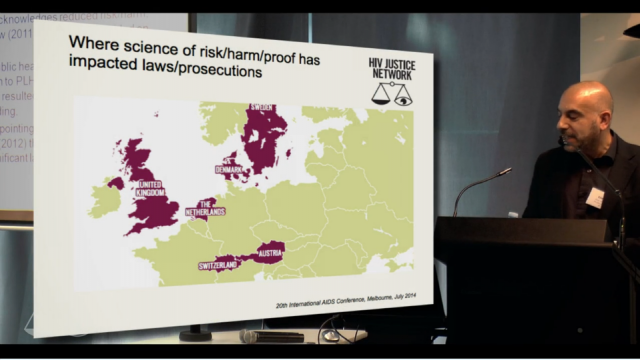
Edwin Bernard: We have to salute the Netherlands, the very first place in the world that actually, way before the Swiss statement, between 2004 and 2007, managed to change the application of the law through a variety of Supreme Court rulings, but also because of advocacy that happened with advocates and healthcare workers and people in the community who limited the role of the criminal law to only intentional exposure or transmission. Denmark was the only country in Western Europe that had an HIV-specific criminal law, and a huge amount of advocacy went on behind the scenes and that law was suspended in 2011 based on the fact that the law was about a serious, life-threatening illness, and the reality was that in Denmark, people living with HIV have exactly the same life expectancy as people without HIV. And so the law just couldn’t apply anymore. And so, we hope that the places like Denmark and the Netherlands will provide inspiration for the rest of us.

Urgent need to focus on global South

But with two-thirds of all HIV-specific criminal laws enacted in the global South, there is now an urgent need to re-focus our efforts.
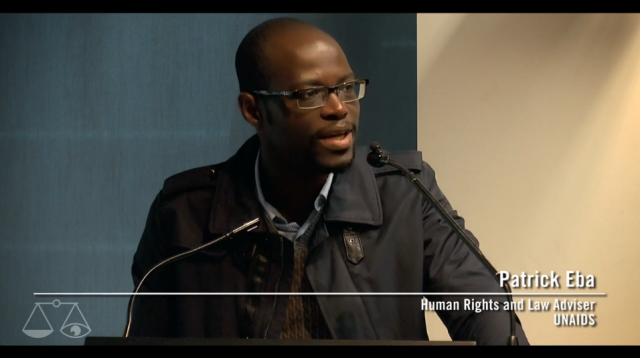
Patrick Eba: For a long time, we have been saying that there is no prosecution happening in the Global South, particularly in Africa, because we were lacking the information to be able to point to those instances of criminalisation. In fact, there is a lot of prosecution that is happening, and in the past year, if you look at the data that is being maintained by the HIV Justice Network, it is clear. We’ve seen the case in Uganda. We know of a decision that came out some time late last year in South Africa. We know of a number of cases in Kenya, in Gabon, in Cameroon [and especially in Zimbabwe]; and these really show that where we celebrate and are able today to know what is happening in the Global North, our lack of understanding of the situation in the Global South is one that requires more attention.
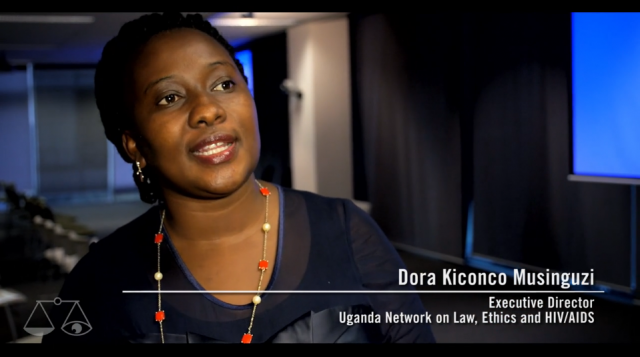
Dora Musinguzi: Uganda is right now grappling with lots of human rights and legal issues, and it’s going to be such a high climb to really convince our governments, our people, government agencies to make sure that we really have this reform of looking at HIV from a human rights angle, public [health] angle, gender justice angle, if we are going to achieve the gains that we have known to achieve as a country. …But we stand strong in this, we are not giving up. We are looking to a future where we shall challenge this criminalisation, and we hope to come back with a positive story.

Workshops on advocacy messages, science and alternatives to a punitive criminal justice approach

After the morning plenary sessions, participants then attended one of three workshops. The first workshop explored how to get advocacy messages right, in terms of what arguments need to be delivered by whom and to whom.
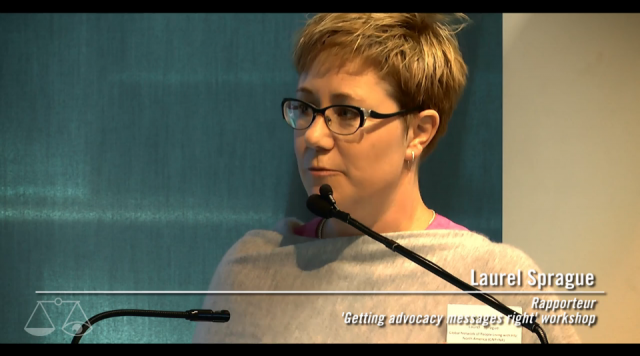
Laurel Sprague: We talked about the importance of stories. In particular, the stories of people who have been prosecuted, both because of the dignity it gives them to be able to share their own experience, and also because what we’re seeing is so broadly understood to be disproportionate once the details come out.

Laurel’s rapporteur notes can be downloaded in full here.  For an example of advocacy messagaging aimed at communities impacted by HIV see this video from Queensland Positive People.

A second workshop highlighted the way that up-to-date science on HIV-related risks has limited the application of the criminal law in Sweden and Canada.
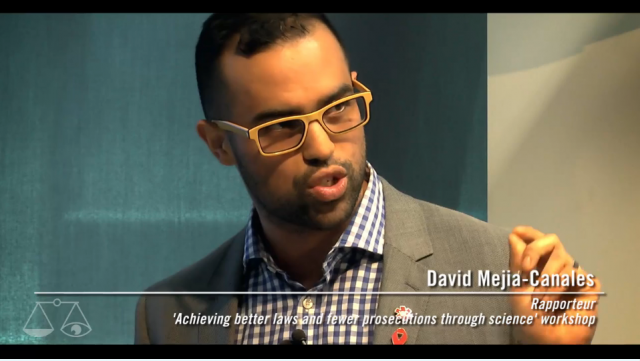
David Mejia-Canales: Really mobilising their scientists, their researchers and really connecting with the lawyers, the judiciary, the prosecutors and putting to them the best evidence that they have.

Download the Powerpoint presentation given by Cecile Kazatchine of the Canadian HIV/AIDS Legal Network here.

The third workshop examined alternatives to a punitive criminal justice system approach, and the risks and benefits of using, for example, public health law or restorative justice.
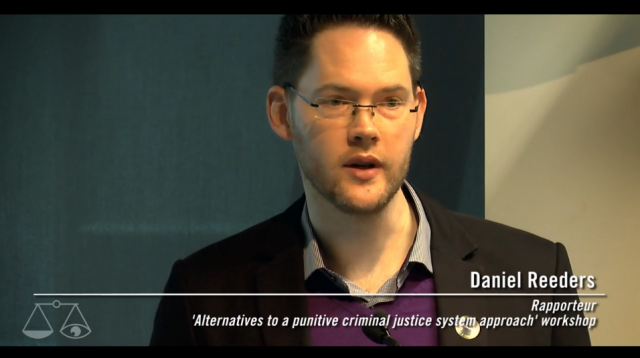
Daniel Reeders: So if someone shows up at a police station or talks to their doctor about being exposed or infected with HIV, a restorative justice approach would talk about giving them an opportunity to work that issue through with the person who they are otherwise trying to report, either for criminal prosecution or public health management. It acknowledges that people experience HIV infection as an injury and that there is a lack of a process offering them an opportunity to heal.

Daniel’s entire rapporteur report can be read on his blog.

Going home with more ideas and tools and inspiration to continue our work

As the meeting came to a close participants appreciated the day as a rare and much needed opportunity to discuss advocacy strategies.

Paul Kidd: What a day! It is just so amazing to be in this room with all of these incredible people and the sense you have of how much passion and energy and commitment there is around this issue.
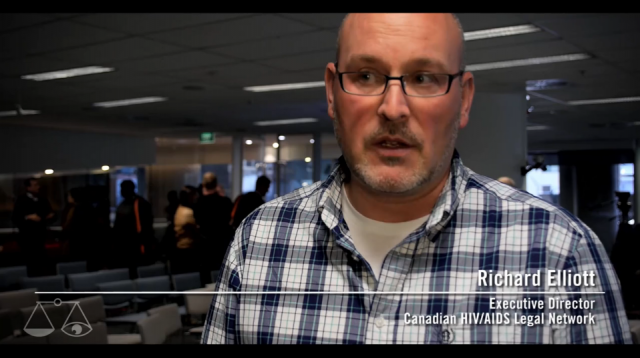
Richard Elliott: Even as we face numerous setbacks in our own context sometimes, we see that in fact people are making breakthroughs elsewhere and then that helps us put pressure domestically on decision makers, on legislators, on judges.
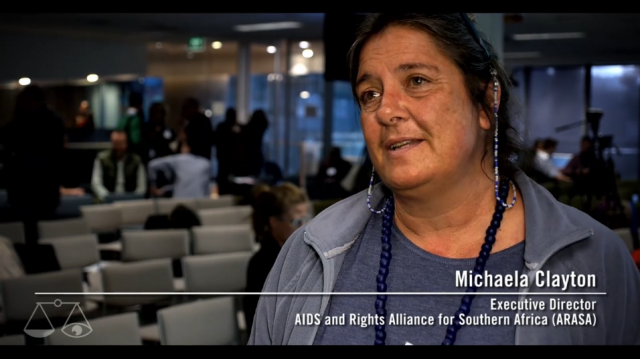
Michaela Clayton: It’s important to learn from how people have achieved successes and what have been peoples’ problems in achieving successes in different countries in addressing criminalisation. So for us it’s a wonderful opportunity to learn from others.

Dora Musinguzi: I was encouraged to know that the struggle is not only for us in Africa, in Uganda, and I was also encouraged to know that our colleagues have made progress, and so we can.

Sean Strub: I think everywhere that there is an effort for this advocacy for reform, it is a constantly evolving effort. And the fact that the HIV Justice Network and others brought together this global community which is incredibly mutually supportive. I think of any aspect of the epidemic, I can’t think of an area where there is more collegiality and mutual respect than those of us who’ve centered our work around criminalisation reform. That’s what we’re seeing here in Melbourne, just an expansion of that, and all of us going home with more ideas and tools and inspiration to continue our work.

To remain connected with the global advocacy movement against overly broad HIV criminalisation, like us on Facebook, follow us on Twitter and sign the Oslo Declaration on HIV Criminalisation to join our mailing list.

Kan. health agency pledges to protect AIDS/HIV patients from quarantines, clearing bill's path

TOPEKA, Kansas – A promise from Kansas’ health department Thursday to continue protecting AIDS and HIV patients from being quarantined has resolved a dispute over a legislative proposal for helping medical personnel and emergency workers who may have been exposed to infectious diseases.