The policy imposed an additional form of ritual humiliation on a reviled category of people without any plausible public-safety justification.
The U.S. Supreme Court today declined to hear Louisiana’s appeal of a decision against its 2006 law requiring that people on the state’s sex offender registry carry IDs or driver’s licenses that say “SEX OFFENDER” in orange capital letters. A year ago, the Louisiana Supreme Court concluded that the requirement amounted to compelled speech and could not be justified by the state’s legitimate interest in protecting public safety. In addition to raising First Amendment issues, Louisiana’s now-moribund law illustrates the longstanding tendency to impose additional punishment on people convicted of sex offenses in the guise of regulation.
The registries themselves, which require sex offenders to regularly report their addresses to local law enforcement agencies so that information can be made publicly available in online databases that also include their names, photographs, and physical descriptions, are primarily punitive, exposing registrants to ostracism, harassment, and violence while impeding their rehabilitation by making it difficult to find employment and housing. There is little evidence that the sort of public notification practiced by every state delivers benefits that outweigh those costs. Louisiana’s experiment in ritual humiliation, which branded registrants with orange letters they had to display in every transaction that required producing a government-issued ID, compounded those costs without offering any plausible benefits.
One problem with sex offender registries is that they cover a wide range of crimes, including many that do not involve violence, force, or physical contact. While people tend to imagine rapists or child molesters when they hear the term sex offender, the reality can be quite different, in ways that are important in assessing the danger that a person might pose to the general public or to people in particular age groups.
In Louisiana, for example, mandatory registration applies not only to crimes like rape and sexual assault but also to nonviolent offenses, such as voyeurism, possession of child pornography, consensual sex between adults who are closely related, sex between high school teachers and students (even when the student has reached the age of consent), and employment of a minor in “any practice, exhibition, or place, dangerous or injurious to the life, limbs, health, or morals of the minor.” Robert Suttle, who posted the picture of his driver’s license shown above, was forced to register because he was convicted of intentionally exposing someone to HIV, which resulted in a six-month prison sentence. After a bad breakup, he says, his former partner told the police he had not been informed of Suttle’s HIV status.
The second line of each record in the state’s registry shows the offender’s “tier,” which corresponds to various crimes classified by severity, ranging from Tier 1 (least serious, requiring registration for 15 years) to Tier 3 (most serious, requiring lifetime registration). Further down in the record, you can see the statute under which the registrant was convicted (e.g., “carnal knowledge of a juvenile”), which still omits potentially important details.
The driver’s license warning required by Louisiana’s law did not provide even that much information, meaning that anyone who saw it was invited to assume the worst. Tazin Hill, the man who challenged the law, completed his prison sentence in 2013. He was convicted of having sex with a 14-year-old when he was 32, which placed him in Tier 1. But anyone who saw his license had no way of knowing the nature or severity of his offense. Rebelling at this government-imposed badge of shame, Hill excised the “SEX OFFENDER” label from his license and covered the gap with clear tape, which resulted in the criminal charges that gave rise to this case.
Another problem with sex offender registries is the mistaken assumption that people who fall into this broad category are more likely to commit additional crimes than, say, robbers, burglars, or arsonists. When it upheld mandatory “treatment” of sex offenders in prison, for example, the Supreme Court relied on a highly dubious recidivism estimate that was repudiated by its original source but has nevertheless been cited repeatedly by lower courts. The “SEX OFFENDER” stamp on Louisiana driver’s licenses, even more than the registry, promoted such erroneous fears by implying that the bearer posed an ongoing threat, no matter the details of his crime, how long ago it occurred, or how he had behaved since he completed his sentence.
The empirically unjustified belief that sex offenders are highly prone to recidivism is especially inaccurate and damaging when applied to people convicted as minors, who are included in Louisiana’s registry and therefore had to carry “SEX OFFENDER” IDs or driver’s licenses. Judy Mantin, who this year testified before a state legislative committee that was considering revisions to Louisiana’s law in light of the state Supreme Court’s ruling, said her son “made a mistake” when he was 14 but today is “a very productive citizen.” She argued that “our children deserve a second chance in life.”
Legislators ostensibly have made the same judgment regarding adults convicted of sex offenses, who have notionally paid their debt to society once they complete their criminal sentences. Yet legislators imply otherwise by imposing additional burdens on those people for decades after their official punishment. In this case, any interaction involving a driver’s license—e.g., with cashiers, hotel clerks, bank tellers, employers, landlords, election officials, or airport security screeners—became a new invitation to close-range fear and loathing.
What was the justification for this requirement, which added to the burdens imposed by registration, public notification, and residence restrictions? The state argued that the “SEX OFFENDER” label facilitated law enforcement by alerting police officers to a person’s status. But police already could readily check that by consulting the state’s database. And as the Louisiana Supreme Court noted, the state could have eliminated even that slight inconvenience with a more discreet label: “A symbol, code, or a letter designation would inform law enforcement that they are dealing with a sex offender and thereby reduce the unnecessary disclosure to others during everyday tasks.”
Such a solution would not be adequate, the state argued in its petition to the U.S. Supreme Court, because “the Louisiana Legislature concluded that the public, and not merely law enforcement, needs to know of a sex offender’s status under limited circumstances.” Such as?
“A property manager needs to know a sex offender’s status when leasing an apartment—or the manager might incur liability if a tenant is raped on the premises,” the petition said. “A church or Red Cross facility may need to know a person’s status as a sex offender when providing shelter from a storm. People trick or-treating on Halloween may need a quick way to verify that their children are safe from predators.”
During a lower-court hearing, one of the state’s lawyers offered another example:
If I’m deciding who I want to be my babysitter and I know that I don’t want a sex offender to babysit my children, I say, “OK. I’d like to see your ID before I allow you to babysit my children.” And, “Oh, it says ‘sex offender.’ I’m not going to hire you.”
The Halloween scenario suggests the state’s desperation, not only because this particular hazard is an urban legend but also because it is difficult to imagine a situation in which parents would demand to see the driver’s licenses of neighbors handing out candy to trick-or-treaters. Even when the concerns are more reasonable, the public registry, for better or worse, already allowed anyone to look up an individual and see if he was listed; that was supposedly the whole purpose of creating a publicly accessible database in the first place.
“Louisiana’s branded-identification regime was an outlier in singling registrants out for public opprobrium,” Hill’s lawyers noted in their brief urging the Supreme Court not to consider the state’s appeal. “Just two other States require identification cards to display phrases like ‘SEX OFFENDER,’ while only six States have laws that require identification cards to include other types of sexual offense disclosure—typically a symbol or statute number recognizable only to law enforcement.”
Even as an outlier, Louisiana’s law suggests how ready politicians are to support practically any burden on sex offenders, whether or not it makes sense as a tool to promote public safety. Policies like these serve no useful purpose, but they do make life harder for a reviled category of people whose punishment never ends.
[Feature] It Takes More Than A Village to End HIV Criminalisation
The proverb says, “It takes a village to raise a child”. But what if a mother in the village is living with HIV, and some of the villagers stigmatise her? What if that stigma creates a situation where the mother living with HIV is unjustly criminalised because of her HIV status? Then it takes more than a village to get justice for that woman. It takes a global movement to end HIV criminalisation to sensitise and train lawyers and expert witnesses. It takes national communities of women living with HIV to support that woman following her release, and to educate the community in which she lives about HIV.
Introduction
In 2016, a Malawi court convicted a woman living with HIV of “negligently and recklessly doing an act likely to spread the infection of any disease which is dangerous to life” under section 192 of the Malawi Penal Code. She had attended a village meeting with her baby which she breastfed as usual before passing the child to her grandmother. Another woman then asked her to hold her baby. It was alleged that this child began breastfeeding briefly before the woman realised what was happening. The child’s mother then reported the incident to the police. The woman was arrested and without legal advice or representation, pleaded guilty, was convicted, and sentenced to nine months’ imprisonment with hard labour.
In addition, the accused woman was taking antiretroviral therapy. The chances of HIV transmission through even long-term breastfeeding are very low (which is why WHO guidelines recommend it when access to infant formula and clean water are limited) and the chances of transmission during the brief period the baby allegedly fed were infinitesimally small. In fact, the accused woman’s own child, who was routinely breastfed, has not acquired HIV, calling into question any suggestion that she intended to cause harm to the other woman’s child. Perversely, for a system that unjustly condemned her for risking harm to the other woman’s child, her own baby was imprisoned with her, without any arrangements for appropriate feeding and care, negating any notion that the legal system’s purpose was to protect children.
Following media reports of her initial conviction, numerous individuals and organisations – including HJN and our HIV JUSTICE WORLDWIDE partners, ARASA and SALC – became involved in the case, ultimately changing the outcome for the woman and her family, and laying the groundwork for further anti-HIV stigma advocacy and education in the region. Her story demonstrates the vital role that education, training, strong networks, and community play in the pursuit of HIV justice.
Living with HIV-related stigma
When interviewed at her home in 2019, the woman referred to as “EL” talked about her life:[1]
[1] The initials EL are used instead of her full name following a court order of anonymity to protect her privacy. The interview took place in 2019, during the village visit described later in this article.
“As kids, there were the two of us — me and my brother. My parents faced challenges raising us. Finding the basic necessities like soap and food was a tall order, let alone talking about going to school. It was difficult to get learning materials as well as proper clothes to wear at school. I worked hard in class but couldn’t get past Standard 5 at primary school. Eventually I dropped out, and my brother did the same, … My daily life was taken up doing house chores just like any other girl in the village, as well as helping my parents with farming. At 16, I got married.”
EL further described how she was diagnosed HIV-positive in 2015 after a de facto compulsory HIV test at an antenatal visit. She already had two children and was pregnant with her third. She had heard about HIV but did not know much about it. EL said that the healthcare workers provided a lot of assistance, giving her accurate information about HIV, including the importance of adhering to her antiretroviral treatment (ARVs).
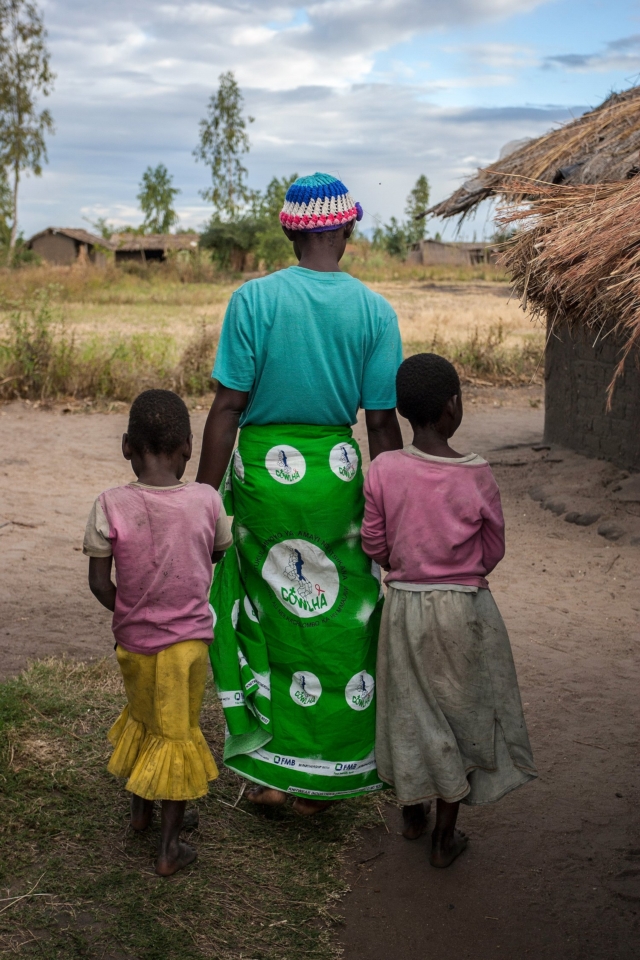
EL and two of her children. Photo: Amos Gumulira/UNDP Malawi
EL said that she generally enjoyed life in her village, although at times she was subject to stigma and discrimination:
“When I went to fetch water at the community borehole, people would laugh at me, and whenever I wanted to participate in community work, you would find pockets of community members talking ill about me. Some people used to insult me, calling me names. But I persevered because my relatives, including the Village Headman himself, gave me support and always stood by my side.”
Members of EL’s family also faced discrimination. “Due to lack of information, a lot of people thought HIV was hereditary and because I was diagnosed HIV-positive, this meant that all my family members had HIV, and they were discriminated against,” EL said.
EL wonders if more could have been done to help her fight stigma. In particular, EL gained a lot of knowledge about HIV from the counselling she got when diagnosed, but perhaps she could have been better equipped with information to share with people in her community:
“A lot of people don’t know that if you adhere to ARVs, you reduce the risk of transmitting HIV to others. This information needs to be passed on to many people. There are also other issues to do with ARVs. A lot of people don’t have adequate information on the effects of ARVs and at the end of the day, they start pointing fingers at each other, giving people room to start speculating about issues to do with witchcraft.”
EL’s prosecution had repercussions for her whole village. One woman from the community explained:
“I was there and very close to where EL was sitting. Yes, she was carrying another woman’s child. This other woman had given the child to EL for safe keeping while she went to stand in a queue, but honestly speaking, I didn’t see EL breastfeed the child. I just heard some people who were sitting a distance from where we were sitting, as they started pointing accusing fingers at her.”
She said that things moved so fast that before they could think of anything to stop what she called “the rumour.” It had gotten out of hand and people started saying that EL had intentionally breastfed the child to transmit HIV.
After receiving a summons, EL voluntarily turned herself in at the police station. She was accompanied by the Village Headman (her grandfather) who wanted first-hand information about what crime she was alleged to have committed. That same day, police transferred EL to a larger town, where she was remanded for three days. At the age of 29, this was the first time that EL had ever left her village.
Days later, she appeared in court and the charge sheet was read out. EL recounted that she had not understood what was happening and could not make arguments because she had no legal representation. EL agreed with the summary of events as they were described, so she was found guilty and was imprisoned together with her youngest child.
She described life in prison as “hell”:
“After a week, my brother showed up to give me my ARVs. All this talk about a woman with HIV breastfeeding. I breastfed but I also found it tough to feed my baby while in prison because there was no provision of special food for babies. We were eating nandolo (pigeon peas) almost every day with Msima ya Mgaiwa (maize meal). And there was only one toilet for a cell of more than 50 people.”
After some time, relatives and other members of her community started visiting, giving her money she could use to buy soap and food for her baby. “When we heard from our Village Headman that she had been arrested, we were so devastated”, a woman from EL’s village explained. “We raised funds for some members to go and give her support only to learn that she had been transferred to one town, then another, but some of us did manage on several occasions to visit her and offer our support when she was in prison.”
Then, out of the blue, EL received a message that some people had come looking for her. She went to meet them: a lawyer, Wesley Mwafulirwa, and his paralegal. They explained why they were there and asked if she would like them to appeal on her behalf. She accepted enthusiastically. “I was excited but at the same time I was confused because I could not believe that I could be so lucky to have these people come to help me.”
Fighting the charges
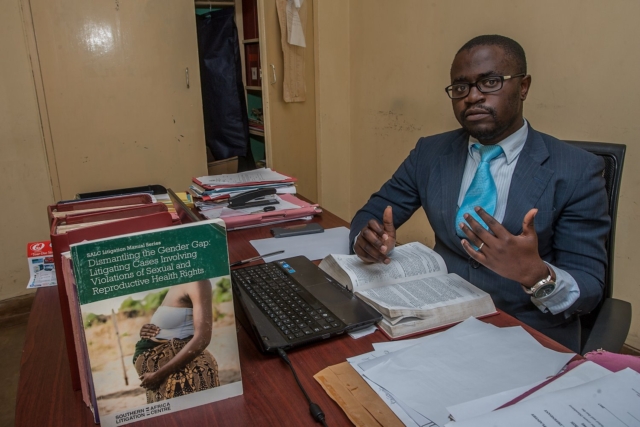
Solicitor Wesley Mwafulirwa had volunteered to attend training to address legal barriers to prison health and human rights presented by the Southern African Litigation Centre (SALC). He travelled from Malawi to South Africa to attend the training which addressed useful regional and international mechanisms, and presented insights about legal practice and strategic litigation to support prison health and human rights, particularly for those facing heightened vulnerability to HIV and TB.
At the training, two lawyers spoke about their pro bono work. Wesley remembers one of them, Allan Maleche (Executive Director of KELIN), saying that each participant should take at least one case when they go back to their country. It was a turning point in Wesley’s career.
He had not been home long when he saw an article in the newspaper about an HIV-positive person convicted for trying to spread HIV. That person was EL.
Wesley, who lives in a small town in northern Malawi, drove for more than ten hours to get to the jail where EL was incarcerated. He explained his determination, saying “I was so fired up! I’d just come from SALC’s training … and I said, ‘I want to take up this case’.”
Wesley interviewed EL and offered to take her case pro bono. Wesley contacted SALC, who offered technical support. Their first step was to get an order for anonymity to protect EL’s identity and gain greater control over media reporting. Next, they faced an ethical question. They wanted to challenge the constitutionality of the law but that would take a long time. Because EL was in prison, they decided to undertake a criminal appeal instead. They applied for EL to be let out of custody on bail pending appeal. This is usually a difficult application to win, but they were successful and EL was released from prison.
In the appeal, the court was asked to consider whether the conviction could be justified, whether the penal provision was constitutional (arguing it was overly broad and vague), and whether the sentence was manifestly unjust. Wesley used his learnings from the SALC training to raise international principles and instruments relating to sentencing, which the court referenced and upheld. Michaela Clayton, then Executive Director of the AIDS and Rights Alliance for southern Africa (ARASA), and now a member of HJN’s Supervisory Board, provided expert testimony. Another expert witness, Dr Ruth Brand, identified through HJN’s global network, gave expert scientific evidence to show the risk of HIV transmission had been “infinitesimally small.”
The case was heard by Honourable Justice Zione Ntaba, who held that the proceedings in the trial court were irregular and “blatantly bias” against EL, compromising her right to a fair trial. Justice Ntaba found the charge sheet had been defective and therefore EL’s plea should not have been recorded as guilty. She noted the law must be sensitive to the accused’s knowledge or belief (or lack of) that HIV would be transmitted. Justice Ntaba decided the conviction could not be justified, acknowledging human rights principles against the overly broad criminalisation of HIV non-disclosure, exposure, or transmission. EL’s sentence was set aside. (The Constitutional challenge was referred to a full-member panel of the Constitutional Court although the case was not pursued.)
Notably, Justice Ntaba was a member of the African Regional Judges Forum to discuss HIV, TB and Human Rights (a process which is owned and planned by the judges and run with support from UNDP and funding from the Global Fund).
Fighting the stigma
Shortly after EL’s arrest, the Coalition of Women and Girls Living with HIV and AIDS in Malawi (COWLHA) and the Malawi branch of the International Community of Women Living with HIV/AIDS (ICW-Malawi) discussed the case at a roundtable meeting. At first, everyone was surprised and even laughed, questioning how she could have breastfed someone else’s child. They had never heard of a criminal case involving infant feeding and did not understand what they were dealing with.
During their discussions, COWLHA and ICW-Malawi agreed that the prosecution of EL was a manifestation of stigma and misinformation about HIV in the community. They learned more about the unjust measures that EL had experienced, like being imprisoned without being given a chance to be heard and not being given the chance to prepare and take her medication and things she needed to care for her child. COWLHA and ICW decided to get involved.
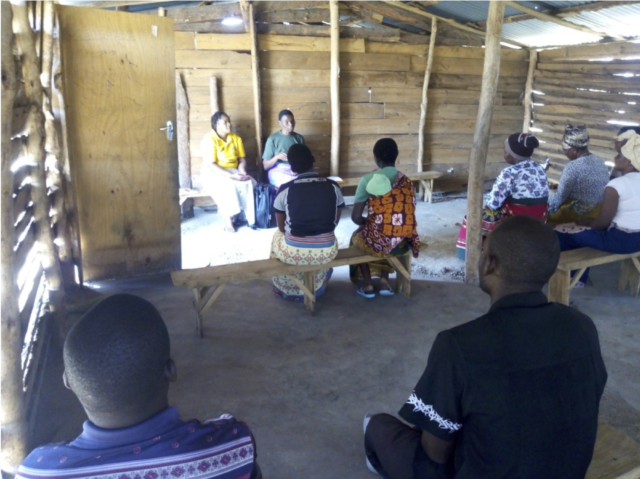
Representatives from COWLHA and ICW meet with members of EL’s village. Photo: COWLHA/ICW
Concerned that EL could face social and community hostility after her release, COWHLA and ICW planned a visit to the village to provide psychosocial support to EL and to work with traditional community leaders to provide community sensitisation on HIV, addressing issues of stigma and discrimination. Their efforts helped change some community members’ ideas about HIV.
The community formed two support groups— one for youth and another for adults (notably both were predominantly female groups). They have conducted numerous activities, including home visits, supporting children to go to school, helping the elderly with house chores, and they have a garden where they grow vegetables and rice. They hoped to access loans to become self-reliant. They also had a list of issues they wanted to learn more about, including preventing mother-to-child transmission, sexual and reproductive health, positive living, stigma and discrimination, and treatment literacy.
Visiting EL at home
In September 2019, a three-member team comprising Edna Tembo (Executive Director of COWLHA), Charity Mkona (ICW Board Chair), and Peter Gwazayani (media consultant), set out for EL’s village.
The team was welcomed by the Group Village Headman, who took them to EL’s house. EL recognised Edna from the work COWLHA and ICW-Malawi had done in the community previously. EL welcomed the team with a big smile.
EL and her husband looked cheerful as they laid a mat on the veranda of their house for the visitors. Her mother later joined the discussion.
EL was interested to learn that HJN wanted to write about her case and the type of interventions that had been helpful, to share the story with advocates for HIV justice around the world.
EL recounted that when she returned to the village, “most members of my community received me with happiness, particularly my relatives. The day I arrived, they were jubilant. They celebrated with songs that we normally sing during special occasions in the village.”
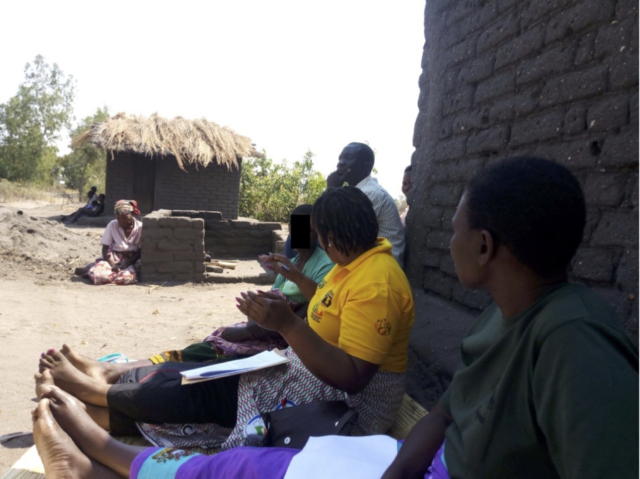
COWLHA ED Edna Tembo and Charity Mkona of ICW chat with EL, her husband and her mother (at far distance). Photo: COWLHA/ICW
EL lives with her husband, five children and her mother in a compound made up of three grass thatched houses. She introduced her children:
“The oldest is 13 and she goes to school, as do the second and third. The fourth, a little girl, is the child I was with in prison. She has not yet started school. And then there is this one, who I am breastfeeding. She is the fifth one. She has been tested for HIV on two occasions and will be going for the last test soon. The other two tests have come back HIV-negative.”
EL’s accuser and her family still lives in the same village which has presented some difficulties. EL said that on several occasions she had tried to greet them when they passed each other, but she had been ignored. “They don’t talk to me but from deep down in my heart, I have no grudges against them,” EL said. “I am just living my normal life,” EL says, although now she says that she would never agree to carry anybody else’s child, for any reason.
Moving beyond criminalisation
With respect to the community-level interventions, lawyer Annabel Raw, who worked at SALC during the time they supported the EL case said:
“As lawyers, we would never have thought to consider such an intervention had ICW-Malawi and COWLHA not shared their insights and been willing to support the client and her community. Their work has been so important to ensuring that meaningful justice was done to combat the actual root cause of the prosecution — stigma and discrimination — and to reconcile EL with her community.”
Engaging with the community also influenced ICW-Malawi and COWLHA’s thinking about HIV criminalisation. COWLHA’s Edna Tembo noted that:
Supporting people who have been prosecuted, particularly women, gives them power, … However, it is very important to stress that psychological support is absolutely vital for those who have been prosecuted. That includes family support, and a supportive community environment enabling acceptance of an individual accused.”
Tembo was also quick to emphasise that there is more work to be done. That work includes awareness raising and ongoing support to the community, especially to identify and train volunteers, empowering them to provide services at community level and to link them to health facilities and district offices for continued support and mentorship.
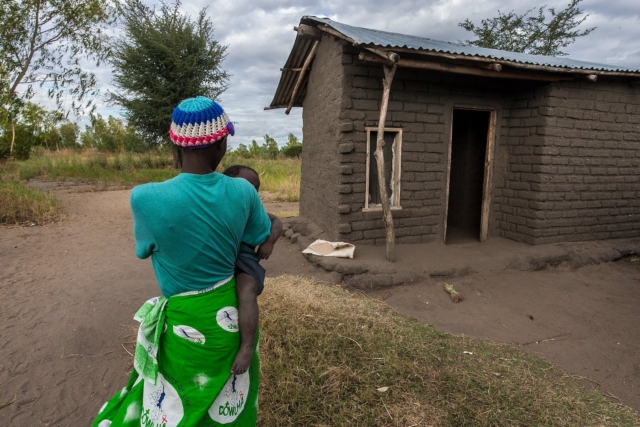
EL carries her youngest child home. Photo: Amos Gumulira/UNDP Malawi
EL described her dreams for the future:
“My wish now is to see my children progress in school so that they become productive citizens in this community and help it grow. That’s my dream. If they get educated, they will be able to stand on their own and support others. My husband is not employed and it is a challenge to get money for school fees for our children. We would love to get a loan or training to have greater knowledge of economic empowerment because we want to be self-reliant. We would then love to lease some land to grow rice to sell to pay back the loan.
“It’s also my wish to see the lives of all people in the community uplifted. We farm but on a small-scale. If we were to be supported with funds, I’d love to see the community establish big rice farms, working in groups, harvesting for consumption and for sale. In so doing, we would be able to uplift our lives for the better.”
Further Information
Learn more about Wesley’s experiences in EL’s case here and here.
Learn more about the African Regional Judges Forum here.
The full High Court judgement is available here, with a summary included here.
Read more about the successful HIV and AIDS Management Act community advocacy here.
This article is based on information provided by ICW-Malawi and COWLHA following their visits to EL’s village, and an interview with Wesley Mwafulirwa published by UNDP. HJN provided financial and logistical support for the village visits thanks to a grant provided to the HIV Justice Global Consortium from the Robert Carr Fund for civil society networks.
Learn how to challenge HIV criminalisation in Africa
Activists and advocates in East and Southern Africa are encouraged to register and participate in a free moderated online course on HIV criminalisation.
If you work with civil society organisations based in Angola, Botswana, Comoros, Democratic Republic of Congo, Eswatini, Lesotho, Kenya, Madagascar, Malawi, Mauritius, Mozambique, Namibia, Seychelles, South Africa, Tanzania, Uganda, Zambia, and Zimbabwe, then this course is for you.
Organised by HIV JUSTICE WORLDWIDE partner, the AIDS and Rights Alliance for Southern Africa (ARASA), the aim of the online course is to increase awareness of the harmful impacts of policies that criminalise people living with HIV and learn how to strengthen advocacy in this area.
The course will start on 13 September 2021 and end on 8 October 2021.
The proposed International Pandemic Treaty could be undermined by political posturing and national protectionism—or it could be an opportunity to chart a different global future based on human rights. Those in charge of drafting the treaty must begin with a clear look at the grave abuses that have characterized the COVID-19 pandemic: authoritarian power grabs; continuing monopolies in diagnostics, therapeutics, and vaccines; failure to resource health systems; staggering setbacks for women; and an upsurge in violence, including covid-related hate crimes. Poorer and marginalized communities have borne the heaviest burden of policing; unemployment; and lack of food, health services, and security.
States have all-too-easily sidelined the international human rights framework under cover of emergency responses. This cannot continue. Any treaty should address these key issues:
The right to health—Most of the world lacks COVID-19 diagnostics, medicines, and vaccines. A new treaty should uphold the right to physical and mental health, and acknowledge the right of everyone to the benefits of scientific progress and its applications, including through intellectual property waivers.
An end to weaponizing pandemics—Any new treaty should protect individuals from threat of criminal sanctions linked to infection and reaffirm the Siracusa Principles, which set out clear limits on restrictions of rights during an emergency.
Workers’ rights are human rights—Workers who gave the most in 2020 were protected the least. States should ensure the physical security of health care workers, community health workers and other essential workers, and respect their right to form and join trade unions. Informal sector workers should have the right to continued employment or social security.
Combat gender inequalities—The pandemic has placed a disproportionate burden on women as healthcare professionals, educators, and caregivers; as well as on transgender people and sex workers. States should prioritize social protection, including childcare and sexual and reproductive health services, as well as prevention and response to gender-based violence.
Uphold rights in the digital age—Digital health has boomed during covid-19. A treaty should address the need for universal access to the internet and digital technology, while upholding rights to digital privacy and non-discrimination, and promoting strict regulation of use of health data.
Transparency and trust—The COVID-19 response has been weakened by corruption. A pandemic treaty should ensure states publish detailed information about budgets, expenditures, and procurement on a live portal; as well as the evidence basis for restrictive measures such as lockdowns; and for diagnostics, therapeutics and vaccine approvals. The International Health Regulations require information-sharing about outbreaks: this has been impeded by states silencing whistleblowers. Any treaty must reaffirm the rights to freedom of expression and opinion.
Accountability and community—Any new treaty should not undermine existing human rights. Human rights obligations related to pandemics should be independently monitored by a multi-stakeholder oversight body that meaningfully incorporates civil society. Community expertise and leadership are vital to effective pandemic response: any treaty should recognize, fund, and enable safe environments for community and civil society at all levels.
The COVID-19 pandemic starkly widened inequalities. We must seize this opportunity to reassert the principle of human equality, which must never be compromised; draw on lessons learned from the past year, and chart a better future.
Co-authors: Sara (Meg) Davis is senior researcher, Global Health Centre at the Graduate Institute of International and Development Studies, Geneva, Switzerland.Philip Alston is professor, New York University School of Law and former UN Special Rapporteur on Extreme Poverty and Human Rights, New York, USA. Joseph J. Amon is Clinical Professor and Director of the Office of Global Health at Dornsife School of Public Health, Drexel University, Philadelphia, USA. Edwin J. Bernard is executive director, HIV Justice Network in Amsterdam, the Netherlands. Sarah M. Brooks is programme director, International Service for Human Rights in Geneva, Switzerland. Gian Luca Burci is professor in the International Law Department of the Graduate Institute of International and Development Studies, Geneva, Switzerland. Naomi Burke-Shyne is executive director, Harm Reduction International, in London, UK. Georgina Caswell is programme manager, Global Network of People Living with HIV in Cape Town, South Africa. Mikhail Golichenko is senior policy analyst, HIV Legal Network in Toronto, Ontario, Canada. Anand Grover is director, Lawyers Collective and the former UN Special Rapporteur on the Right to Physical and Mental Health in Mumbai, India. Sophie Harman is professor at the School of Politics and International Relations, Queen Mary University of London, in London, UK. Lu Jun is director of Beijing Yirenping Center in Beijing, China. Rajat Khosla is senior director of research, advocacy and policy at Amnesty International, London, UK. Kyle Knight is senior researcher, Human Rights Watch, Durham, NC, USA. Allan Maleche is executive director, Kenya Ethical and Legal Issues Network on HIV and AIDS (KELIN), Nairobi, Kenya. Tlaleng Mofokeng is UN Special Rapporteur on the Right to Physical and Mental Health. Moses Mulumba is executive director, Center for Health, Human Rights and Development, in Kampala, Uganda. Sandeep Nanwani is chief medical officer, Yayasan Kebaya in Yogyakarta, Indonesia. Mike Podmore is director, STOPAIDS in London, UK. Dainius Puras is a professor at Vilnius University and former UN Special Rapporteur on the Right to Physical and Mental Health in Vilnius, Lithuania. Nina Sun is deputy director, Global Health and assistant clinical professor at the Dornsife School of Public Health, Drexel University, Philadelphia, USA. Nerima Were is deputy director, Kenya Ethical and Legal Issues Network on HIV and AIDS (KELIN), Nairobi, Kenya.
Year in review: Celebrating successes, highlighting the many challenges ahead
This past year has shown us what happens when one pandemic – HIV – is overshadowed by another pandemic, COVID-19. Despite the many lessons learned from our collective advocacy against HIV criminalisation that we and our HIV JUSTICE WORLDWIDE partners highlighted in March, these lessons were mostly ignored by policymakers around the world.
The result was a series of knee-jerk legal, policy and police responses leading to the overzealous policing of people living with HIV and other key and inadequately served populations already subject to existing inequalities in law and policy, which we have been highlighting in our HIV Justice Weekly newsletter since March.
This latest pandemic overshadowed, and in some cases undermined, the work we and others have been doing to ensure a fair, just, rational and evidence-based response towards people living with HIV by the criminal justice system.
2020 also saw Poland passing a new law against COVID-19 that also increased the criminal penalty for HIV exposure, and number of disappointing HIV criminalisation higher court appeals in the US (Ohio), and Canada (Ontario and Alberta) that appeared to ignore science over stigma.
And yet, despite the many difficulties of 2020, the movement to end unjust HIV criminalisation has continued to gain momentum.
There is still so much more to do, however. Despite these successes, as well as the many milestones the HIV JUSTICE WORLDWIDE movement has achieved since its launch in 2016, we will not rest until everyone living with HIV in all their diversity is treated equally, fairly and justly by all actors of the criminal justice system.
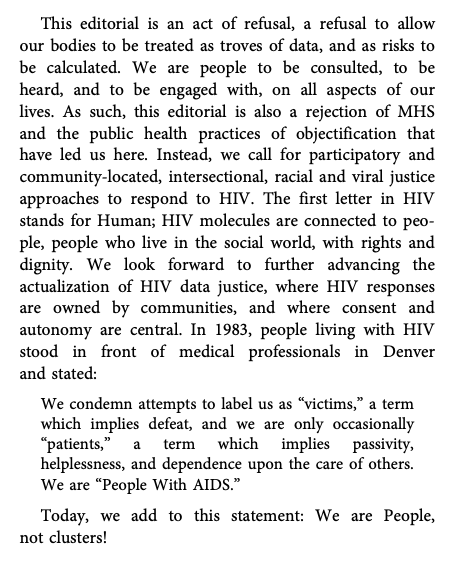
We Are People, Not Clusters! Why public health surveillance using blood taken for HIV resistance testing risks doing more harm than good
A series of articles and editorials in the October 2020 issue of the American Journal of Bioethics published last Friday examine a growing concern amongst community leaders of people living with HIV and our scholarly allies: the use of blood taken from people living with HIV during routine testing prior to starting or changing antiretroviral therapy in surveillance databases, without our permisssion, for public health purposes.
This is already taking place across the United States and in some Canadian provinces, and is currently being considered elsewhere in the world.
The rollout of so-called ‘molecular HIV surveillance’ to identify ‘clusters’ of transmissions to attempt to further improve public health responses to HIV is a growing source of anxiety and concern for people living with HIV in the US and Canada, especially for people who are already marginalised and criminalised in other ways, because they can’t be certain that this data won’t be shared with law enforcement or immigration authorities, which can lead to prosecution and/or deportation.
Coming to Facebook Live on 30th September – HIV Justice Live! Whose Blood is it, Anyway? Like or follow us on Facebook to watch and participate in the first of our new interactive webshows, which will focus on molecular HIV surveillance.
“HIV data justice draws on the collective resources of the HIV/AIDS movement to build new alliances aimed at providing affected individuals and communities with greater control over how their data are utilized in the healthcare system, with the paired aim of providing them with greater access to better services on terms of their own choosing.”
Molldrem and Smith
In the editorial, we welcome Molldrem and Smith’s critique of the controversial rollout of molecular HIV surveillance (MHS) in the United States, which explores three intersecting concerns:
(1) the non-consensual re-purposing of personal health information and biomaterial for public health surveillance;
(2) the use of molecular HIV surveillance data in larger databases to find ‘clusters’ of infections and to make determinations about transmission directionality, and the criminalising implications that follow such determinations; and
(3) the way MHS amplifies the targeting and stigmatisation of already oppressed and marginalized communities.
The editorial questions the rationale behind the use of MHS as one of four pillars of the US Centres for Disease Control (CDC) End The Epidemic (ETE) Plan and calls for the abolition of molecular HIV surveillance in the United States as it is currently being rolled out by the CDC because it blurs the boundaries between consent and criminalisation.
Instead, we envision a future of new participatory and intersectional racial and viral justice possibilities, one which ensures the lives, voices, self-determination, and autonomy of people living with HIV are central to HIV research and public health practice.
There were a number of presentations, mostly e-posters, at AIDS2020:Virtual that focused on HIV criminalisation. We have compiled them all below given that access was (and remains) limited.
The only oral presentations specifically covering HIV criminalisation were delivered by HIV Justice Network’s Executive Director, Edwin J Bernard, presenting in three pre-recorded video sessions.
Below you will find the presentation ‘Bringing Science to Justice’ for the IAPAC 90-90-90 Targets Update, produced for the session, ‘Creating Enabling Environments for Optimal HIV Responses’. This eleven minute presentation, that also includes a number of video clips, covers the following:
The detrimental implications of HIV criminalisation on human rights and public health
The impact of the ‘Expert consensus statement on the science of HIV in the context of criminal law’
Lessons learned from HIV criminalisation on punitive responses to COVID-19
Conclusion: It is more critical than ever to commit to, and respect, human rights principles; ground public health measures in scientific evidence; and establish partnerships, trust, and co-operation between scientists, law- and policymakers and the most impacted communities.
Update (29 July): During a California HIV/AIDS Policy Research Centers virtual satellite session, Dr. Ayako Miyashita Ochoa of UCLA Luskin School of Public Affairs, Department of Social Welfare, interviewed activist Marco Castro-Bojorquez about the modernisation of California’s HIV-specific criminal law as an example of of evidence-based policymaking.
There were a number of poster presentations that also focused on HIV criminalisation in the following countries/jurisdictions:
PEF 1737 United States
PEF 1738 England & Wales
PEF 1739 Australia
PEF 1740 Niger
PEF 1742 Malawi
PEF 1781 Florida, USA
PEF 1794 Uganda
PEF 1841 Taiwan
The abstracts are below. Click on the title to download the pdf of the poster.
BACKGROUND: In 2017, 36 states had laws penalizing persons with HIV (PWH) for sexual or no-risk behavior (e.g., spitting). Research shows these laws do not impact sexual risk behaviors or diagnosis rates. Citizens likely are unaware of these laws; we do not expect direct behavioral effects. However, laws reflect states’ values and may mirror community attitudes towards PWH. Understanding how structural factors relate to stigma is important for stopping HIV stigma. METHODS: National HIV Behavioral Surveillance used venue-based sampling methods to interview men who have sex with men (MSM) in 23 U.S. cities from June-December 2017. Using Center for HIV Law and Policy reports, we categorized states’ HIV-specific laws as of June 2017. We compared MSM”s perceptions of community attitudes towards PWH between MSM living in states with versus without HIV laws. We obtained adjusted prevalence ratios using log-linked Poisson models assessing the relationship between law and four community stigma attitudes (discrimination, rights, friendship, punishment), which we then compared between black MSM in states with versus without laws. RESULTS: Two-thirds of MSM lived in states with HIV-specific laws. MSM in states with laws were more likely to report black race (38% versus 15%), poverty (23% versus 12%), or incarceration (25% versus 19%). Multivariable models found laws were related to perceived community beliefs that PWH “got what they deserved” (aPR=1.13, 95% CI: 1.03-1.24), but not other attitudes. Compared to black MSM in states without laws, black MSM in states with laws were more likely to believe persons in their community would discriminate against PWH (64% versus 50%), not support PWH’s rights (25% versus 16%), not be friends with PWH (24% versus 13%), and believe HIV was deserved punishment (32% versus 22%). CONCLUSIONS: MSM in states with HIV laws were disproportionately from marginalized groups. Laws were related to perceived community attitudes that HIV was deserved punishment; understanding specific stigma attitudes can inform interventions. Although black MSM reported high community stigma overall, stigma was significantly higher for black MSM in states with HIV laws. States may consider repealing or reforming HIV laws and focusing on effective prevention efforts to End the HIV Epidemic.
BACKGROUND: In England and Wales it is possible to be prosecuted for the sexual transmission of infection under the Offences Against the Person Act 1861 or the Criminal Attempts Act 1981. After the first prosecutions in 2003, National AIDS Trust (NAT) successfully advocated for legal guidance for prosecutors and worked with the Crown Prosecution Guidance (CPS) to develop this. DESCRIPTION: In 2018 NAT requested that the guidance be updated. In January 2019 the CPS shared a draft of their revised guidance with NAT, who then coordinated a joint response from NAT and other key stakeholders. This successfully ensured that the new guidance reflects medical developments such as Undetectable=Untransmittable and clinical guidance. Developments in case law have led the CPS to take the view that HIV/STI status deception may be capable of vitiating consent to sex. NAT is concerned that this could result in people who lie about their HIV status being prosecuted for rape or sexual assault, even with safeguards used and no transmission occurring. NAT prepared a briefing articulating legal, policy and public health arguments against this position, and presented it at a meeting with the CPS. As a result the CPS have added several caveats, but we still believe their position to be unacceptable and discussions are ongoing. LESSONS LEARNED: The successes we have had in improving the guidance demonstrate the importance of long-standing proactive engagement, relationship-building and collaboration. Collaborating with a range of key stakeholders including clinicians and lawyers enabled NAT to leverage wider authority and expertise. However, the issue of HIV status deception has illustrated the implications for HIV of legal developments in related but not directly transferable areas. Confidence in our understanding of the law and persistence in making our arguments heard has been crucial in ensuring ongoing engagement on this issue. CONCLUSIONS: The updated guidance will help to ensure that prosecutions for reckless or intentional transmission are conducted in a way that minimises harm to both individuals and the wider community. Regarding the issue of HIV status deception, possible next steps include securing parliamentary engagement, pro bono legal opinions, and further representations from local government and public health bodies.
BACKGROUND: A significant portion of people convicted of HIV transmission in Australia are not Australian citizens. Due to not holding citizenship, those convicted of serious criminal offences (which includes facing a prison term of 12 months or more), are at risk of having their visas cancelled and being removed from Australia. The HIV/AIDS Legal Centre (HALC) has represented a number of these clients in both their criminal and subsequent immigration proceedings to assist these clients in preventing their removal from Australia. DESCRIPTION: Where a person is not an Australian citizen and commits a criminal offence they are at risk of detention and removal from Australia. In two recent case studies of people with HIV convicted of HIV transmission, following the completion of their custodial sentences steps were then taken to cancel their visas and place them into immigration detention. Both clients had their visas cancelled and had to take steps to appeal the decisions. Part of the reason for the cancellation was the perception of ongoing risk to the Australian community. Neither client had been convicted of intentionally transmitting HIV to their sexual partner. HALC continues to represent one of the clients mentioned and the other has now exhausted all appeal options. LESSONS LEARNED: There are often many and varied reasons for HIV non disclosure and, from HALC”s experiences, following criminal and public health interventions it is unlikely that a person with HIV would continue to place their sexual partners at risk of contracting HIV. Decision makers in migration proceedings appear to be unwilling to accept that a person with HIV would no longer place their sexual partner at risk of HIV transmission as the decision makers note in their decisions that they there remains a risk to the community. CONCLUSIONS: The outcomes of these cases demonstrates the need for ongoing advocacy and law reform in the removal of offences for HIV non-disclosure, exposure and transmission, except where actual intent can be established to a criminal law standard. The cases also demonstrate the ongoing need for continued robust representation of those, often vulnerable migrants, who are facing visa cancellation.
BACKGROUND: To effectively fight against HIV, Niger adopted Law No. 2007-08 of April 30, 2007 related on HIV prevention, care and control. This law included problematic provisions, including the criminalization of exposure, HIV transmission, and the non-disclosure of HIV to the sexual partner. Actually, PLWHIV continue to be victims of the application of the provisions criminalizing the transmission of HIV through several criminal prosecution cases in 2017. DESCRIPTION: In June 2018, 13 civil society organizations created the “National Coalition for the Decriminalization of HIV in Niger”. This one benefited from the technical and financial support of HIV JUSTICE WORLDWIDE. Its advocacy objectives, by 2021, are to : repeal of offenses criminalizing exposure and transmission of HIV ; research and disseminate reliable and convincing data on the impact of HIV criminalization on access to HIV-related services. Since its creation, the Coalition has carried out the following activities: National workshop for consulting civil society stakeholders on the exposure, transmission and non-disclosure of HIV in Niger; The development of the Memorandum of December 20, 2018 entitled ‘exploring ways and means to resolve the problems of legal proceedings against people living with HIV in order to reduce to zero the new infections, deaths and discrimination linked to AIDS; Organization of several advocacy meetings during the ‘zero discrimination’ day (March, 2019) for public decision-makers and partners. LESSONS LEARNED: Judicial police officers and magistrates have to exercise greater caution when considering a criminal prosecution, and in particular, carefully assess the latest scientific data on the risks of transmission and the consequences of the infection; National AIDS Control Program needs a comprehensive assessment of the application of criminal legislation on the transmission, exposure and non-disclosure of HIV status in order to measure its impact on the effectiveness of national response. CONCLUSIONS: The criminalization of HIV transmission undermines public health efforts and does not take into account the reality of PLWHIV and especially women who are not always able to disclose their HIV status without fear of reprisals or violence, or to impose the wearing a condom. The threat of possible criminal prosecution only increases their vulnerability.
BACKGROUND: Building on the work of the Global Commission on HIV and the Law, and in order to promote an enabling environment for achieving the 90-90-90 targets, UNDP has supported regional-and national-level work on removing legal barriers to accessing HIV services in sub-Saharan Africa. Covering over 20 countries, this work consists of regional-level capacity building for duty-bearers and rights-holders from the different countries and in-country activities tailored to local realities. DESCRIPTION: In 2019/20, we evaluated the impacts of this work through a review of project documents and key informant interviews with stakeholders including civil society representatives, government officials, and UNDP staff, and conducted an in-depth case study in Malawi. LESSONS LEARNED: Participation in regional spaces empowered national-level stakeholders in their country level work. A participatory legal environment assessment (LEA), jointly owned by government and civil society, served as the starting point and the resulting document, providing an overview of the strengths and weaknesses of HIV-related national laws and policies, has served as a cornerstone for subsequent activities. For example, national advocacy efforts informed by the LEA, and participation by the Chair of the Parliamentary Committee on HIV in regional activities, were key to shaping a revised HIV law to better align with international human rights law. The new law has led to the reform of the institutional framework for the national HIV response. Judges participated in regional judges’ fora where they could request information on HIV-related science, discuss lived experiences with key populations’ representatives and hear about how legal issues were being addressed across the region. Lawyers from across the region took part in joint training. After one such training, and with technical support from regional partners to create a strong case, a lawyer chose to appeal the conviction of a woman under Malawi’s law criminalizing HIV transmission. The presiding judge had attended regional judges’ fora and, drawing on a firm understanding of HIV transmission dynamics, overturned the original ruling. CONCLUSIONS: A mix of regional and national level activities allows for tailoring of activities to national contexts while also providing space for peer networking and support where ‘difficult’ issues might more easily be discussed.
BACKGROUND: According to the Centers for Disease Control and Prevention (CDC), as of 2016, 108,003 people live with HIV (PLHIV) in Florida, which also has the highest rates of new HIV diagnoses in the country. Numerous complexities worsen Florida’s HIV risk environment, including sex work, human trafficking, injection drug use, and sex tourism. These topics are often bases for HIV-related arrests that journalists cover. HIV criminalization describes statutes that criminalize otherwise legal conduct or that enhance penalties for illegal conduct based on a person’s positive HIV status. METHODS: This study employed a systematic review of Florida news articles on HIV-related arrests published between 2009-2019. Through qualitative content analysis, our study analyzed how race, gender, and journalistic tone coalesce in reports of HIV-related arrests. RESULTS: A 2018 report from the Williams Institute indicated that white Floridian women are primarily arrested for HIV-related crimes. The systematic review found zero news reports on HIV-related arrests of white Floridian women, and only one article identified a female perpetrator whose race was undisclosed. Sixty-four other articles reported solely on the HIV-related arrests of men, predominantly black men. We identified two categories of articles where HIV was either central to the arrest, or the person’s HIV-positive status was reported but exhibited little pertinence to the arrest. CONCLUSIONS: Journalistic and police reporting behaviors risk inadvertently stigmatizing PLHIV at a time when public awareness of HIV depends on perceptions of HIV. This information will be used to shape equitable local nonprofit campaigns for community prevention, and HIV decriminalization efforts, while also combating the perpetuation of HIV misinformation.
BACKGROUND: The purpose of the research: To assess the compliance of the Uganda HIV and AIDS Control and Prevention Act, 2014 (the Act) with international human rights law standards.
Problem: In 2014, the Government of Uganda enacted a law to control and prevent HIV and AIDS. However, human rights advocates contest that the law contains provisions that don”t comply with international human rights law standards. METHODS: Study period: August 2014 – August 2015 Study design: Qualitative design. Data collection: The study used a document analysis method. Method of analysis: The study identified international human rights law standards related to HIV and AIDS and used them as benchmarks for the review, analysis and synthesis of the literature. RESULTS: The study established that: The Act carries provisions that comply with international human rights law standards. These include HIV counselling, testing, and treatment; state responsibility in HIV and AIDS control; the establishment of the HIV and AIDS Trust Fund; HIV-related human biomedical research; and prohibition of discrimination in various settings on grounds of HIV status. The Act also contains provisions that are not compliant with international human rights law standards. These include mandatory HIV testing, disclosure without consent, criminalization of actual and attempted HIV transmission, and criminal penalties for vaguely defined conduct. The Act lacks provisions that would make it more effective in controlling and preventing HIV and AIDS. These include commitments by the state to be accountable for its obligations stated in the Act; definition of what constitutes discrimination in various settings; and addressing challenges such as the causes of discrimination, inadequate professional human resources at health facilities, lack of HIV-friendly services in health facilities, and unregulated informal sector in complying with the law. CONCLUSIONS: The study identified the compliance and non-compliance of the Act to international human rights law standards. It made recommendations to the Government of Uganda, organisations of people living with HIV and AIDS, organisations that advocate for human rights, and national human rights institutions, on the need to eliminate, revise and add some provisions in the Act to create an enabling legal environment that conforms with international human rights law.
BACKGROUND: Taiwan ranks top amongst the most progressive Asian countries, including being the first to pass marriage equality in Asia. Yet, stigma and discrimination of certain sub-populations, specifically people living with HIV (PLHIV) continue to prevail, as reflected in the Article 21 of HIV special law which overly criminalizes HIV non-disclosure, exposure and transmission. METHODS: Using qualitative and quantitative approaches, Persons with HIV/AIDS Rights Advocacy Association (PRAA) of Taiwan makes a case on how the current criminal justice system in Taiwan adapt the narrative of ‘HIV as a weapon’ to prevent PLHIV from asserting their rights. RESULTS:Article 21 states that individuals with knowledge of their HIV-positive status, by concealing the fact, engage in unsafe sex with others or share injection syringes, diluted fluids, and thus infect others, shall be sentenced for 5 to 12 years. Data showed over 30 cases were identified from 2012 to 2019, the majority of prosecutions were associated with sexual activities. However, unsafe sex was often defined exclusively with use of condom, and the court rarely recognized scientific advancements in antiretroviral therapy and suppressed viral load. Cases included: prosecution from ex-partner whom knew defendant’s HIV status before their relationship; state prosecution without plaintiff by turning 14 HIV-positive witnesses into defendants; 13-year incarceration despite medical expert’s testimony on the unlikelihood of HIV transmission. Those who haven’t been prosecuted continued to face both physical and emotional health threats, such as a woman threaten by her admirer to disclose her status if she turns him down. Bias and prejudice, worsen by difficulties in proving self-disclosure or condom use commonly resulted in convictions. CONCLUSIONS:Article 21 and out-of-date judicial interpretation of HIV transmission risks gravely deprive the rights of PLHIV and further perpetuates stigma against PLHIV and affected communities through special criminal law on HIV. There’s a strong case to be made for abolishing Article 21 under the Constitution of Taiwan and the International Bill of Human Rights. Training and support on HIV advancements shall be given to all members of judicial and criminal law system to further inform any application of criminal law in cases related to HIV.
Russia: Names of released prisoners suffering from certain diseases to be passed to authorities of regions where they live
FSIN ordered to report the release of dangerously ill prisoners
Source: Pravo – Translated automatically by Deepl.com. For original article in Russian, please scroll down.
The exact list of diseases to be reported will be determined by the government.
On 20 July, President Vladimir Putin signed a law obliging prison administration staff to inform about the diseases of released prisoners. The relevant information will have to be passed by the FSIN bodies to the authorities of the region where the prisoner lives.
The author of the initiative was the Cabinet of Ministers. The State Duma adopted the document in its final reading on 7 July, and the Council of Ministers approved it on 15 July. The law will come into force only in six months.
Control over the provision of medical care to prisoners who have served their sentence is necessary due to lack of understanding of the gravity of the disease, “low educational and cultural level, mental disorders and asocial behavior,” as follows from the explanatory note to the bill.
At the same time, the exact list of diseases to be informed about has yet to be determined by the government. According to the authors of the initiative, in the case of newly released prisoners, different types of hepatitis, tuberculosis and HIV pose the greatest danger. Tens of thousands of people are released each year with these diseases, the explanatory note says.
ФСИН обязали сообщать об освобождении опасно больных заключенных
Точный список заболеваний, о которых нужно будет информировать, определит правительство.
Президент Владимир Путин 20 июля подписал закон, обязывающий сотрудников администрации исправительных учреждений информировать о заболеваниях вышедших на свободу заключённых. Соответствующую информацию органы ФСИН должны будут передавать властям региона, в котором проживает отбывший наказание.
Автором инициативы выступил кабмин. Госдума приняла документ в окончательном чтении 7 июля, Совфед одобрил его 15 июля. В силу закон вступит только через полгода.
Контроль за оказанием медицинской помощи заключённым, отбывшим наказание, необходим из-за непонимания ими тяжести заболевания, «низкого образовательного и культурного уровня, психических расстройств и асоциального поведения», следует из пояснительной записки к законопроекту.
При этом точный список заболеваний, о которых нужно будет информировать, еще только предстоит определить правительству. По мнению авторов инициативы, в случае только что освободившихся заключённых наибольшую опасность представляют разные типы гепатита, туберкулёз и ВИЧ. С этими заболеваниями ежегодно выходят на свободу десятки тысяч человек, говорится в пояснительной записке.
Watch all the videos of Beyond Blame @HIV2020 – our “perfectly executed…deftly curated, deeply informative” webshow
Earlier this month, advocates from all over the world came together for two hours to discuss the successes and challenges of the global movement to end HIV criminalisation.
All of the recordings of Beyond Blame: Challenging HIV Criminalisation for HIV JUSTICE WORLDWIDE are now available on the HIV Justice Network’s YouTube Channel.
Kene Esom, Policy Specialist: Human Rights, Law and Gender, United Nations Development Programme (UNDP)
The full-length director’s cut version – with enhanced audio and video – is now available in English as well as with the audio track of the recorded simultaneous translation in French, Spanish, Russian, and Portuguese.
“We have been being battling this fight for many years. Since the start of the HIV epidemic we as gay men, as gay women, as queers, as transgender people, as sex workers, as people using drugs, have been persecuted by the criminal law. And I’m here to say, “Enough! Enough!
We have achieved a great deal with our movement, with the HIV Justice Network. We have achieved a great deal in conscientizing law makers, law givers and the public. It is now time for us to join in unison to demand the end of these stigmatising, retrograde, unproductive, hurtful, harmful laws.
It is a long struggle we’ve engaged in. And it’s one that has hurt many of us. Some of us here today, some of us listening in, some of us who have spoken, have felt the most brutal brush of the law. They have been imprisoned, unjustly prosecuted, unjustly convicted, and unjustly sent away.
HIV is not a crime. But there is more to it. Criminalising HIV, criminalising the transmission or exposure of HIV, as many countries on my own beautiful continent Africa do, is not just stupid and retrograde. It impedes the most important message of the HIV epidemic now, which is that this epidemic is manageable. I’ve been on antiretroviral treatment now for very nearly 23 years. My viral load has been undetectable for more than 20.
We can beat this, but we have to approach this issue as public health issue. We have to approach it rationally and sensibly, and without stigma, and without targeting people, and without seeking to hurt and marginalise people.We’ve made calamitous mistakes with the misapplication of the criminal law over the last hundred years, in the so-called ‘war on drugs’. We continue to make a calamitous mistake in Africa and elsewhere by misusing the criminal law against queer people like myself. We make a huge mistake by misusing the criminal law against people with HIV.
Let us rise today and say, “Enough!”
Criminalization laws impact public health and perpetuate discrimination
HIV and LGBTQ Criminalization Laws are Both Human Rights and Public Health Issues, Experts Say
A panel at the 23rd International AIDS Conference (AIDS 2020, gone virtual this year due to COVID-19) discussed the growing right-wing populist movements around the world that threaten advances made by activists toward ending criminalization of people living with HIV and LGBTQ people.
Poland just re-elected President Andrzej Duda, whose party, PiS, declared “The LGBT and gender movement threatens our Polish identity, the nation, and the state.” PiS wants to “protect children from the LGBT ideology,” defines marriage in strictly heterosexual terms, and aims to outlaw adoptions by LGBTQ people. Around 100 localities in the country have declared themselves to be “LGBT-free zones.”
Botswana goes even further, reported Tebogo Gareitsanye of BONELA, a legal and advocacy organization in that country. Consensual sex between same-sex partners is illegal and prosecuted as “unnatural offenses” and “indecent practices.” That statute originally applied only to men who have sex with men. Sex between women was not outlawed until 1998.
Botswana law distinguishes between sexual orientation per se—which is, in fact, a protected category under employment discrimination law—and acting on one’s orientation, which is illegal. After a campaign by BONELA and others, the country’s High Court recently decriminalized private, consensual sex acts. However, Botswana’s government has appealed that decision, and a final ruling is still pending.
Beyond human rights implications, such laws also impact public health, since LGBTQ people will not seek health services for fear of being prosecuted, Gareitsanye noted. Similarly, laws that criminalize certain acts if someone is living with HIV impede public health, said Edwin J. Bernard of the HIV Justice Network. “Communicable diseases are public health issues, not criminal issues.”
HIV criminalization laws generally require the person in question to know their status. They therefore discourage people from being tested. Sean Strub of the Sero Project summed this up in a video shared by Bernard at the conference: “Take the test and risk arrest.” Another interviewee in that video, Patrick O’Byrne, Ph.D., RN-EC, of the University of Ottawa, reported that participants in their study were unable to distinguish between the public health department and the police. “That’s problematic,” O’Byrne commented.
In California, for example, people living with HIV (PLWH) can be prosecuted for four HIV-specific “offenses,” explained Ayako Miyashita Ochoa, J.D., of the University of California Los Angeles: solicitation while seropositive, exposure with intent to transmit HIV, exposure to a communicable disease, and an enhanced sentence for forced sex, if the rapist lives with HIV. Sex workers account for 95% of HIV-related prosecutions in the state, Ochoa reported.
Exposure to a communicable disease could, of course, be applied to many different viruses—including SARS-CoV-2, the virus that causes COVID-19. So far, there are no reports of people refusing to wear masks being prosecuted under that law. Nonetheless, in many countries, human rights have taken a backseat to the pandemic response, noted Thokozile Phiri Nkhoma of Facilitators of Community Transformation in Malawi. Civil society must address criminalization as well as rights and resource issues in the wake of the pandemic, Nkhoma demanded.
Beyond their effect on individual persons prosecuted under them, criminal laws perpetuate structural inequalities, discrimination, and xenophobia, argued Susana T. Fried of CREA, an international feminist organization based in India. To counter such effects, we need to strengthen solidarity between and with affected people. We also must be aware of the unintended effects some laws meant to protect vulnerable communities might have. For example, raising the age of marriage can protect young girls. However, it can also be used to outlaw consensual sex between young people, if it ties age of consent to age of marriage.
The consequences of these and other laws regulating sex and sexuality are quite intentional, concluded Marco Castro-Bojorquez of HIV Racial Justice Now: “The systems of oppression that we have created specifically to oppress certain communities were working very well in the criminalization of PLWH.”
You can select your preferred language from the 'Select Language' menu at the top of the page.
Continue
We use cookies to ensure that we give you the best experience on our website. By continuing to use our site, you are agreeing to our use of cookies. You can change your cookie settings at any time if you want. Find out more in our Privacy & Cookie Policy.