EACS 2025: Are Europe’s migrants acquiring HIV after arrival?
More than 60% of HIV diagnoses among migrants in Switzerland occur after arrival, with some groups waiting up to 6 years before detection; findings that expose significant gaps in the country’s prevention and screening strategies.
A new analysis of the Swiss HIV Cohort Study shows that among 1713 migrants diagnosed between 2010 and 2024, 62.1% were diagnosed post-migration. This challenges the longstanding assumption that most infections occur before arrival from high-prevalence regions and aligns with another recent analysis estimating that about 30% of migrants acquire HIV after migration, underscoring ongoing risk in host countries despite prevention programs.
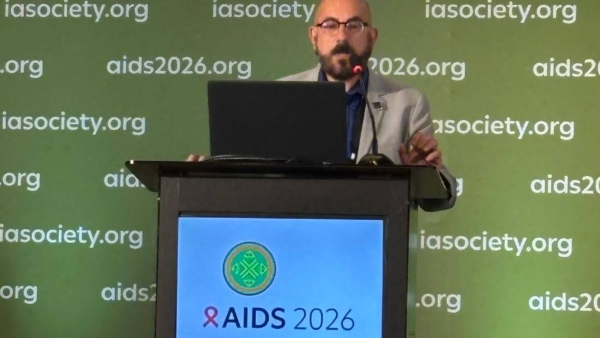
Presenting the 15‑year analysis at the European AIDS Clinical Society (EACS) 2025 Annual Meeting, PhD researcher Jessy J. Duran Ramirez of University Hospital Zurich, Zurich, reported that migrants now account for 49% of new HIV diagnoses in Switzerland — a share that has risen steadily even as rates in other European populations stabilize or decline.
“Despite the overall decrease and stagnation in new HIV diagnoses, migrants remain disproportionately affected,” Duran Ramirez said.
Delayed Diagnosis Patterns Emerge
Among the study’s key findings were notable diagnostic delays across migrant populations. Compared with 5 years for men who have sex with men (MSM) and just 2 years for female heterosexuals, male heterosexuals from migrant populations wait a median of 6 years from immigration to HIV diagnosis.
Key Statistics from 3490 participants (2010-2024):
- 1777 Swiss nationals; 1713 migrants
- 62.1% of migrant diagnoses occurred post-migration
- Median age at diagnosis: 38 years (migrants) vs 44 years (Swiss nationals)
- CD4 count at diagnosis: 339 cells/µL (migrants) vs 404 cells/µL (Swiss nationals)
Migrants from Asia experienced the longest delays overall, with a median of 12 years from immigration to diagnosis.
These delays resulted in significantly lower CD4 counts at diagnosis compared with Swiss nationals, indicating more advanced disease progression.
The demographic profile of post-migration diagnoses also differed markedly from that of Swiss nationals. Women accounted for 27% of migrant diagnoses vs only 11% among Swiss nationals, while MSM represented 43% of migrant cases compared with 63% of Swiss cases.
Cultural and Structural Barriers
Jürgen Rockstroh, MD, head of the HIV outpatient clinic at the University of Bonn, Bonn, Germany, identified multiple obstacles preventing effective screening among migrant populations across Europe.
“People who are migrating to Europe, or are refugees, have difficulties in accessing the healthcare system because there are language barriers, there are insurance and cost coverage barriers,” he said. “The question is, how can you reach these populations?”