Not only disease: how HIV turns into a criminal case
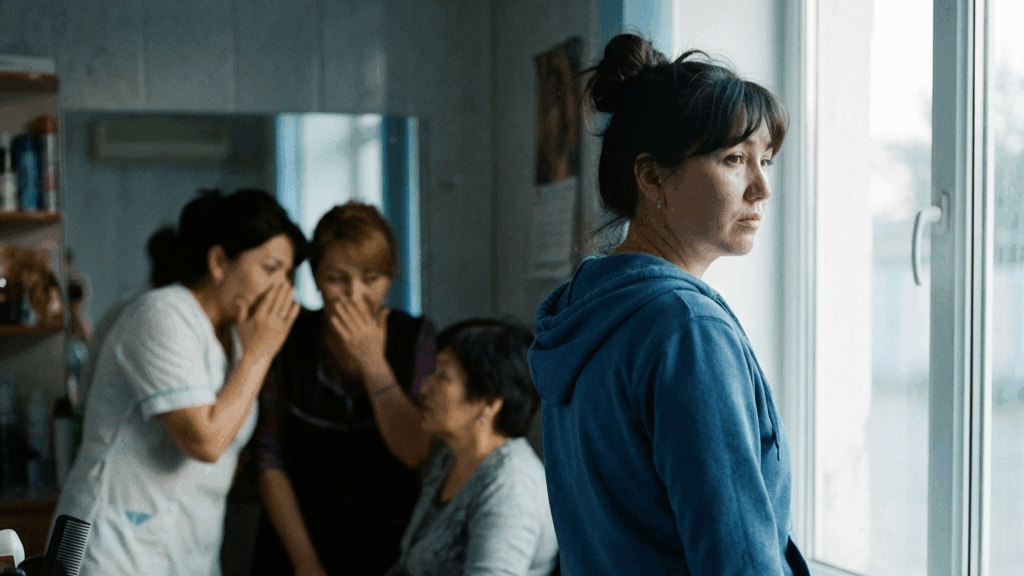
When Aziza (name changed) came to work in a beauty salon in Tashkent that morning, she did not expect that she would soon become a defendant in a criminal case. Her HIV status, which had previously remained part of a medical secret, became known and turned out to be not just personal information, but a legal fact.
At that time, Uzbekistan had a list of professions prohibited for people living with HIV. Today it has been significantly reduced and it mainly concerns medical specialties, but then the restrictions were wider. Work in the field of beauty was prohibited.
In itself, employment in the salon was qualified as “deliberingly placing another person at risk of HIV infection”. In other words, the risk was assumed automatically – without the need to prove the real threat of virus transmission. There were no scientific grounds for this approach: HIV is not transmitted through household contacts, and if standard sanitary standards are observed, work in the salon does not pose an epidemiological danger.
Nevertheless, a criminal case was opened against the woman under Article 113 of the Criminal Code – “Spreation of venereal disease or HIV/AIDS infection”. The court found her guilty, despite the absence of facts of infection transmission or actions that create a real risk.
A similar article is present in the Criminal Code of Tajikistan – 125 – “HIV infection”.
Later, Aziza, trying to earn a living, faced problems again. The employee of the internal affairs bodies actually disclosed her diagnosis publicly, despite the fact that information about the state of health is classified as confidential and is subject to protection. Employees who work with such cases are required to undergo special training and take into account both medical and legal aspects, including the requirement to maintain medical confidentiality. However, in practice, these norms are not always observed – including due to a lack of understanding of confidentiality responsibilities.
Aziza was convicted under the norm, which was later revised. The restrictions were recognized as unjustified, and the list of prohibited professions was significantly reduced.
As of December 1, 2025, according to the Republican AIDS Center of Uzbekistan, 52 thousand people with HIV live in the country. As of September 30, 2025, 13,045 people living with HIV were registered in Tajikistan.
In 2023, 20 cases were recorded in Uzbekistan when people living with HIV became suspects, interrogated and brought to justice under Article 113 of the Criminal Code. According to the HIV Justice Network, from 2008 to 2026, 442 cases related to the criminalization of HIV were registered in the country.
In Tajikistan, according to specialized studies, 64% of people living with HIV report cases of discrimination, including from medical workers. At the same time, there are virtually no mechanisms for reviewing such cases, rehabilitation or compensation for damage. Even after the change in legislation, the consequences for convicts remain – legal, social and professional. The system adjusts the norms, but does not restore fate.
The criminal article automatically reveals the diagnosis
A person living with HIV, who leads a full life, builds relationships and does not violate medical prescriptions, under certain legal conditions may find himself in the status of a potential accused. And this despite the fact that other norms of legislation are directly enshrined: HIV status cannot serve as a basis for discrimination.
“The problem is that the criminal article itself automatically discloses the diagnosis: if a person is tried under the article on the spread of HIV, his status becomes obvious. This violates the confidentiality of the diagnosis and, accordingly, the right to privacy. Thus, a person not only gets a criminal record, but also faces the disclosure of his diagnosis,” says Timur Abdullayev, a consultant on law and public health.
There are also problems with employment. As a rule, these are episodic cases, information about which reaches public figures. Many cases remain unknown because people are afraid to take any steps not to reveal their diagnosis.
“If the law itself creates discrimination, it cannot be called good. The paradox is that the HIV prevention law explicitly states the inadmissibility of discrimination in the field of labor and education. But at the same time, there are norms according to which a person can be brought to justice simply for the fact that he continues to work. As a result, there is a contradiction: discrimination is formally prohibited, but in fact it is possible”.
According to Zebo Kassymova, a lawyer representing the interests of women living with HIV within the framework of the Global Fund project in Tajikistan, under Article 125, as in Uzbekistan, the majority of applicants are women.
“Article 125 of the Criminal Code of the Republic of Tatarstan is discriminatory against people living with HIV in terms of respect and observance of human rights,” she says.
The article provides for a composition not only for intentional transmission of HIV, but also for endangering HIV infection. According to the lawyer, almost all PLWH who have sexual contact fall under this article, and thus this norm deprives PLWH of the right to sexual health as an element of the right to physical and mental health.
“And this disposition does not take into account the informed consent of the other partner, does not take into account such moments as the use of condoms as a means of safety during sexual contact or the unidentified viral load, in which HIV is not transmitted according to the latest scientific research, the “window period” during which HIV is detected (from 3 to 6 months),” she says.
The legislation does not define the ways of HIV transmission. Meanwhile, until recently, the courts issued convictions only if there was HIV status, regardless of whether there was a risk of infection or not, says Zebo Kassymova.
Depression and lack of rehabilitation
Aziza, whose HIV status was revealed, was in a serious psychological state for a long time. At the same time, she had a small child who needed to be supported.
“She was deprived of her last source of income. Moreover, this was done by the state, which convicted it under an article that would actually no longer be applied today – her profession is no longer on the list of prohibited,” says Timur Abdullayev, a consultant on law and public health.
Aziza’s criminal record has already been extinguished, but rehabilitation has not been carried out. At the same time, the very fact of the investigation, trial and sentence still affects her life.
Almost all Central Asian countries have retained the criminalizing articles inherited from the Soviet period, although they were partially revised and edited over time.
“The problem is that the very concept of “knowness”, which is used in such articles, is legally blurred. The Criminal Code does not explain what exactly “knowingly” means. Knowledge is not an element of the crime – such an element is intent,” Abdullayev notes.
This article appeared back in the 1980s, when it was believed that criminal prosecution would help stop the epidemic. Forty years have passed – the article remained, the epidemic has not disappeared anywhere, says the expert.
There are cases of discrimination on the basis of HIV, but the problem is that there is no system that would record them. There are no studies and regular monitoring. As a result, we get a paradoxical situation: there is no monitoring system – it means that there are no problems, says the expert.
Timur Abdullayev says that in Uzbekistan it would be possible to study what discrimination people with HIV face, but there was not enough money and specialists for this. They wanted to include this item in the international application for funding, but it was not approved – and in the end the study was not conducted.
The expert notes that the full picture of the situation is not visible, and reports of violations appear regularly, especially when the diagnosis is disclosed.
“For example, a person is tested for HIV, he receives a call from a medical institution, and if he is not there, they can tell relatives that they need to come to the center. It used to happen regularly, but even now such cases pop up periodically.”
The UN Committee on the Elimination of All Forms of Discrimination against Women recommended that Uzbekistan repeal the article criminalizing the transmission of HIV, especially its part on “at risk of infection”. The logic is simple: women suffer disproportionately from this norm, so it is considered discriminatory by the Committee. “But there was no reaction. The article was and remained,” Abdullayev says.
Decision
International organizations such as the UN, UNAIDS and the World Health Organization (WHO) are actively opposing the criminalization of HIV. According to their recommendations, criminal liability for HIV should be limited only to cases of intentional transmission of HIV infection, when a person knowingly and intentionally infects another.
In Armenia, the provision on “leavement in danger” was excluded, retaining responsibility for the actual transmission of infection – intentional or negligent.
In the United States, some states still criminalize HIV transmission, while others have abandoned such norms. At the same time, studies show that the presence or absence of such articles does not have a statistically significant impact on the level of infection spread.
There are two problems here. The first is the automatic disclosure of the diagnosis: if the article directly mentions HIV, the very fact of criminal prosecution makes the diagnosis public. The second is a wide space for abuse. There are situations when after the conflict one partner writes an application for the other, although both of them knew about the diagnosis for a long time.
In many countries – Belarus, Kazakhstan, Moldova, Russia, Kyrgyzstan – the legislation has been amended, according to which responsibility does not come if the partner was aware of the HIV status and voluntarily took a possible risk. Similar changes are currently being discussed in Tajikistan.
The situation in Tajikistan
On December 26, 2023, Tajikistan began the process of decriminalizing responsibility for endangering HIV infection and transmission in order to ensure justice for people living with HIV.
The new resolution of the Plenum of the Supreme Court of the Republic of Tatarstan “On judicial practice in criminal cases related to human immunodeficiency virus infection” offers the courts to consider issues related to criminal liability under Article 125 of the Criminal Code more objectively. The resolution obliges judicial practice to be based on new norms that take into account international standards and recommendations.
“The Plenum Resolution is encouraging because it allows for a more fair interpretation of existing laws, but it does not establish new laws and does not change the Criminal Code, which still criminalizes HIV transmission. This step towards a fairer legal framework was the result of joint efforts of the Supreme Court and civil society organizations, as well as long-term advocacy of UNAIDS, UNDP and the Global Fund to Fight AIDS, Tuberculosis and Malaria, which reflects a holistic and inclusive approach to solving complex legal issues related to HIV,” says Zebo Kassymova, a lawyer from Dushanbe.
The article duplicates the norms
Timur Abdullayev believes that the need for a separate article on HIV in criminal legislation raises serious doubts. According to him, when it is proposed to cancel a special norm, most often there is an objection: “But then how to qualify the harm?”.
However, he notes, most criminal codes already provide for articles on causing harm to health – mild, moderate and severe, and the regulations explicitly indicate that biological impact can also be considered harm to health. In this sense, a separate article on HIV actually duplicates the existing norms. “In fact, the coordinated work of several departments and explanations is enough – and the need for a separate article disappears,” he emphasizes.
Abdullayev also draws attention to the widespread argument of law enforcement agencies that without a special article, people will allegedly begin to infect others en masse. He calls it a myth, emphasizing: “This norm has never stopped the spread of infection”. In his opinion, the price of her existence is too high – people get criminal records without committed actions that would really deserve criminal punishment.
The expert reminds that in case of cancellation of the special article, general norms on causing harm to health may be applied. According to him, in the practice of Uzbekistan, HIV transmission is often actually equated to serious bodily harm, which creates a disproportion to the punishment. As a result, several problems arise at once: there is a separate article, the application of which causes difficulties, and there is no sufficient judicial explanations, which increases legal uncertainty.
The organization “Ishonch va hayot” proposes to limit criminal liability in Uzbekistan only to cases of intentional transmission of HIV – when it is proven that a person knew about his HIV-positive status, acted with the direct intention of transmitting the virus and the infection really occurred.
Aziza’s story is not an isolated case, but an example of how legal norms can survive their time and continue to break lives. Until the legislation is brought into line with modern medicine and the principles of confidentiality, people with HIV will live not only with a diagnosis, but also with a constant risk of being accused.