Skip to content
HIV Justice Network
  • YouTube
  • Home
  • About
    • HIV Justice Network
    • Staff and Consultants
    • Supervisory Board
    • Global Advisory Panel
    • Our Policies
    • Our Funders
      • ANBI Status
  • News
    • By the HIV Justice Network
    • Curated from other sources
    • HIV JUSTICE NEWS (Newsletter)
  • Academy
  • Database
    • Overview
    • Laws and Analyses
    • Cases
    • Organisations
    • Disclaimer
  • Publications
  • Video
  • Contact Us
  • Donate
News curated from other sources

Ethiopia: New report on HIV criminalisation law with a focus on Ethiopia concludes that the use of criminal law to address HIV is anappropriate

2 December 2016
Ethiopia Articles Social science Research Public health
  • Twitter
  • Facebook
Source: http://www.scirp.org/journal/72462.html

Abstract

States ever since the outbreak of HIV/AIDS have been using different methods in order to combat the pandemic if possible and to reduce vulnerability. In spite of this, HIV/AIDS continues to be prevalent especially in a less developed countries to the extent that it to be hurdle for development. Criminalization of HIV/AIDS patients is one of the mechanisms that are used in the fight against the deadly disease. However, employing criminalization as prevention and vulnerability reduction strategy poses a question and stimulates a debate. Hence, the main thrust of this article is to identify this challenge and to assess whether criminalization of HIV/AIDS patients reduce vulnerability to HIV/AIDS. This being the aim it will also go on to analyze the role of criminal law in a public health issue. In doing so, the article will discuss experience of countries in criminalization of HIV/AIDS patients along side with international frameworks. At a glance, criminal law through a vehicle of punishment seems to play a role in reducing vulnerability to HIV/AIDS but, the writer based on the analyses of relevant literature and experiences of countries, argues that the use of criminal law to address HIV is inappropriate except in rare cases where a person acts with conscious intent to transmit HIV and does so, and this is because of the high degree of proof required in criminal case and the difficulty of using criminal law in HIV related issue due to the nature of the disease and the absence of technology used for the required proof in the criminal law, i.e. beyond reasonable doubt.

Ekubu, Y. (2016) Reducing Vulnerabilities to HIV: Does the Criminalization of HIVAIDS Patients Contribute?. Beijing Law Review, 7, 292-313. doi: 10.4236/blr.2016.74027.

The report can be downloaded here

News curated from other sources

The Anti-Rights Movement is Organised. Are We?

August 3, 2026

Mexico: Campaigners press Baja California to vote on HIV law reform

LGBTQ+ collective seeks progress in reform to eliminate crime that criminalizes people with HIV in Baja California
July 29, 2026

US: Governor signs bill ending HIV-specific criminal penalties in Pennsylvania

July 26, 2026

US: Pennsylvania approves bill to end HIV sentencing enhancement

Pennsylvania House unanimously passes bill ending HIV-specific criminal penalty enhancement
July 14, 2026

US: Louisiana reform offers blueprint for ending HIV Criminalisation

Decriminalizing HIV: 3 moves that helped ETAF secure progress in Louisiana
July 10, 2026

News by the HIV Justice Network

The next phase of HIV decriminalisation: closing the translation gap

July 31, 2026

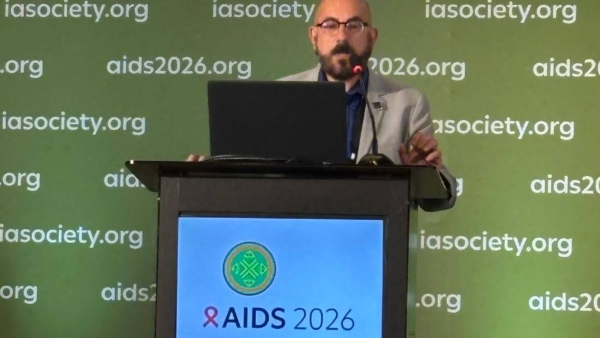
New global Guidance on HIV decriminalisation launched at AIDS 2026

July 30, 2026

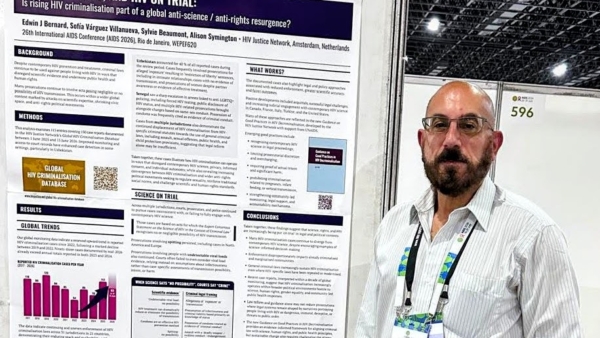
New data presented at AIDS 2026 reveal renewed rise in HIV criminalisation amid global anti-rights backlash

July 29, 2026

New research identifies how healthcare systems become gateways to HIV criminalisation

July 29, 2026

HIV Justice Network at AIDS 2026: new research, practical tools and global advocacy for HIV justice

July 20, 2026
  • YouTube
Disclaimer

This website operates as a global hub, consolidating a wide range of resources on HIV criminalisation for advocates working to abolish criminal and similar laws, policies and practices that regulate, control and punish people living with HIV based on their HIV-positive status. While we endeavour to ensure that all information is correct and up-to-date, we cannot guarantee the accuracy of laws or cases. The information contained on this site is not a substitute for legal advice. Anyone seeking clarification of the law in particular circumstances should seek legal advice. Read more

Registered office:
Stichting HIV Justice (HIV Justice Foundation), Korte Lijnbaanssteeg 1, Kamer 4007, 1012 SL Amsterdam, the Netherlands

You can select your preferred language from the 'Select Language' menu at the top of the page.

Continue

We use cookies to ensure that we give you the best experience on our website. By continuing to use our site, you are agreeing to our use of cookies. You can change your cookie settings at any time if you want. Find out more in our Privacy & Cookie Policy.

Accept Close