Senegal’s anti-homosexuality law: violations of defendants’ rights are causing concern among lawyers and NGOs
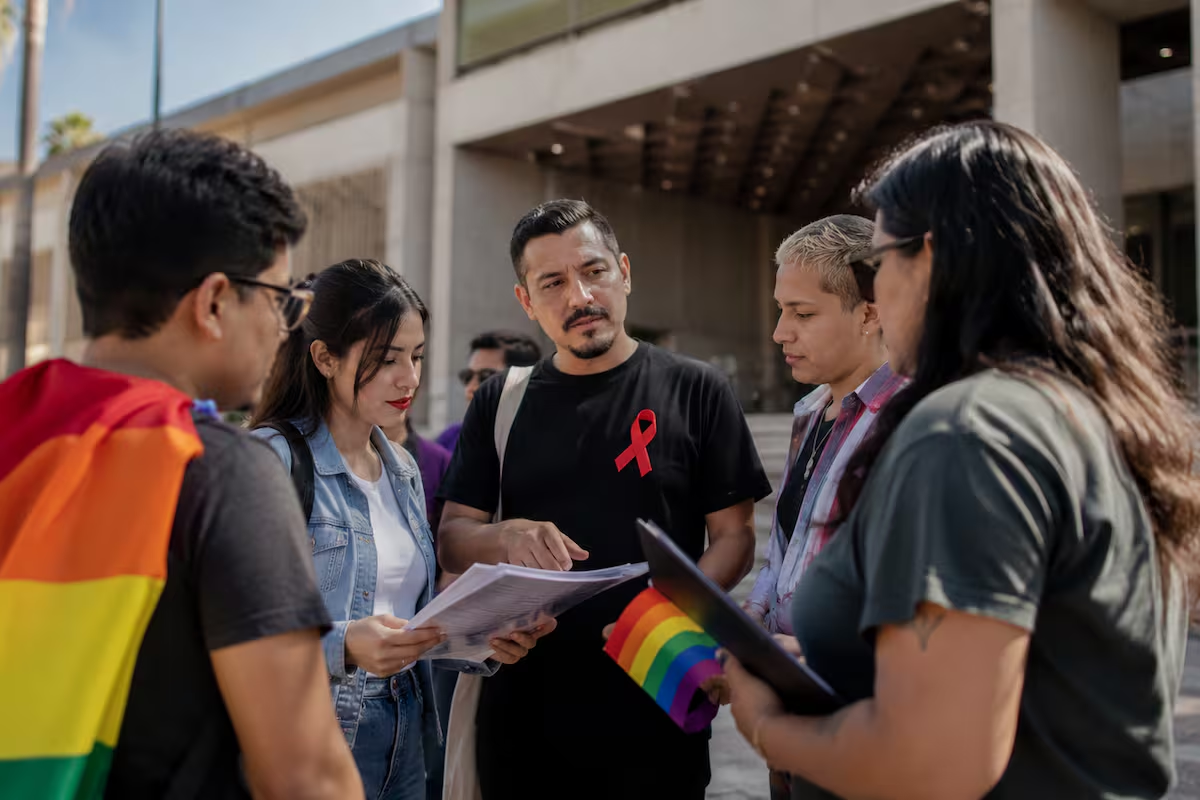
In Senegal, a month and a half after the enactment of a law toughening penalties for homosexuality, and with over a hundred people having been arrested for alleged ‘unnatural acts’ and some accused of wilful transmission of HIV, lawyers are concerned about violations of defendants’ rights, including unauthorised searches of mobile phones, interrogation reports ending up in the press, and the absence of legal representation for a number of those arrested.
with RFI correspondent in Dakar, Léa-Lisa Westerhoff
The lobby of the High Court in Dakar is bustling with people…
No case involving “unnatural acts” is being heard that day, but Maître Kandiak François Senghor wishes to discuss the conditions under which one of his clients, arrested for alleged homosexuality in early February, was questioned at the Keur Massar police station.
“The commander had confiscated and searched his mobile phone without his consent. And… in his office, he forced him to waive his right to a lawyer – that’s not right! It was also he who leaked details of the investigation to the press – it’s shocking! ‘Maître Senghor assures us that this violation of the right to legal representation is a first since 2016 and the entry into force of the UMOA regulations governing the legal profession in Senegal, but it is far from being the only one,’ explains Maître Abdou Dieng. “In the cases involving me regarding acts against nature, at least 100 people have been arrested, and of those 100, not a single one was assisted by a lawyer during questioning – that is not legal! ”
On 10 February, the two lawyers therefore filed a complaint against the brigade commander of the Keur Massar police station for procedural violations during the interrogation of their two clients: the right to be assisted by a lawyer, as well as the searching of phones without consent, and the breach of medical confidentiality with medical records published in the press.
For Mr Abdou Dieng, urgent action is needed: “Leaking information about a person’s serological status is dangerous, as it is confidential, yet it is all over TV programmes and in the press! It is very serious, in truth! ”
Filed on 16 February, the complaint is still under investigation by the Public Prosecutor’s Office at the Dakar Court of Appeal.
For its part, the NGO Amnesty International is also concerned about these mass arrests of suspected homosexuals, which are, for the most part, based on searches of mobile phones.
Loi anti-homosexualité au Sénégal: les violations des droits des prévenus inquiètent avocats et ONG
Au Sénégal, un mois et demi après la promulgation d’une loi qui durcit les peines pour homosexualité, et alors que plus d’une centaine de personnes ont été arrêtés pour « actes contre nature » présumés et certains accusés de transmission volontaire du VIH, des avocats s’inquiètent de cas de violation du droit des prévenus avec des fouilles de téléphone portables non consenties, des procès-verbaux d’interrogatoire qui atterrissent dans la presse et l’absence d’avocat pour un certain nombre de personnes arrêtées.
avec la correspondante RFI à Dakar, Léa-Lisa Westerhoff
Le hall du tribunal de grande instance de Dakar bruisse de monde…
Aucune affaire d’« acte contre nature » n’est jugée ce jour-là, mais maître Kandiak François Senghor veut revenir sur les conditions dans lesquelles l’un de ses clients, arrêté pour homosexualité présumée début février, a été auditionné au commissariat de Keur Massar.
« Le commandant avait confisqué et fouillé son portable sans son consentement. Et… dans son bureau, il l’a contraint à renoncer à son droit à un avocat, ce n’est pas normal ! C’est également lui qui a fait fuiter les éléments de l’enquête dans la presse, c’est choquant ! »Maître Senghor l’assure, cette violation du droit d’être assisté par un avocat est une première depuis 2016 et l’entrée en vigueur du règlement UMOA qui régit la profession d’avocat au Sénégal, mais elle est loin d’être la seule, nous explique Maître Abdou Dieng. « Pour les dossiers qui me concernent d’acte contre nature, on est au moins à 100 personnes arrêtées, et sur ces 100 personnes aucune n’a été assistée par un avocat au moment de l’interrogatoire, ce n’est pas légal ! »
Le 10 février dernier les deux avocats ont donc porté plainte contre le commandant de brigade du commissariat de Keur Massar pour des violations de procédure lors de l’interrogatoire de leurs deux clients : celle d’être assisté par un avocat, mais aussi des fouilles de téléphone sans consentement, ou encore la violation du secret médical avec des statuts médicaux publiés dans la presse.
Pour maître Abdou Dieng il est urgent d’agir : « Distiller des informations sur l’état sérologique d’une personne, c’est quand même dangereux car c’est un secret or c’est partout sur les plateaux de tv et dans la presse ! C’est très grave en vérité ! »
Saisie depuis le 16 février, la plainte est toujours en cours d’instruction devant le parquet général de la cour d’appel de Dakar.
De son côté, l’ONG Amnesty international s’inquiète, elle aussi, de ces arrestations en série d’homosexuels présumés qui reposent, pour la plupart, sur des fouilles de téléphones portables.