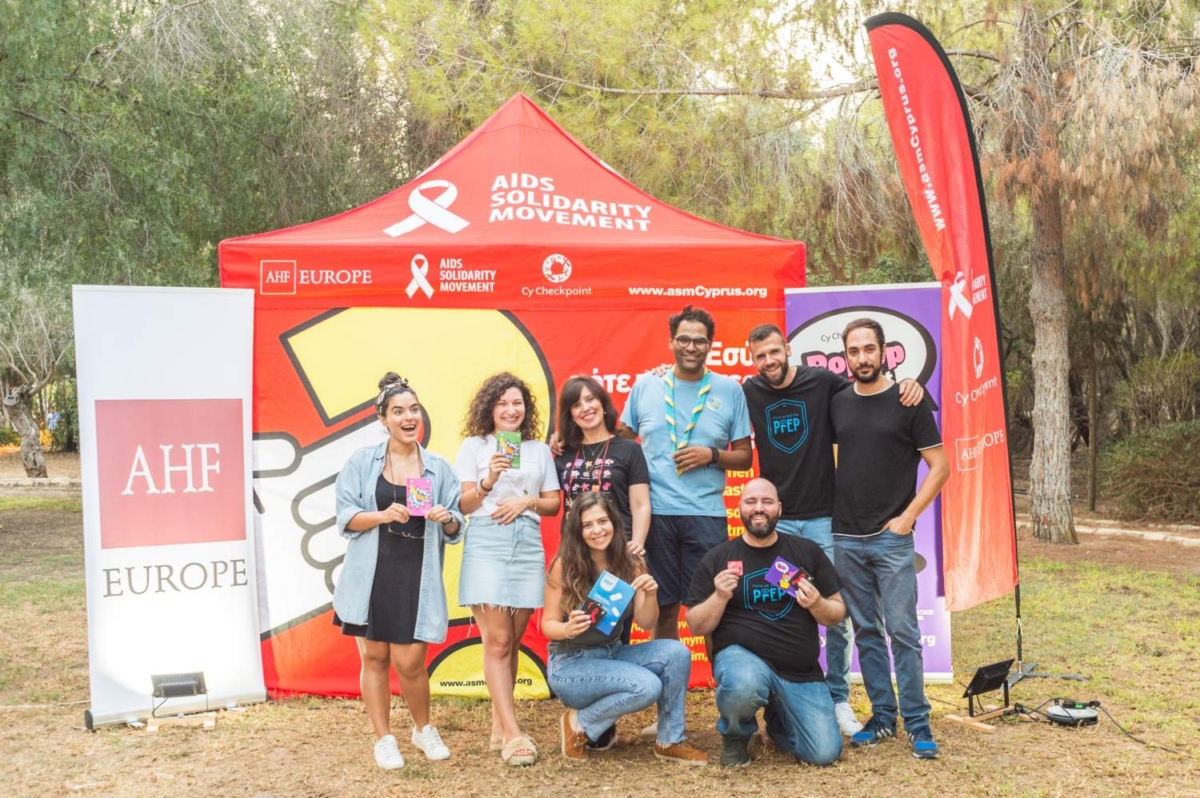
Science over stigma: Inside the push to decriminalise HIV transmission in Cyprus
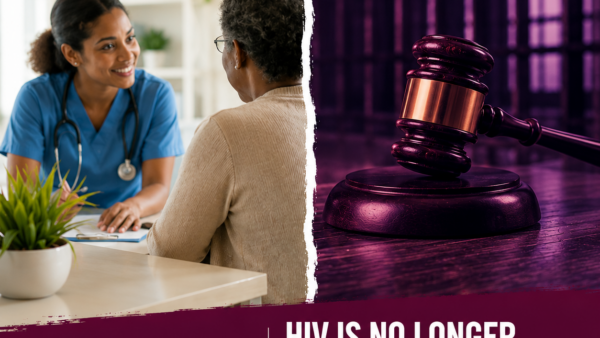
Cyprus is on the verge of decriminalising HIV transmission, with a draft law approved by the National AIDS Committee now waiting for the Minister of Health to bring it before the Council of Ministers.
The AIDS Solidarity Movement (“the Movement”), an active member of the National AIDS Committee since 2016, drafted the proposal alongside the National AIDS Committee and the Ministry of Health to align Cypriot legislation with modern science.
At the heart of the reform is the globally accepted principle of Undetectable equals Untransmittable (U=U): people on HIV treatment achieve an undetectable viral load and thus cannot pass the virus to sexual partners, even without using condoms, and can naturally conceive HIV-negative children.
Founded in 1989, the Movement operates across four pillars: psychosocial support for people living with HIV, prevention, community empowerment and advocacy, and stigma reduction. Its prevention work encompasses Cy Checkpoint, the Cyprus PrEP Point, condom and lubricant distribution, DoxyPEP, and public awareness campaigns. It is, in effect, the main community-led infrastructure keeping Cyprus’s HIV response connected to its most vulnerable populations.
“The medical targets are succeeding, but our societal targets regarding stigma still need work,” the Movement’s President, Christos Krasidis, told en.philenews. “Public perception is frequently stuck in an outdated 1980s narrative, whereas the clinical and therapeutic reality has completely changed.”
That gap between science and public understanding is precisely what advocates say makes legal reform urgent. Criminalising transmission under conditions that medical consensus deems impossible to transmit sends a message, the Movement argues, that contradicts both the science and the rehabilitation of HIV in public life.
Cyprus’s public health record on HIV is, by international standards, exceptional. Healthcare frameworks across the island have officially surpassed the United Nations’ 95-95-95 targets for diagnosing and treating HIV, with national data showing the country has passed the 98 per cent mark in key tracking criteria, including viral suppression. The targets refer to 95% of all people living with HIV knowing their HIV status, 95% of all people diagnosed with HIV infection receive sustained antiretroviral therapy (ART) and 95% of all people receiving antiretroviral therapy have viral suppression.
The Movement attributes much of this to its community-led infrastructure, centred on Cy Checkpoint, a free anonymous rapid-testing hub launched in 2015, and the Cyprus PrEP Point, which advises the public on Pre-Exposure Prophylaxis.
The checkpoint operates on a peer-to-peer model rather than a clinical setting, following international and European best practices. Visitors are met not by formal medical authorities but by peers from the community.
Testing is free, anonymous, and uses a simple finger-prick blood test that delivers precise results on the spot. Crucially, unlike testing through the national health system, where results are permanently logged into a central GHS database, Cy Checkpoint does not register identities — if a rapid test returns a reactive result, it serves as a starting point to link the person to care rather than entering them into a permanent state registry, something that would deter many individuals.
The Movement says roughly one-third of people who walk in are getting tested for the first time, and many explicitly choose the community space over public hospitals to protect their anonymity. The 95-95-95 achievement also reflects close collaboration with the specialised HIV clinical care system at the Gregorios HIV Reference Clinic.
“People do not come to us because we hold authority over them,” Krasidis said. “They come because we communicate on the same level, offer clear choices, and give personal health responsibility back to the individual without judgment.”
The epidemiological picture has shifted significantly since the Movement was established in 1989. Targeted awareness campaigns have successfully reduced new diagnoses within the LGBTQI population, to the point where transmission rates are now lower within that community than among heterosexual demographics. Public health strategies have since shifted focus to heterosexual groups.
Yet, the Movement warns that a persistent myth — that HIV is exclusively a concern for gay men — continues to deter heterosexual individuals, particularly those aged 45 and above, from seeking testing even when engaging in unprotected sex.
“We need the wider public to understand that vulnerability to the virus is universal,” Krasidis said. “Once the heterosexual population breaks through the historic stigma and understands that HIV can affect anyone, routine testing can become a normalised healthcare habit for everyone. In this context, criminalisation of HIV transmission acts as a barrier and further fuels stigma. This is why we must change these laws.”
Access gaps run deeper still. Asylum seekers and migrants face language barriers and legal instability that cut them off from care. People engaged in chemsex — the sexualised use of substances find state drug rehabilitation centres ill-equipped to handle the intersection of substance use and sexual health. Transgender individuals, sex workers, and women face distinct forms of local stigma that frequently cause them to be hesitant or unable to seek care from healthcare practitioners.
The Movement notes that many of the most vulnerable individuals carry parallel identities and that if a healthcare space fails to account for those facets holistically, it makes asking for support more challenging.
All of this work — the Cy Checkpoint, the popup clinics, the outreach at festivals, universities, and nightclubs — is carried out by a five-member board, one full-time staff member, one part-time employee, part-time Community Health Workers and a pool of volunteers. Cy Checkpoint receives no official or consistent state funding.
Its rapid tests and prevention work are kept alive by international grants from bodies including AHF, Mi-Health and EU-CORE. The Movement’s clinical psychology programme, which has run for 25 years, receives 80 per cent of its budget through annual Ministry of Health grants, but the frontline hub operates outside the state budget entirely.
“True equality in health access cannot depend on a single non-governmental organisation,” Krasidis said. “Personal doctors and general practitioners across GHS must be systematically trained in LGBTQI health and modern STI management so that no patient faces discrimination.”
Any member of the public can get tested every Tuesday afternoon, between 5-8 pm at the Cy Checkpoint’s Permanent Space in Nicosia. You can either book an appointment (through call or text at 99607005, or a message on Instagram & Facebook). Alternatively, you can walk-in without an appointment. Testing slots are every 20 minutes.
PopUps are also being organised, which you can follow by looking at Cy Checkpoint’s Monthly schedule on Instagram & Facebook.
The following outreach testing is also being conducted at:
- International Condom Day (every February)
- Femme-Fest (every May)
- Spring European Testing Week (every May)
- Cyprus Pride (every May/June)
- Up-to-Youth Festival (every September)
- United by Pride (every September/October)
- European HIV/Hepatitis Testing Week (every November)